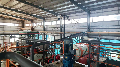
Soil Washing Equipment: Process Flow and Technical Advantages | Desen Environment
Explore soil washing equipment process flow and technical advantages. Learn how Desen Environment delivers efficient, modular soil remediation and leaching solutions for contaminated sites.
Soil washing equipment has become the cornerstone technology for rapid, cost-effective soil remediation at contaminated industrial, mining, and brownfield sites worldwide. By leveraging the physical separation of fine contaminant-laden particles from clean coarse fractions, modern soil washing systems remove heavy metals, petroleum hydrocarbons, and other hazardous substances while recovering the majority of treated soil for reuse. This article delivers a complete technical breakdown of soil washing equipment — from process flow and core components to the engineering advantages that make it the preferred choice for project owners and environmental contractors.
Desen Environment (郑州德森环境), a leading Chinese manufacturer of soil washing equipment and integrated remediation systems, has deployed modular and skid-mounted leaching plants across more than 300 contaminated site projects in China, Southeast Asia, and beyond. With throughput capacities ranging from 10 to 100 tonnes per hour, Desen's soil washing solutions consistently achieve contaminant removal rates above 90% while meeting the most stringent national cleanup standards.
What Is Soil Washing Equipment and How Does It Work?
Soil washing equipment refers to an integrated, engineered system that uses water — often enhanced with biodegradable surfactants or pH-adjusting agents — to physically separate contaminants from soil particles. The fundamental principle behind soil washing is simple yet powerful: pollutants such as heavy metals and hydrocarbons preferentially bind to fine-grained particles (silt and clay) that possess a high surface-area-to-volume ratio, whereas coarse sand and gravel fractions are comparatively clean.
By exploiting this differential contaminant distribution, soil washing equipment concentrates the vast majority of pollution into a small fine-fraction stream, dramatically reducing the volume of material requiring expensive off-site disposal or secondary treatment. This physical-chemical separation is achieved through a sequence of mechanical, hydraulic, and gravitational unit operations rather than through chemical destruction — making soil washing both energy-efficient and environmentally benign compared with thermal alternatives.
Soil Washing Equipment Process Flow
A complete soil washing plant follows a staged process flow engineered to maximize contaminant liberation and recovery of clean material. Desen Environment's standard soil washing equipment configuration comprises the following stages:
Stage 1 — Feed Preparation and Pre-Screening
Excavated contaminated soil is first fed through a vibrating grizzly or trommel screen at a 30–50 mm cut point. This pre-screening stage removes oversize debris, stones, roots, and construction rubble that would otherwise consume washing capacity. Clean coarse oversize material may bypass treatment entirely, immediately reducing the processed volume and improving the overall economics of the soil washing campaign.
Stage 2 — Attrition Scrubbing
The screened soil enters attrition scrubber reactors where high-speed impellers generate intense particle-on-particle collisions in an aqueous suspension. This mechanical action dislodges contaminant coatings — such as heavy metal-laden clays or hydrocarbon films — from mineral surfaces without degrading the soil matrix. Operating at optimized slurry densities and pH, the scrubber stage is the heart of any soil washing equipment train.
Stage 3 — Hydrocyclone Classification
The scrubbed slurry is pumped through a battery of hydrocyclones that separate fine particles from coarse sand based on centrifugal force. Because contaminants concentrate in the fine fraction, hydrocyclone classification typically captures 70–95% of total pollutants into just 20–40% of the original soil mass. This volume reduction is a defining economic advantage of soil washing and a key reason project owners choose the technology.
Stage 4 — Solid-Liquid Separation and Dewatering
Separated streams are dewatered using vibrating screens, filter presses, or decanter centrifuges. The clean coarse fraction is tested against regulatory standards and returned to site as backfill or aggregate. The contaminant-rich fine fraction is directed to final treatment — thermal desorption, stabilization, or permitted disposal — completing the soil washing equipment cycle.
Stage 5 — Process Water Recycling
A closed-loop water management circuit with dissolved air flotation (DAF) and sedimentation recovers and recycles process water, minimizing freshwater consumption to as little as 0.3 m³ per tonne of treated soil and eliminating discharge obligations at the remediation site.
Core Technical Advantages of Soil Washing Equipment
Compared with excavation-and-landfill or purely thermal treatment, modern soil washing equipment delivers compelling advantages across technical, economic, and environmental dimensions.
High and Reliable Contaminant Removal
Properly configured soil washing equipment achieves removal rates of 85–99% for heavy metals and petroleum hydrocarbons, routinely reducing concentrations from thousands of mg/kg to below applicable cleanup thresholds. Desen Environment's project database shows median post-treatment heavy metal concentrations falling within regulatory limits across hundreds of completed sites.
Dramatic Volume Reduction
By isolating contaminants into a fine fraction representing 20–40% of original mass, soil washing slashes off-site disposal volumes. A 50,000-tonne site may see disposal requirements drop to 10,000–20,000 tonnes, avoiding substantial hazardous waste tipping fees and transportation emissions.
Material Recovery and Circular Economy
Cleaned coarse fractions recovered by soil washing equipment become reusable aggregate rather than waste. Desen Environment has documented cases where recovered material value exceeded $40 per tonne, partially offsetting treatment costs and supporting circular-economy objectives for sustainable soil remediation.
Modular and Rapid On-Site Deployment
Desen's soil washing equipment is delivered as containerized, modular units that can be commissioned on-site within 7–14 days. For brownfield redevelopment where clearance speed drives financial returns, this rapid deployment is a decisive advantage over fixed installations requiring months of construction.
Low Environmental Footprint
Life-cycle assessments indicate that soil washing reduces greenhouse gas emissions per tonne of contaminated soil treated by 65–80% versus excavation-and-landfill, while preserving landfill capacity for genuinely hazardous waste streams and reducing total project logistics impact.
Engineering Case Study: Heavy Metal Contaminated Site Remediation
Project background: A 9-hectare former electroplating and battery-recycling complex in central China required remediation of approximately 68,000 tonnes of soil contaminated with lead (up to 3,200 mg/kg), zinc, and cadmium exceeding GB 36600-2018 risk screening values for industrial land use.
Desen Environment's solution deployed a two-module soil washing equipment train with combined throughput of 40 tonnes per hour:
- Pre-screening at 40 mm liberated 24% clean oversize material bypassing treatment.
- Attrition scrubbing and hydrocyclone classification at a 60-micron cut point concentrated 81% of total heavy metals into 32% of soil mass.
- Dewatering and stabilization of the fine fraction produced a stable, non-leaching product suitable for contained disposal.
- Closed-loop water recycling maintained process water quality with zero discharge throughout the campaign.
Independent laboratory verification of 96 post-treatment samples confirmed mean lead concentration of 410 mg/kg — well below the 800 mg/kg industrial threshold — achieving full regulatory clearance in 5.8 months and enabling redevelopment of the site into a light-industrial park.
Frequently Asked Questions About Soil Washing Equipment
What contaminants can soil washing equipment treat?
Soil washing equipment is highly effective for heavy metals (lead, cadmium, arsenic, zinc, copper), petroleum hydrocarbons (TPH), and many inorganic contaminants that associate with fine soil fractions. It is less suitable for contaminants uniformly distributed through coarse fractions or strongly chemisorbed to mineral lattices, which may require complementary treatment such as thermal desorption.
How does soil washing compare with thermal desorption?
Soil washing achieves 85–97% removal for most contaminants at $30–80 per tonne, making it cost-effective for large volumes. Thermal desorption reaches 99%+ removal including the most recalcitrant compounds at $80–200 per tonne. Many projects combine both: washing as primary treatment, followed by targeted thermal desorption of the concentrated fine fraction separated by the soil washing equipment.
Is soil washing equipment suitable for small sites?
Yes. Desen Environment offers mobile and modular soil washing equipment scalable from 10 tonnes per hour, making on-site treatment economical even for smaller contaminated parcels where excavation-and-disposal logistics would otherwise dominate project costs.
What happens to the contaminant-rich fine fraction?
The fine fraction — typically 20–40% of original mass but containing 70–95% of contaminants — undergoes secondary treatment: off-site hazardous waste disposal, thermal desorption for destruction, or stabilization/solidification. Desen Environment's teams select the most cost-effective pathway based on volume, concentration, and local facility capacity.
Does soil washing equipment require a permanent facility?
No. Desen's soil washing equipment is available as skid-mounted and fully mobile configurations that operate directly at the contaminated site, eliminating long-distance transport and enabling treatment precisely where contamination occurs — a key benefit for remote mining or industrial sites.