Smart Soil Washing Technology for Contaminated Land: Fast, Precise, and Circular Remediation
Industrial sites and urban land often suffer from soil contamination caused by heavy metals, petroleum hydrocarbons, and other pollutants. Conventional remediation methods tend to be slow and disruptive. Desen Environment’s soil washing equipment offers a faster, more precise alternative—designed
Industrial sites and urban land often suffer from soil contamination caused by heavy metals, petroleum hydrocarbons, and other pollutants. Conventional remediation methods tend to be slow and disruptive. Desen Environment’s soil washing equipment offers a faster, more precise alternative—designed for on-site remediation with maximum efficiency and minimal environmental impact.
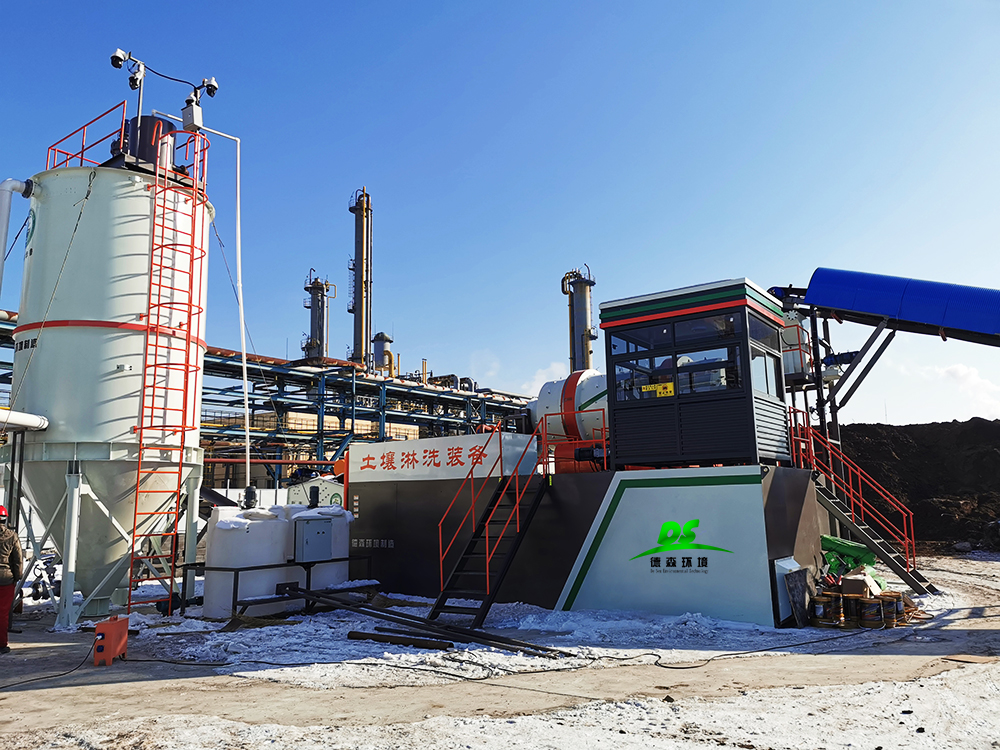
Built on an integrated modular design, Desen’s soil washing system can be deployed directly to contaminated locations. Customized washing agents act like targeted soil cleaners, penetrating between soil particles to detach stubborn contaminants such as heavy metals and hydrocarbons. Through screening, washing, and solid–liquid separation, pollutants are efficiently removed while clean soil is recovered for reuse.
Circular utilization is embedded into the system’s core design. Wash water is treated and recycled for repeated use, minimizing freshwater consumption. Concentrated heavy metal residues can be further processed for industrial recovery, while cleaned soil meets reuse standards for backfilling, landscaping, or construction applications. No unnecessary waste, no secondary pollution—every resource is fully utilized.
Unlike complex, impractical systems on the market, Desen’s soil washing equipment is engineered for real-world remediation challenges. Its modular structure adapts to confined or complex sites, intelligent controls reduce labor costs, and closed-loop processing maximizes both environmental and economic returns.
Desen Environment proves that contaminated soil is not a dead end. With the right technology, polluted land can be restored, reused, and reintegrated into sustainable urban development—turning environmental liabilities into long-term green value.