Understanding Heavy Metal Soil Contamination—and a Smarter Path to Remediation
The formation of heavy metal contamination in soil is the result of a long-term interaction between natural geological processes and human activities. From a natural perspective, the Earth’s crust inherently contains elements such as lead, cadmium, chromium, and mercury. Through processes like rock
The formation of heavy metal contamination in soil is the result of a long-term interaction between natural geological processes and human activities. From a natural perspective, the Earth’s crust inherently contains elements such as lead, cadmium, chromium, and mercury. Through processes like rock weathering, volcanic activity, and soil erosion, trace amounts of these metals are gradually released into the soil, forming what is known as background concentrations. At these naturally occurring levels, heavy metals generally pose little risk to ecosystems.
However, the relationship between heavy metals and soil heavy metal contamination is one of source and accumulation. While they share a natural origin, human activities dramatically amplify their environmental impact.
Heavy Metals vs. Soil Heavy Metals: Source and Accumulation
Heavy metals are typically defined as metallic elements with a density greater than 4.5 g/cm³, including lead (Pb), cadmium (Cd), chromium (Cr), and mercury (Hg). Soil heavy metals refer to the presence of these elements within the soil environment—originating both from natural geological processes and from external inputs driven by industrial emissions, mining, wastewater irrigation, fertilizers, and pesticides.
In essence, soil acts as one of the most important environmental reservoirs for heavy metals at the Earth’s surface. Once introduced, these contaminants tend to persist and accumulate.
Key Characteristics of Heavy Metal Pollution in Soil
Heavy metal contamination in soil exhibits three defining characteristics:
Hidden nature – Unlike air or water pollution, soil contamination is not immediately visible and can only be identified through professional testing and analysis.
Cumulative behavior – Heavy metals are not biodegradable. Over time, they continuously accumulate in soil, gradually intensifying contamination levels.
Irreversibility – Heavy metals bind strongly to soil particles. Once concentrations exceed safety thresholds, natural attenuation is extremely limited without human intervention.
Moreover, heavy metals can migrate through crop uptake and groundwater infiltration, posing long-term risks to food safety, ecosystems, and human health.
A Practical Solution for Heavy Metal Soil Remediation
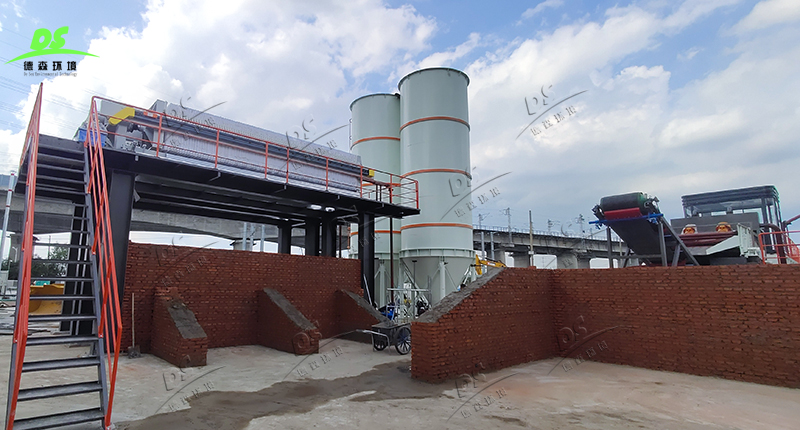
Conventional remediation methods often struggle to balance treatment efficiency with ecological protection. This is where Desen Environment’s soil remediation solutions offer a decisive advantage.
By combining on-site operation and precision-targeted treatment, Desen’s technology effectively removes heavy metal ions while preserving the soil’s original structure and organic matter. The approach integrates remediation, restoration, and reuse into a single streamlined process—making contaminated land safe for future use.
From industrial legacy sites to agricultural farmland, Desen Environment is leveraging advanced technology to build a strong protective barrier for polluted soil—restoring land health and unlocking sustainable value for every hectare.