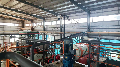
Industrial Material Washing: 5 Proven Strategies for Heavy Metal Soil Remediation
Discover 5 proven industrial material washing strategies for effective heavy metal soil remediation. Learn how advanced soil washing equipment delivers cost-efficient, eco-friendly results for contaminated sites.
Understanding Heavy Metal Contamination in Industrial Sites
Heavy metal contamination remains one of the most persistent challenges in industrial land remediation. Metals such as lead, cadmium, chromium, and arsenic accumulate in soil over decades of industrial activity, posing serious risks to groundwater, ecosystems, and human health. Unlike organic pollutants that may naturally degrade over time, heavy metals are non-biodegradable and require active intervention through specialized treatment technologies.
Industrial material washing has emerged as a leading solution for addressing this challenge. By applying targeted washing agents and mechanical separation techniques, this approach physically and chemically extracts heavy metal contaminants from soil matrices, restoring land to safe, usable conditions.
Strategy 1: Physical Separation and Particle Classification
The first step in effective material washing involves physical separation of soil fractions. Contaminated soil typically contains a mix of coarse particles (gravel and sand) and fine particles (silt and clay). Heavy metals predominantly bind to finer particles due to their larger surface area. By using screening and hydrocyclone systems, operators can separate clean coarse fractions from contaminated fines, significantly reducing the volume of material requiring intensive treatment.
Modern washing plants can achieve processing rates of 40 to 120 tons per hour, depending on site conditions and contamination levels. This scalable approach ensures projects of varying sizes can be addressed efficiently.
Strategy 2: Chemical Washing with Eco-Friendly Agents
For heavily contaminated fine fractions, chemical washing agents are introduced to dissolve, desorb, or chelate metal ions from soil particles. The key advancement in recent years has been the development of environmentally benign washing solutions that avoid the secondary pollution risks associated with traditional strong acids.
Common washing agents include biodegradable chelating agents, organic acids, and surfactants designed for specific metal types. For instance, EDTA-based solutions prove effective for lead and cadmium, while specialized formulations target hexavalent chromium. The closed-loop design of modern washing plants enables over 95% of process water to be recycled, minimizing waste generation and operational costs.
Strategy 3: Multi-Stage Treatment Integration
Complex industrial sites often present mixed contamination profiles combining heavy metals with organic pollutants. A single treatment approach rarely delivers optimal results in such scenarios. Multi-stage integrated treatment systems combine washing, classification, and polishing steps in one continuous process flow.
For example, a project may first apply physical screening to remove debris, followed by chemical washing for heavy metal removal, and finally thermal treatment or bioremediation for residual organic contaminants. This layered approach ensures comprehensive remediation while maintaining cost efficiency.
Strategy 4: Real-Time Monitoring and Intelligent Control
The integration of IoT sensors and intelligent control systems has transformed material washing operations. Real-time monitoring of parameters such as pH levels, contaminant concentrations, and turbidity allows operators to dynamically adjust washing agent dosages and processing speeds. This data-driven approach optimizes chemical consumption, reduces energy use, and ensures consistent treatment quality.
Advanced systems also feature remote monitoring capabilities, enabling expert oversight of multiple project sites simultaneously. Automated alerts for parameter deviations help prevent treatment failures before they occur.
Strategy 5: Resource Recovery and Circular Economy Integration
Modern industrial material washing extends beyond simple contamination removal to embrace resource recovery principles. Cleaned coarse materials can be directly reused as construction aggregates for road bases or concrete production. Recovered metals from concentrated waste streams may be processed for industrial reuse. Even treated wastewater, after purification, returns to the washing cycle.
This circular approach not only reduces disposal costs but also generates additional value streams, improving the overall economics of remediation projects. In many cases, the value of recovered materials can offset a significant portion of treatment costs.
Conclusion: Choosing the Right Material Washing Solution
Successful heavy metal soil remediation requires a combination of proven technology and practical experience. When evaluating industrial material washing solutions, decision-makers should consider equipment flexibility, environmental compliance, energy efficiency, and total cost of ownership. With the right system in place, contaminated industrial sites can be transformed into safe, productive assets that support sustainable development goals.