Modular Soil Washing Systems for Industrial Site Remediation
Explore modular soil washing systems for scalable heavy metal and organic-contaminated industrial site remediation. 15-100 t/h capacity with rapid modular deployment. Ideal for brownfield redevelopment and EPC projects.
Industrial sites — from abandoned chemical plants and metallurgical smelters to decommissioned manufacturing facilities — represent some of the most complex soil remediation challenges in the world. These brownfield sites often contain a cocktail of heavy metals (lead, cadmium, chromium, arsenic), persistent organic pollutants (PAHs, PCBs), and mixed contamination that demands a sophisticated, multi-stage treatment approach. Modular soil washing systems have proven to be the most effective and economically viable technology for large-scale industrial site remediation.
The Complexity of Industrial Site Contamination
Unlike single-source pollution, industrial sites typically feature heterogeneous contamination spread across wide areas. Heavy metals may be concentrated in surface soils near former process areas, while organic solvents have migrated deeper into the subsurface. A one-size-fits-all approach rarely works. This is precisely where the flexibility of modular soil washing systems shines — individual modules can be configured, combined, and scaled to match the specific contaminant profile of each site.
Desen Modular Washing System Architecture
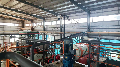
Desen Environmental's DSLX series modular system consists of seven independent yet fully integrated modules: a hopper-type feeding unit with variable frequency drive, a rotary drum scrubbing and screening module, an efficient soaking and classification unit, a deep cone thickener for slurry concentration, a plate-and-frame filter press for dewatering, a water treatment system with chemical dosing and lamella sedimentation, and a central DCS intelligent control module. The system achieves over 90% water recycling through its closed-loop design, and the entire plant can be installed on a standard concrete pad within 15 days — no deep foundations required.
Proven Performance: Real-World Case Studies
Desen's modular washing technology has been deployed at some of China's largest soil remediation projects. The Changsha Chromium Salt Plant project — one of the single largest contaminated site remediation efforts in the country — utilized Desen's leaching and classification modules to separate chromium-contaminated fine particles from clean coarse aggregates. The Hangzhou Steelworks site, now being transformed into a national industrial heritage park, employed a 30 t/h DSLX system to treat mixed heavy metal and PAH contamination across the 120-hectare former steel production zone. In each case, the modular approach allowed for phased deployment that matched project timelines and budgets.
Scalability and Economic Benefits
A key advantage of the modular design is its inherent scalability. A contractor can begin with a 15 t/h configuration for pilot testing, then add parallel modules to reach 50 or 100 t/h as the project moves into full-scale production. This staged approach minimizes upfront capital exposure while maintaining the ability to scale rapidly. Operating costs are further reduced by the system's energy-efficient design — a 30 t/h configuration draws approximately 260 kWh, translating to significantly lower per-ton treatment costs compared to thermal or chemical oxidation alternatives.
Smart Remediation with 5G IoT Integration
Every Desen modular system comes equipped with a 5G cloud-based IoT platform that provides real-time monitoring of key parameters: throughput rates, water quality metrics, energy consumption, and equipment health status. Project managers can access dashboards from any location, enabling data-driven decision making and proactive maintenance scheduling. For EPC contractors managing multiple concurrent sites, this centralized visibility is invaluable for resource allocation and compliance reporting.
Meeting Global Brownfield Redevelopment Demand
The global push for brownfield redevelopment — driven by urban land scarcity and stricter environmental regulations — is creating sustained demand for industrial site remediation. From China's retreat from secondary to tertiary policy that has relocated thousands of factories out of city centers, to the Middle East's growing focus on sustainable urban development, modular soil washing systems are positioned as the technology of choice for the next decade of industrial land restoration.