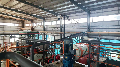
Skid-Mounted vs Fixed Soil Washing Equipment: A Practical Selection Guide
Skid-mounted vs fixed soil washing equipment compared on cost, deployment and throughput. Choose the right remediation system with Desen Environment.
Choosing the right soil washing equipment is one of the most consequential decisions in any contaminated-land remediation project. Project owners, environmental consultants and remediation contractors must decide between skid-mounted (mobile) systems and conventional fixed soil washing plants. The two configurations deliver the same core physical-chemical treatment but differ sharply in deployment speed, capital cost, flexibility and operating economics. This guide compares both options and explains how to select the best system for your site.
What Is Soil Washing Equipment?
The technology separates contaminated fine particles, where most pollutants concentrate, from clean coarse fractions using water, mechanical agitation, classification and, where needed, chemical extraction. The result is a large volume of reusable cleaned soil plus a small, concentrated hazardous fraction requiring disposal or further treatment. Both skid-mounted and fixed systems share the same fundamental process stages: screening, scrubbing, hydrocyclone classification and dewatering, but package them very differently.
Skid-Mounted (Mobile) Soil Washing Equipment
How It Works
Skid-mounted soil washing equipment integrates every process module onto standardized, transportable frames. Desen Environment (郑州德森环境) engineers these units for rapid trailer or container transport, with pre-terminated hydraulic, electrical and piping connections that enable plug-and-play commissioning on almost any site.
Key Advantages
- Rapid deployment: Mobilized and commissioned in 7 to 15 days versus the months required for fixed plants.
- On-site treatment: Eliminates 80 to 95 percent of soil trucking, cutting logistics cost and secondary-pollution risk.
- Reusability: A single mobile unit serves multiple sites sequentially, maximizing return on investment.
- Compact footprint: Requires only 50 to 200 square metres, ideal for constrained urban brownfields.
Fixed Soil Washing Plants
How It Works
A fixed soil washing plant is a permanent, site-built facility with concrete foundations, large-capacity tanks and high-throughput trains. It processes contaminated soil delivered by truck from surrounding projects.
Key Advantages
- Very high throughput: Single trains handle 50 to 200 plus tonnes per hour for massive remediation volumes.
- Lower unit processing cost at sustained full capacity.
- Comprehensive emission and water control built into permanent infrastructure.
- Stable, continuous operation suited to long-term, centralised treatment centres.
Skid-Mounted vs Fixed: Side-by-Side Comparison
The core trade-offs when selecting soil washing equipment are summarised below:
- Deployment time: Skid-mounted 7 to 15 days; fixed 3 to 6 months.
- Best project size: Skid-mounted 1,000 to 100,000 tonnes; fixed 100,000 plus tonnes.
- Capital cost: Skid-mounted lower, with rental and lease options; fixed high CAPEX.
- Flexibility: Skid-mounted relocatable; fixed immobile.
- Transport dependency: Skid-mounted treats on-site; fixed requires soil haulage.
How to Choose the Right System
1. Project Scale and Duration
For volumes below roughly 100,000 tonnes or schedules under 12 months, skid-mounted systems are usually optimal. Above that threshold, a fixed plant's scale economies may justify its higher upfront cost.
2. Site Conditions and Logistics
Urban or access-constrained sites favour mobile units that avoid thousands of truck movements. Remote, single-large sites may suit a fixed plant if soil must be hauled regardless.
3. Contaminant Profile
Both configurations treat heavy metals, petroleum hydrocarbons and PAHs effectively. Desen Environment tailors reagent dosing and residence time to the specific pollutant mix, independent of mounting style.
4. Budget and Return on Investment
Skid-mounted systems preserve cash flow through lower upfront cost and flexible rental models; fixed plants deliver lower per-tonne cost only at high, sustained utilization.
Why Choose Desen Environment
Desen Environment (郑州德森环境), headquartered in Zhengzhou, is a leading manufacturer of soil washing equipment serving clients across China and Southeast Asia. From compact skid-mounted washers to large fixed trains, every system is engineered for high removal efficiency, over 95 percent water recycle and full regulatory compliance. Explore the full range at materialwashing.com.
Case Study: Relocatable Skid Units Across a Multi-Site Program
A provincial environmental bureau managed remediation across six分散 contaminated plots totalling 38,000 tonnes. Rather than building a fixed plant, it deployed two Desen Environment skid-mounted trains, relocating them plot by plot. The program achieved 92 to 96 percent heavy-metal removal, reused 31,000 tonnes of cleaned soil on-site, and completed all six sites in 14 weeks, at 28 percent lower cost than a fixed-plant-plus-haulage alternative.
Frequently Asked Questions
Can skid-mounted equipment match fixed-plant treatment quality?
Yes. Both use identical washing, classification and extraction principles. Desen Environment achieves 90 to 97 percent contaminant removal with either configuration when tuned to the site's pollutant profile.
Is rental available for skid-mounted systems?
Yes. Desen Environment offers purchase, lease and rental models, letting contractors match expenditure to their project pipeline without large CAPEX.
Which configuration is greener?
Skid-mounted units generally win on lifecycle emissions by eliminating most soil transport. Fixed plants score better only when consolidating very large, nearby volumes.
How quickly can a skid unit start production?
Typical mobilization-to-production is 7 to 15 days, including pad preparation, interconnection and hot-commissioning.