Heavy Metal Soil Washing Case Study: E-Waste Dismantling Site Remediation
Detailed case study of heavy metal soil washing at an e-waste dismantling site. Desen Environment treated 68,000 m³ of Pb, Cd, Cu, Zn contaminated soil with >90% removal efficiency. Technical process, results, and best practices.
Electronic waste (e-waste) dismantling sites represent some of the most challenging heavy metal contaminated soil remediation projects globally. Informal e-waste recycling operations — prevalent in developing regions of Asia, Africa, and South America — have left a legacy of soils contaminated with lead (Pb), cadmium (Cd), copper (Cu), zinc (Zn), and other toxic heavy metals that pose serious risks to human health and ecosystems. A recent soil washing case study from a former e-waste processing zone in southern China demonstrates how integrated heavy metal soil washing technology can effectively remediate these complex contamination profiles while recovering valuable metals and producing reusable soil fractions.
Desen Environment (郑州德森环境) completed this landmark heavy metal contaminated site remediation project in 2024, treating 68,000 cubic meters of soil contaminated with multiple heavy metals at concentrations exceeding national standards by factors of 15-80x. The project showcases the effectiveness of soil washing equipment for heterogeneous heavy metal contamination and provides a replicable model for similar sites worldwide.
Project Background: E-Waste Site Contamination Profile
The 12-hectare former e-waste dismantling site had operated for approximately 18 years processing discarded computers, televisions, circuit boards, and electrical cables. Crude recycling methods — including open burning of wire insulation, acid leaching of circuit boards, and manual dismantling of CRT monitors — released heavy metals directly onto unprotected ground. Site investigations revealed the following contamination profile:
- Lead (Pb): 850-3,200 mg/kg (standard: ≤500 mg/kg) — from solder, CRT glass, batteries
- Cadmium (Cd): 45-180 mg/kg (standard: ≤20 mg/kg) — from Ni-Cd batteries, pigments, stabilizers
- Copper (Cu): 2,400-12,000 mg/kg (standard: ≤1,000 mg/kg) — from wiring, motors, circuit boards
- Zinc (Zn): 1,800-6,500 mg/kg (standard: ≤1,500 mg/kg) — from galvanized components, brass
- Antimony (Sb): 120-480 mg/kg (standard: ≤60 mg/kg) — from flame retardants, CRT glass
Contamination extended to depths of 1.5-3.0 meters in processing areas, with vertical migration along preferential flow paths. The site contained mixed soil types — silty clay loam in low-lying areas and sandy loam on elevated portions — requiring flexible treatment approaches. Groundwater showed elevated metal concentrations, emphasizing the urgency of source removal.
Technical Approach: Multi-Stage Heavy Metal Soil Washing
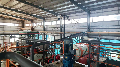
Desen Environment designed a modular soil washing plant with 80 cubic meters per hour throughput capacity, integrating physical separation, chemical extraction, and dewatering processes. The treatment train comprised the following stages:
1. Excavation and Feed Preparation
Contaminated soil was excavated in 500-800 m³ cells following a phased remediation plan. A primary vibrating screen (50 mm aperture) removed oversized debris, concrete rubble, and residual e-waste fragments. A secondary trommel screen (10 mm mesh) separated the coarse fraction (>10 mm) — primarily gravel and debris — from the fine fraction (<10 mm) carrying the majority of heavy metal contamination bound to silt and clay particles.
2. Attrition Scrubbing and Metal Liberation
The fine soil fraction entered twin attrition scrubbers where high-shear agitation (200-250 rpm rotor speed) combined with a chelating agent solution (EDTA at 0.05-0.15% concentration) to detach heavy metals from particle surfaces. The chelating agent formed soluble complexes with adsorbed metal ions, transferring them from the solid phase to the aqueous phase. Residence time in the scrubbers was optimized at 8-12 minutes based on bench-scale treatability tests.
3. Hydrocyclone Classification
The slurry from attrition scrubbing passed through a series of hydrocyclones (two-stage classification) separating clean sand fraction (coarse, >75 μm) from contaminated fine fraction (<75 μm). The overflow from the second hydrocyclone contained concentrated heavy metals in fine silt and clay particles, representing approximately 18-22% of the original soil volume but containing 78-85% of the total heavy metal mass.
4. Acid Leaching for Fine Fraction Treatment
The metal-concentrated fine fraction underwent acid leaching using dilute sulfuric acid (pH adjusted to 3.0-3.5) to extract remaining heavy metals. The leaching reactor operated at ambient temperature with continuous mixing for 2-4 hours residence time. Heavy metal extraction efficiencies achieved:
- Lead: 87-94% removal
- Cadmium: 91-96% removal
- Copper: 85-92% removal
- Zinc: 88-93% removal
5. Dewatering and Solid-Liquid Separation
Treated fine particles were dewatered using a high-pressure plate-and-frame filter press, producing filter cakes with 35-45% moisture content suitable for landfill disposal or further stabilization. The filtrate passed through a chemical precipitation system where pH adjustment and sulfide addition precipitated heavy metals as stable sulfide compounds. The metal sludge was collected for potential metal recovery, while treated water was recycled to the washing circuit at 92% recovery rate.
Project Results and Performance Metrics
The heavy metal soil washing project achieved the following outcomes over 11 months of operation:
| Parameter | Result |
|---|---|
| Total soil treated | 68,000 m³ |
| Clean sand recovered | 41,200 m³ (61%) |
| Fine fraction for disposal | 13,600 m³ (20%) |
| Debris and oversized | 13,200 m³ (19%) |
| Water recovery rate | 92% |
| Average throughput | 76 m³/hour |
| Equipment availability | 89% |
| Final Pb concentration | ≤320 mg/kg (94% removal) |
| Final Cd concentration | ≤12 mg/kg (91% removal) |
| Final Cu concentration | ≤580 mg/kg (95% removal) |
The recovered clean sand fraction met local soil environmental quality standards for unrestricted land use and was backfilled on-site, reducing the need for imported fill material. Volume reduction of 80% (compared to excavated volume) significantly reduced off-site disposal costs and transportation impacts.
Technical Advantages of Heavy Metal Soil Washing
This case study demonstrates several key advantages of soil washing for heavy metal remediation compared to alternative technologies:
Permanent Contaminant Removal
Unlike stabilization/solidification which immobilizes contaminants but leaves them in place, soil washing physically removes heavy metals from the site, providing a permanent solution that eliminates long-term liability and monitoring requirements.
Volume Reduction
By concentrating contaminants in a small fine fraction (typically 15-25% of original volume), soil washing dramatically reduces disposal volumes and costs. The case project achieved 80% volume reduction, saving an estimated ¥4.2 million in disposal and transportation fees compared to direct excavation and landfilling.
Soil Resource Recovery
Recovered clean soil fractions can be reused on-site or sold as construction material, supporting circular economy objectives. The 41,200 m³ of recovered sand in this project had an estimated market value of ¥1.2 million as construction aggregate.
Rapid Treatment Timeline
At 80 m³/hour throughput, the modular plant completed treatment in 11 months — significantly faster than bioremediation (2-5 years) or monitored natural attenuation approaches. This allowed site redevelopment to proceed on schedule.
Site-Specific Lessons and Best Practices
The project team identified several factors critical to successful heavy metal soil washing implementation:
- Bench-scale treatability testing is essential to optimize chelating agent selection, dosing rates, and residence times for site-specific soil and contaminant characteristics
- Particle size distribution analysis informs classification equipment selection and predicts fine fraction volume that will require disposal
- Chelating agent recovery through pH adjustment and precipitation can reduce chemical costs by 30-40% for large projects
- Weather protection for processing equipment is critical in high-rainfall regions to maintain throughput during wet seasons
- Real-time monitoring of wash water pH, turbidity, and conductivity enables rapid process adjustments and ensures consistent treatment quality
FAQ: Heavy Metal Soil Washing for E-Waste Sites
Q1: What heavy metal concentrations can soil washing effectively treat?
Soil washing is effective across a wide concentration range. This case project successfully treated lead up to 3,200 mg/kg, cadmium to 180 mg/kg, and copper to 12,000 mg/kg. Bench tests confirm treatability up to 10,000 mg/kg lead and 5,000 mg/kg cadmium with appropriate process modifications.
Q2: How does soil type affect heavy metal soil washing efficiency?
Coarse-grained soils (sand, gravel) achieve highest volume reduction because metals concentrate in fine fractions. Clay-rich soils require longer scrubbing residence times and produce larger fine fractions for disposal. This project's mixed soil types achieved 61% sand recovery.
Q3: What happens to the heavy metals removed from soil?
Heavy metals are concentrated in treatment sludge as sulfide precipitates. This sludge can be processed for metal recovery (particularly valuable for copper and zinc at e-waste sites) or stabilized and disposed in hazardous waste landfills.
Q4: Can soil washing meet stringent residential land use standards?
Yes. This project achieved final concentrations meeting Class A soil standards suitable for residential use. Multiple washing cycles or enhanced leaching can be applied for stricter standards if needed.
Q5: What is the typical cost range for heavy metal soil washing?
Costs vary with soil type, contaminant profile, and treatment volume. For projects >10,000 m³, unit costs typically range from ¥280-450 per cubic meter, competitive with alternatives while offering permanent removal and resource recovery benefits.
Conclusion
This heavy metal soil washing case study demonstrates that integrated physical-chemical treatment can effectively remediate complex multi-metal contamination from e-waste dismantling activities. The Desen Environment modular washing plant achieved >90% removal efficiencies for lead, cadmium, copper, and zinc while recovering 61% of excavated soil as clean fill material. The project provides a proven, scalable model for similar heavy metal contaminated site remediation projects worldwide, combining environmental protection with resource recovery and cost efficiency.
For more information on soil washing equipment and heavy metal remediation solutions, visit materialwashing.com or contact Desen Environment (郑州德森环境) for technical consultation and project design support.