Soil Washing Plant Throughput Bottleneck Diagnosis: Finding the Unit That Sets Your Rate
How to diagnose a soil washing plant throughput bottleneck: measuring mass and solids at each stage, locating the constraining unit and fixing it in cost order.
Soil Washing Plant Throughput Bottleneck Diagnosis: Finding the Unit That Sets Your Rate
Every soil washing plant has a rated throughput, and almost none of them runs at it. The gap is rarely a single broken component. It is a queue: material arrives at one unit faster than that unit can pass it, the surplus accumulates somewhere in the circuit, and the whole line settles at the rate of whichever stage fills first. Diagnosing that stage, rather than a symptom that only looks like one, is the difference between spending on the right upgrade and spending twice. This guide sets out a practical method for throughput bottleneck diagnosis on a modular or mobile washing line.
Why a Washing Line Settles at Its Slowest Stage
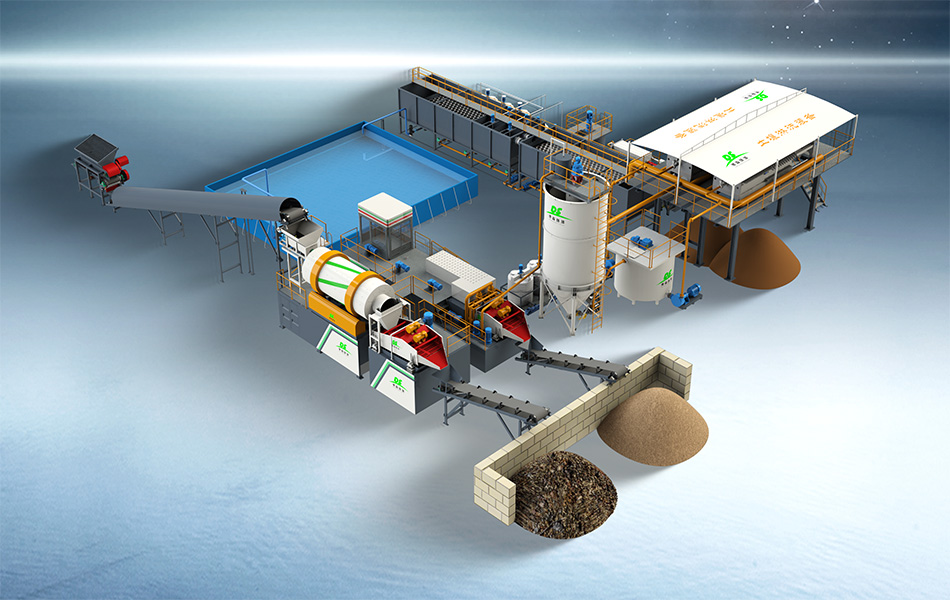
A soil washing plant is a chain of capacities: feed preparation, scrubbing, rinsing, fines recovery, water treatment and dewatering. Nameplate figures are quoted per unit, and buyers often add them up, but the units sit in series, so the achievable rate is set by the lowest one, adjusted for whatever buffer volume exists between stages. A line rated at 60 t/h whose dewatering stage handles only 45 t/h of fines will run at 45 t/h, quietly and without a single alarm.
The three places material actually queues
Surplus shows up in a limited number of physical locations: a pile in front of the scrubber feed, a rising level in a tank, or a return load circulating in the fines circuit. Each points to a different kind of constraint. A growing feed pile means upstream handling is fine and the washing stage is saturated. A rising thickener level means the water side cannot keep pace with the solids being sent to it. A circulating load in the cyclone circuit, where underflow is re-processed repeatedly, means the cut is too fine for the feed or the slurry too dilute to classify properly.
- Feed pile growth at the scrubber inlet: washing stage or feed rate control
- Rising level in thickener or recycle tank: water balance or flocculant dosing
- Cyclone underflow circulating: slurry density, cut point or screen aperture
- Filter press cycle stretching: fines load, cake thickness or feed solids
- Conveyor running full while the stockpile does not grow: moisture or measurement error
Running the Diagnosis on Site
Diagnosis is a measurement exercise before it is an engineering one. Two numbers per stage, mass rate and solids content, are enough to locate the constraint on most lines, provided both are taken over the same window.
Measure mass rate, not just belt speed
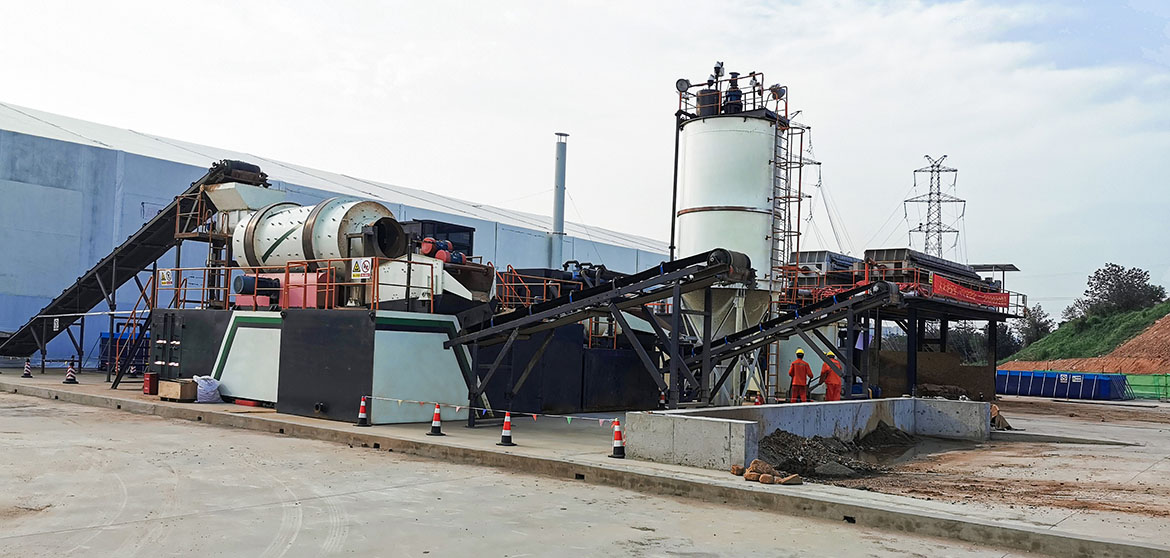
Belt speed plus a visual estimate of burden depth will not survive comparison between stages. A belt scale, a weighbridge on the outbound haul, or a timed bucket count against a known bucket volume all yield a mass figure that can be reconciled. The reconciliation is the point: if 50 tonnes enters the plant in a shift and 42 tonnes leaves as product, the missing 8 tonnes sits in a tank, in a pile, or in the filter cake. Tracking where it sits tells you which stage is holding it.
Take solids and moisture at every transfer point
Sampling slurry at scrubber discharge, screen undersump and press feed shows how solids are distributed. Plants regularly find the fines fraction larger than design assumed, 25 percent rather than 15, which overloads dewatering while the coarse side runs half empty. That is a feed characterisation problem, not a machine problem, and it changes the fix entirely.
The stages that constrain most often
In practice three areas account for most shortfalls. Dewatering comes first: press cycle time is fixed by cake thickness and pumping pressure, and a modest rise in fines pushes cycle time up faster than throughput rises. Water treatment is second, because thickener area and flocculant dose were sized for a solids load that moves with the feed. Fines recovery is third, where a cut point set for a cleaner feed recirculates material that should already have left the circuit.
Fixing the Constraint in the Right Order
Once the stage is identified, the lowest-cost intervention is usually a change in operation rather than a change in equipment.
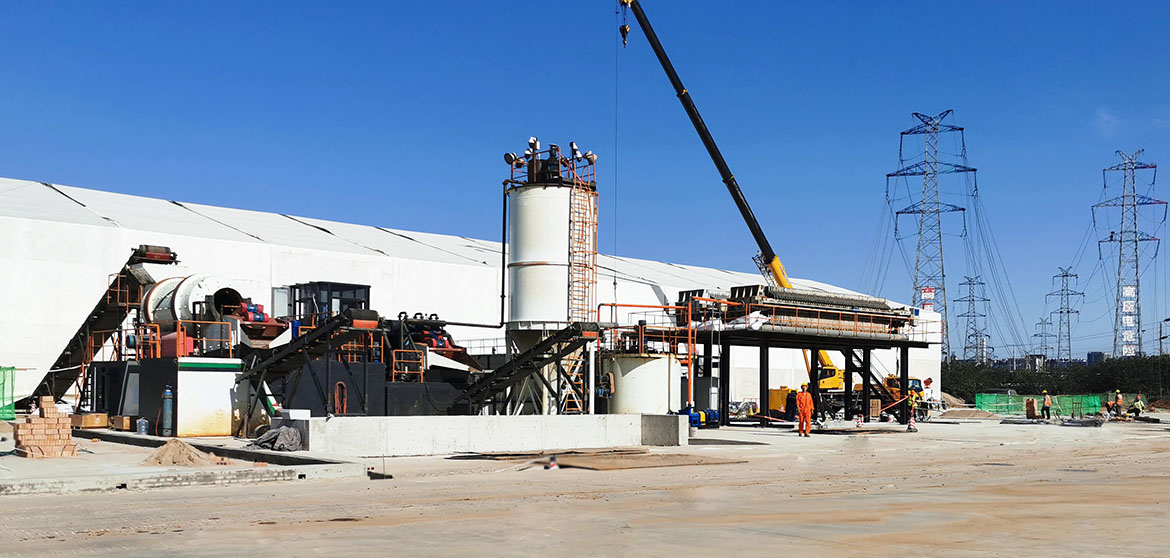
Operational fixes before capital fixes
Feed rate control is the most under-used tool on a washing line. Blending a wet, clay-rich batch with a drier, granular one flattens the peaks that overwhelm dewatering. A small increase in flocculant dose, plus a dilution point ahead of the thickener, can recover thickener capacity without new steel. Adjusting screen aperture or rinse spray water reduces the fines load sent forward. Each is reversible and can be trialled inside a shift.
When capital is the honest answer
If the constraint survives those adjustments, it is structural. A second filter press, additional thickener area, or a larger fines recovery unit are the usual answers, and they should be sequenced by cost per tonne of recovered capacity rather than by which unit is easiest to order. On a modular plant the advantage is that the upgrade can be a single added module instead of a rebuild of the line.
Throughput bottleneck diagnosis is not a one-off study: feed changes, season and product specification all move the constraint, so the measurement routine is worth keeping. Desen Environmental builds modular and mobile soil washing plant for contaminated soil, and supports project teams with line audits, capacity checks and staged upgrades.