Scale and Fouling Control in Washing Plant Water Circuits: Keeping the Recycle Loop Flowing
How to control scale and fouling in washing plant water circuits: salt accumulation, monitoring conductivity and hardness, bleed rates and cleaning routines.
Scale and Fouling Control in Washing Plant Water Circuits: Keeping the Recycle Loop Flowing
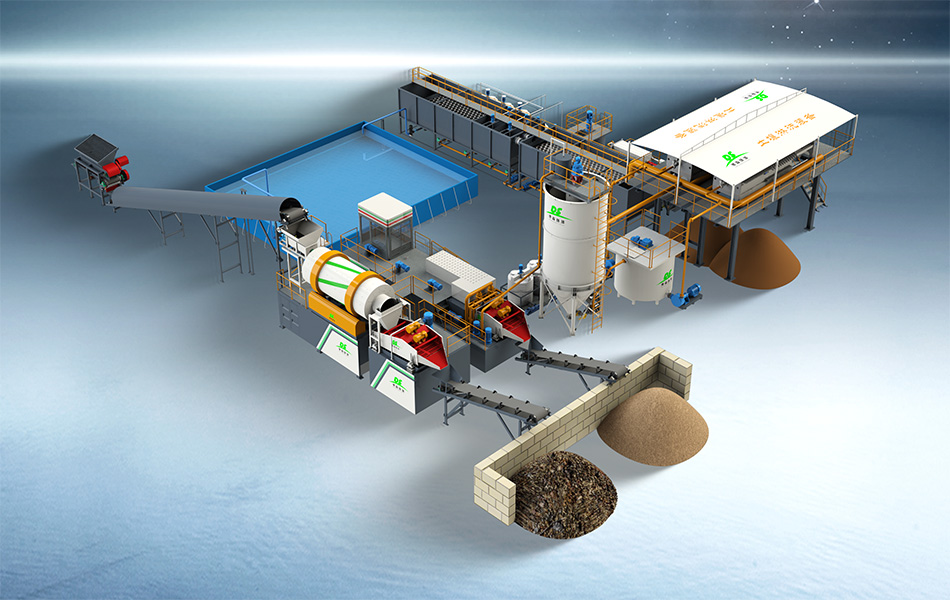
A soil washing plant recycles most of its process water, and every litre that recirculates carries a little of the site with it: dissolved salts, fine silt, polymer residue and hardness from the make-up supply. Left unmanaged, that load comes back out of solution as scale on pipes and nozzles, or settles as fouling in tanks and pumps. In hot, dry markets such as the Gulf, where evaporation concentrates the loop and make-up water is often hard, fouling is a common reason a washing line loses pressure and throughput within its first season. The controls below keep a closed water circuit flowing.

Why Scale Builds Up in a Closed Washing Water Circuit
Salt accumulation in the recycle loop
Closed loops behave like small evaporation ponds. Water leaves the circuit as vapour from sprays and open tanks and leaves with the dewatered cake, but the salts it carried stay behind, topped up daily by hard make-up water. Calcium and magnesium carbonates, sulphates and, on some sites, chlorides accumulate steadily. A loop that starts around 800 microsiemens per centimetre can pass 3,000 within weeks of continuous operation. Nothing breaks at first: pumps still turn and sprays still run. Then nozzles narrow, float switches stick, and the filter press takes longer to fill because the feed pump cannot hold pressure.
Where deposits form first
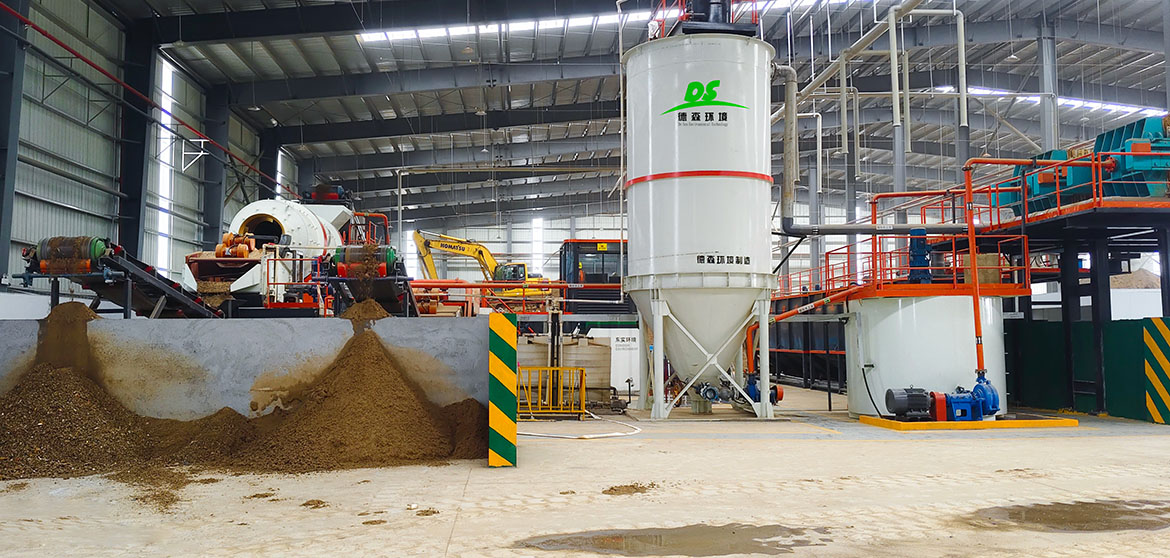
Deposits concentrate where velocity drops, where water flashes or warms, and where fine solids can settle. A weekly walk through the water side of the plant should include:
- spray bars and washing nozzles on the drum scrubber and rinsing screens
- cyclone feed pumps and their suction strainers, where fines and hardness combine
- pipe elbows and dead legs that stay full between shifts
- thickener and tank bottoms, where settled sludge hardens into a layer
- heated lines and coil surfaces in cold seasons, where warmth accelerates carbonate precipitation
- filter press feed ports and cloth surfaces
Control Measures That Keep the Loop Clean
Monitor the chemistry that drives scaling
Scaling risk is predictable from three routine measurements: pH, electrical conductivity and water hardness. The conductivity trend is the early warning signal, because a loop whose conductivity climbs faster than the bleed rate allows is concentrating salts. Hardness and alkalinity together indicate carbonate scaling potential, and a simple saturation check on a weekly sample is enough for most washing circuits. Sampling should happen at the same point and the same time each day, since values drift through the shift as wash water returns from the plant.
Bleed, dilute and treat
The first lever is a controlled bleed: a continuous purge of loop water to the effluent treatment stage, sized to hold conductivity below the level where the site's hardness starts precipitating. The second is make-up quality. Where possible, soften or filter the incoming water, or route rainwater and treated discharge back into the loop as dilution. Where hardness is unavoidable, a maintenance dose of antiscalant or a pH trim toward the neutral band slows carbonate growth without upsetting the washing chemistry upstream. Any change to reagent dosing upstream should trigger a recheck of loop chemistry, because flocculants and washing reagents all end up in the same water.
Mechanical cleaning and inspection intervals
Chemistry slows scale; it does not remove it. Schedule mechanical cleaning where deposits are known to form: nozzle soak-and-brush routines weekly during hard-water operation, strainer cleaning every shift, and tank bottom desludging aligned with planned stoppages. Keep spare spray nozzles and a spare set of press cloths on site, so a fouled component is swapped in minutes rather than cleaned in hours. Record each cleaning in the plant log together with the conductivity reading at the time. The correlation between the two tells you when the bleed rate is set wrong.
Making Fouling Control Part of Daily Operation
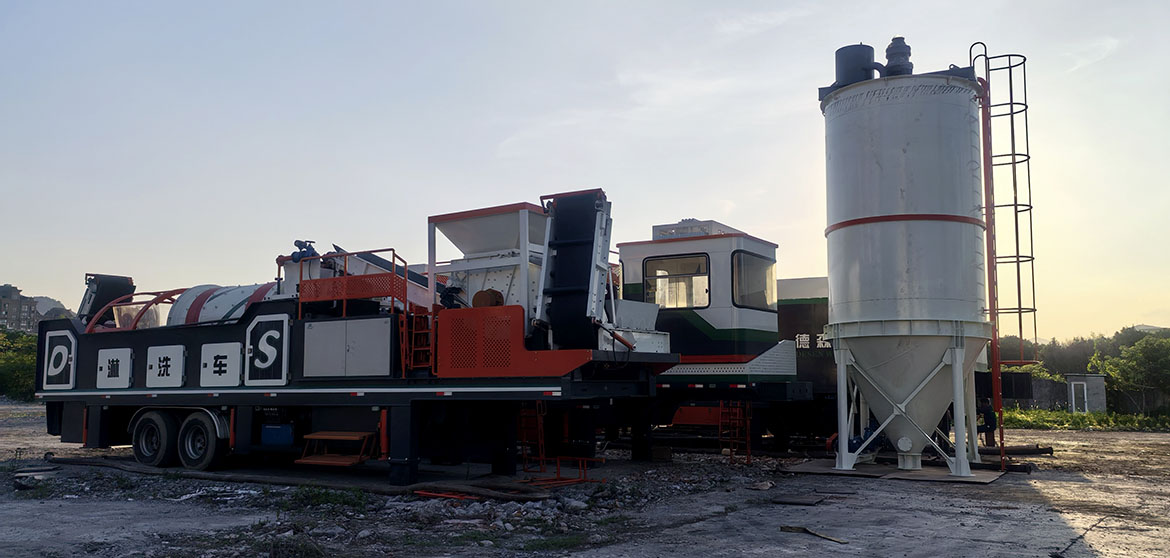
On a modular or mobile washing plant, fouling control is a shift routine, not a project. Assign the daily conductivity and hardness reading to the same operator role each shift, keep the bleed valve on the round of visual checks, and review the log weekly alongside the maintenance plan. Desen Environmental supplies modular soil washing and screening equipment with closed water circuits designed for straightforward bleed, sampling and tank access, and commissions operating crews on these routines before handover. A loop that is measured daily and purged on schedule keeps its pressure, its nozzles and its throughput through the whole washing campaign.