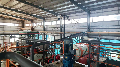
Modular Soil Washing Equipment: Enabling Rapid Contaminated Site Remediation
Modular soil washing equipment enables rapid contaminated site remediation. Learn about modular washing systems, key advantages, engineering case studies and equipment selection from Desen Environment (郑州德森环境) at materialwashing.com.
When environmental remediation projects face tight schedules and complex site constraints, modular soil washing equipment has emerged as the preferred solution for contractors and government agencies alike. Modular soil washing equipment combines factory-built precision with field-deployable flexibility, delivering full-scale contaminant removal while cutting project timelines by up to 70 percent compared with conventional permanent installations. Desen Environment (郑州德森环境) engineers and manufactures modular washing systems that serve projects ranging from small brownfield cleanups to large-scale national remediation programs across China.
What Is Modular Soil Washing Equipment?
Modular soil washing equipment refers to soil treatment systems built as self-contained, pre-engineered units in a manufacturing facility, then assembled on-site through bolted and plug-connected interfaces. Unlike fully fixed plants that require months of civil engineering, each modular unit arrives at the site pre-wired, pre-plumbed and hydrotested. The washing process follows the same proven physics as conventional soil washing: size classification separates coarse clean fractions from fine contaminated particles, attrition scrubbing liberates embedded pollutants, and chemical extraction targets dissolved heavy metals or hydrocarbon species. The modular approach simply changes the delivery model, not the underlying science.
Core Modules in a Modular Soil Washing System
1. Feed Preparation and Screening Module
Contaminated soil is fed through a robust trommel screen that removes oversize debris, rocks and foreign objects before the material enters the washing circuit. Desen Environment designs these screens with changeable aperture configurations so operators can adapt to varying feed gradations without redesigning the entire system.
2. Scrubbing and Contaminant Liberation Module
The AS-series attrition scrubber is the heart of any modular washing train. Rotating internal lifters agitate soil particles in a slurry environment, generating particle-on-particle and particle-on-wall collisions that detach heavy metals, petroleum films and other contaminants from mineral surfaces. Scrubber residence time and rotational speed are adjusted to match the target contaminant and soil matrix, ensuring maximum liberation without unnecessary fines generation.
3. Hydraulic Classification and Separation Module
Hydrocyclones separate washed soil into size-specific streams. Fine fractions carrying concentrated contaminants are diverted for further chemical treatment or disposal, while coarse clean fractions are dewatered and stockpiled for reuse. The modular design allows operators to add or remove hydrocyclone stages depending on project-specific contaminant profiles, providing a level of process flexibility unavailable from conventional fixed plants.
4. Water Management and Recycle Module
Modular systems incorporate an integrated water management circuit that captures slurry effluent, treats it through sedimentation and filtration, and returns over 90 percent of process water to the washing circuit. This closed-loop design minimizes freshwater consumption and eliminates the risk of secondary contamination from wastewater discharge.
Key Advantages of Modular Soil Washing Equipment
Rapid Deployment and Project Acceleration
The single greatest advantage of modular soil washing equipment is speed. From order confirmation to first-production on-site, Desen Environment's modular trains typically require 4 to 8 weeks for delivery and commissioning, compared with 4 to 8 months for a purpose-built fixed plant. This compressed timeline translates directly into earlier project completion, lower financing costs and faster regulatory clearance.
Scalable and Configurable for Any Project Size
Modular units can be operated individually for smaller sites or combined into multi-unit configurations for high-throughput remediation programs. Desen Environment offers four standard capacity tiers from 20 to 150 tonnes per hour per train, allowing precise matching of equipment to project volume without overbuilding and unnecessary capital expenditure.
Reduced Site Civil Works and Footprint
Because every module arrives with its own structural steel frame and leveling feet, site preparation requires only a compacted granular pad rather than poured concrete foundations. This reduces preparatory works cost by 40 to 60 percent and makes modular equipment viable on sites where conventional plant construction would be impractical due to ground conditions, planning restrictions or heritage constraints.
Multi-Site Reuse and Investment Efficiency
A single modular washing train can be redeployed across multiple contaminated sites over its operational lifetime. Remediators and environmental service companies thus amortise capital investment across many projects, achieving lower total cost of ownership than purpose-built fixed equipment. Desen Environment maintains a fleet of rental and lease units for clients who prefer operational expenditure models over upfront capital commitment.
Engineering Case Study: Petrochemical Brownfield in Jiangsu Province
A former petrochemical storage terminal in Jiangsu Province required remediation of 28,000 tonnes of soil contaminated with total petroleum hydrocarbons (TPH) at concentrations ranging from 3,200 to 18,500 mg/kg. The project had a strict six-month completion deadline imposed by a property transfer agreement, making a conventional fixed plant impossible. The remediation contractor deployed a Desen Environment modular washing train, completing feed preparation, scrubbing, classification and dewatering in a single integrated circuit. After washing with a surfactant-enhanced aqueous solution and hydrocyclone classification, 23,400 tonnes of soil met the GB 36600-2018 Tier 1 standard for industrial land use, representing an 83.5 percent TPH removal rate. The project was completed in 19 weeks, including mobilisation, commissioning and demobilisation, at a total cost 34 percent below that of an equivalent fixed-plant remediation approach.
Modular Equipment Selection Criteria
Contaminant Type and Concentration
Heavy metal contamination typically requires reagent-enhanced washing with acids, chelating agents or alkaline solutions. Petroleum hydrocarbon contamination responds well to surfactant or biosurfactant washing. The modular system can accommodate both reagent dosing circuits without structural redesign, but operators should confirm that the selected modular configuration includes the necessary reagent storage and injection modules before ordering.
Soil Texture and Particle Size Distribution
Sandy soils with low fines content wash efficiently with minimal attrition scrubbing. Clay-rich soils require more intensive scrubbing and may generate higher volumes of contaminated fine fractions. Desen Environment conducts a pre-project soil characterisation to size the attrition scrubber and hydrocyclone circuit appropriately for each specific site.
Available Site Area and Access
The minimum footprint for a single modular washing train with ancillary equipment is approximately 400 square metres. For projects with limited space, two-unit side-by-side configurations or elevated platform arrangements are available. Desen Environment provides detailed site layout drawings as part of its standard project engineering package.
Why Choose Desen Environment for Modular Soil Washing
Desen Environment (郑州德森环境科技有限公司), headquartered in Zhengzhou, China, has designed and delivered over 60 modular soil washing installations across Asia since 2012. The company's modular product line includes the DT-series (20-50 t/h), the DX-series (50-100 t/h) and the DY-series (100-150 t/h), each engineered for rapid mobilisation, ease of operation and high environmental performance. Every system is manufactured under ISO 9001 quality management and backed by Desen Environment's 24-month on-site warranty and operator training program. Contact the Desen Environment engineering team at materialwashing.com to discuss your contaminated site remediation requirements.
Frequently Asked Questions
How long does it take to set up modular soil washing equipment on-site?
From module arrival on-site to first production typically takes 10 to 21 days, depending on site preparation status and the complexity of interconnecting piping. Desen Environment provides a pre-commissioning checklist and on-site installation supervision to ensure smooth handover.
Can modular soil washing equipment treat both heavy metals and petroleum hydrocarbons?
Yes. Desen Environment's modular washing trains are designed for multi-contaminant applications. The attrition scrubber and reagent dosing system can be configured for simultaneous or sequential treatment of heavy metals, petroleum hydrocarbons, PAHs and other target compounds.
What is the typical removal efficiency for modular soil washing?
Modular washing systems achieve 85 to 97 percent contaminant removal efficiency depending on soil type, contaminant concentration and reagent programme. Desen Environment guarantees performance targets in the supply contract based on pre-project soil characterisation data.
Is the equipment road-transportable without special permits?
Standard modular units are designed to comply with standard road transport dimensions and weight limits for most provinces. For very large capacity units or jurisdictions with restricted axle loads, Desen Environment offers modular subdivision options that allow standard haulage without oversize permits.