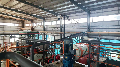
Material Washing and Classification Plant for Mining, Aggregate, and Bulk Solid Recovery
What Is a Material Washing and Classification Plant?
A material washing and classification plant combines attrition scrubbing, wet screening, hydrocyclone classification, and dewatering into an integrated processing line. It is used to upgrade ores and aggregates, remove clay and silt contamination, separate particle size fractions, and recover fine sand that would otherwise be lost in slurry. Desen Environmental offers both mobile and modular configurations, making the technology accessible for projects ranging from temporary crushing sites to permanent mineral processing facilities.
Process Stages
Scrubbing
High-intensity attrition scrubbers generate friction between particles, breaking down clay agglomerates and washing away surface coatings. This stage is critical for feeds with high clay content, where simple screening would leave lumps of cemented material inside the product. The scrubbing drum is lined with high-elasticity wear plates that increase the number of effective contact events while protecting the shell from abrasive wear.
Multistage Classification
The scrubbed slurry passes through multistage classifying equipment that separates solids by particle size and settling behavior. Hydrocyclones, spiral classifiers, and concentrating screens work together to split coarse sand, fine sand, and ultrafine slimes into distinct streams. A typical mobile multistage classifying plant is designed for slurry with a solids concentration up to 30 percent and a maximum particle size of 2 mm, minimizing the solid content entering subsequent dewatering and filter press stages. Precise classification also improves the efficiency of downstream chemical reactions when reagents are added to the slurry.
Screening and Dewatering
Final product grading is completed on high-frequency screens, while dewatering equipment removes free water from the recovered sand. The result is a stackable, transportable product ready for sale or reuse. Meanwhile, the clarified process water is recycled back to the washing circuit, keeping water consumption low and eliminating the need for large external settling ponds.
Feed Preparation and Water Balance
A well-designed plant starts with reliable feed control. A receiving hopper with a vibrating feeder delivers a consistent tonnage to the scrubber, while a pre-screen removes oversize rocks that could damage downstream equipment. On the water side, the plant balances make-up water, recycled process water, and the water entrained in filter cake and product. Thickeners and settling tanks clarify the fines stream, and surplus water can be reused for dust suppression around the site. This closed water balance is a major advantage in arid regions and on sites where discharge permits are difficult to obtain.
Applications: Mining, Aggregates, and Bulk Solids
- Mine tailings recovery: washing and classification recover clean sand fractions from tailings dams, enabling reuse in construction and reducing storage requirements.
- Aggregate and sand production: removal of clay and silt improves the quality of crushed rock and natural sand for concrete and mortar.
- Coal and coal gangue processing: wet washing upgrades coal quality and separates gangue for backfill or aggregate use.
- Landfill mining and screening: mobile screening plants process municipal solid waste and excavation spoil to recover soil-like material and recyclables.
- Fly ash treatment: multistage washing and classification support fly ash chelation, solidification, and multi-stage elution programs.
Field Case: Mine Tailings Washing Project
A mine tailings washing and classification project in Chengde, China, processes 30 t/h of tailings using a mobile screening and classification line. The plant separates fine sand from the tailings stream, produces a marketable sand product, and reduces the volume of material requiring permanent storage. The mobile configuration allowed the operator to move the plant between multiple waste piles within the same site, matching the equipment to the mining schedule.
In another example, a contaminated soil screening and pretreatment project in Ningxia uses a mobile screening unit at 30 t/h to prepare feed for a combined washing and bioremediation program, demonstrating how classification equipment integrates with larger remediation trains. At the high end of the range, a landfill screening project in Dongguan processes 200 t/h, showing that wet processing technology scales far beyond conventional soil remediation applications.
Mobile and Modular Advantages
Desen material washing plants are engineered for fast deployment and flexible operation:
- Rapid mobilization: mobile units are transported on trailers and can be operational within days, ideal for multi-point projects.
- Compact footprint: integrated design reduces site preparation and civil works.
- Low operating cost: optimized power consumption and closed-loop water systems lower unit processing costs.
- Smart control: DCS distributed control and 5G cloud connectivity give operators real-time visibility of every unit, while a hydraulic scissor-lift control cabin provides safe transport at low position and full-site monitoring when raised.
Conclusion
A material washing and classification plant turns mining waste, aggregates, and bulk solids into recoverable value. By combining attrition scrubbing, multistage classification, screening, and dewatering, operators can maximize sand recovery, reduce disposal volumes, and recycle process water. With proven projects across mine tailings, landfill mining, and aggregate processing, Desen Environmental supplies mobile and modular systems sized from 8 t/h to 200 t/h to fit project-specific requirements. Contact Desen to evaluate how washing and classification can improve the economics of your material stream.