Textile Dyeing Site Soil Washing Heavy Metals: Cleaning Up Former Dye House and Mill Land
How soil washing cleans heavy metals and dye residues at former textile dyeing sites: debris screening, attrition scrubbing, fines separation and compliant cake disposal.
Textile Dyeing Site Soil Washing Heavy Metals: Cleaning Up Former Dye House and Mill Land
Across Southeast Asia and Europe, former textile dyeing and finishing mills are among the most common industrial brownfields a city inherits. Dye houses, printing tables and finishing ranges were built on cheap land close to canals and rail lines, and decades of spilled liquors, lagoon sludge and yard filling left metals and dye residues in the ground. When those plots come up for redevelopment, textile dyeing site soil washing offers a route that recovers most of the soil instead of hauling every tonne to landfill. This guide explains how such a project is organised, from the first sampling round to the final stockpile of washed aggregate.
What the Ground at a Former Dye House Contains
Where the contamination came from
Textile dyeing introduced several inputs that end up in soil. Metal-complex dyes and mordants brought chromium, copper, tin, zinc and antimony into the process, and bath spills and tank cleaning moved them into the yard. Spent dye liquor was commonly discharged to lagoons, where suspended solids settled into strongly coloured sludge that was later dredged and graded across the site as fill. Fixing agents and finishing recipes added salt loads, and at older mills sulphur dyes and chlorinated carriers added their own residues. The result is a soil profile where contamination follows the water: strongest in lagoon footprints and drainage channels, weaker in the general yard fill.
Which metals dominate and where they sit
Copper is usually the signature contaminant, introduced by the phthalocyanine blues and greens that dominate modern dye recipes, alongside chromium from mordanting and metal-complex dyes. The key physical fact is that this load is not spread evenly through the ground. Metals and dye molecules attach to silt, clay and the organic matter that accumulated in lagoons, which is exactly the fraction washing equipment is built to separate. Coarse sand and gravel, exposed to decades of drainage and rain, are usually far cleaner. That particle-size split is what makes textile dyeing site soil washing worth testing before any excavation plan is written.
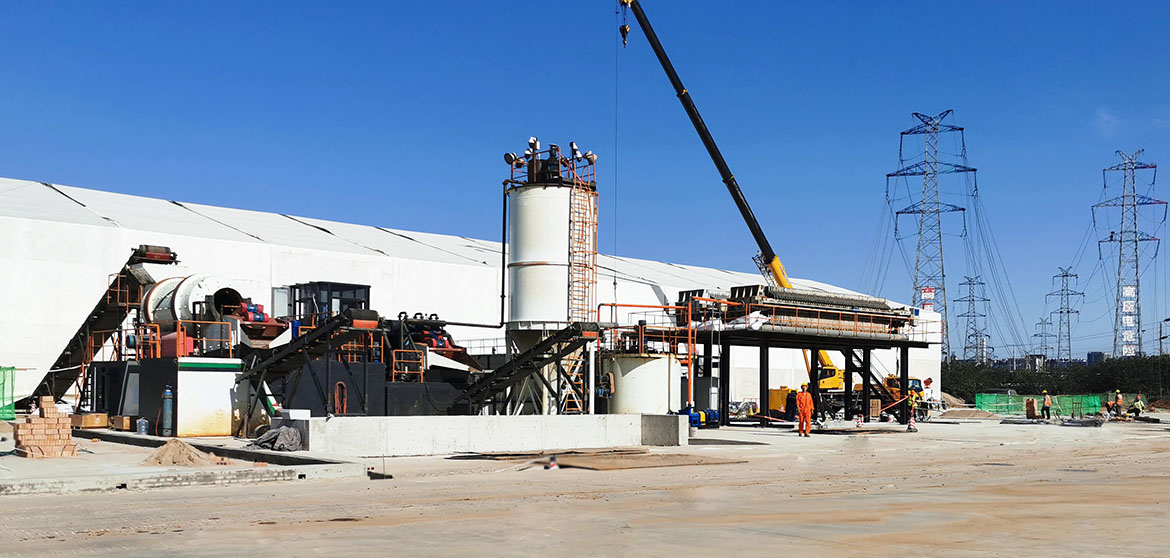
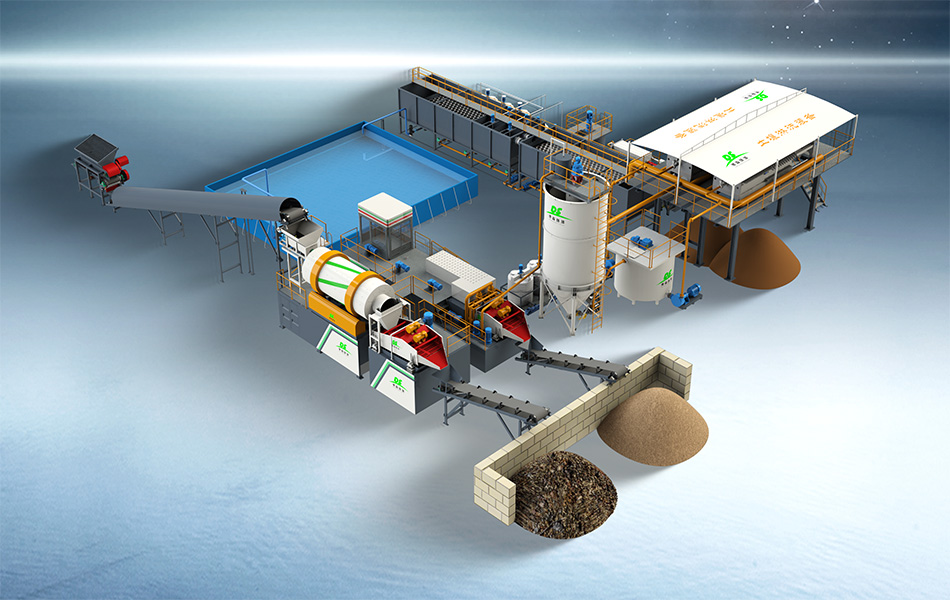
How a Washing Line Treats Dyeing Site Soil
Pre-screening out what washing cannot help
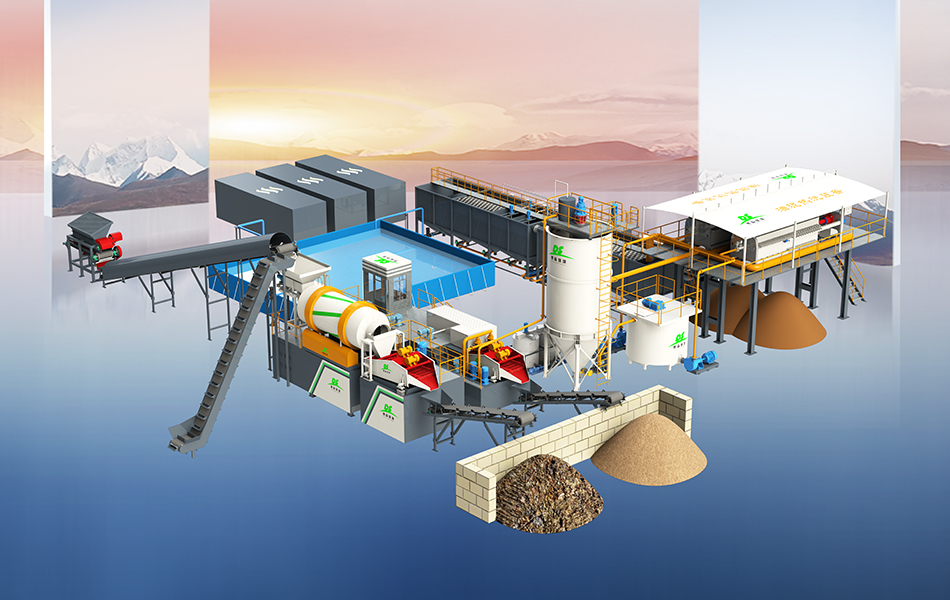
Dye yard soil carries debris that would blind screens, jam conveyors and overload the water circuit. A coarse screening pass ahead of the wash removes:
- fabric offcuts, yarn and lint buried in the yard fill
- plastic cones, bobbin shells and packaging waste
- brick, concrete and lagoon lining fragments
- set lumps of dried lagoon sludge, which are broken or routed to the fines stream
Attrition scrubbing and the reagent wash
Most of the metal and dye load sits as a thin coating on particle surfaces, so the workhorse is attrition scrubbing. A rotary drum scrubber and attrition cells shear the coatings off sand and gravel surfaces under high solids density. For dye residues, a mild alkaline wash with a surfactant lifts the colour out; where metals are fixed more strongly, a chelant stage or a controlled acid wash releases them before the chemistry is neutralised. The sequence and reagent doses are set by treatability results, not by template, because a copper-dominated site behaves differently from one where salt and colour are the main problems.
Classification, dewatering and the water circuit
After scrubbing, hydrocyclones split the slurry. Washed sand and gravel drain on dewatering screens and stockpile as reusable fill for the redevelopment. The metal- and dye-bearing fines report to a thickener and then a filter press, leaving a compact cake classified against local waste acceptance criteria for compliant disposal. Process water is recycled through a lined pond or clarifier, but dyeing site liquor carries high salt and colour loads, so the loop needs planned bleeding, fresh water make-up and a permitted discharge route for the bleed stream.
What to Confirm Before Committing to a Washing Route
Treatability testing sets the economics
A split-sample test on representative borings settles the question that decides everything: where the metals actually sit. Each size fraction is washed separately and analysed, and if the clean coarse fraction carries the bulk of the mass — commonly above seventy percent on dye site soils — the washing route pays for itself through avoided disposal. If the metals are dispersed evenly across all sizes, recovery is smaller and the project should weigh washing against excavation and off-site disposal with open eyes.
Sludge zones, salt and permits
Lagoon and channel footprints are mapped and handled as a separate stream from the yard fill, because their fines and organic content load the plant differently. On the compliance side, the filter cake needs a waste classification dossier, and the bleed water from the recycle loop needs a discharge permit before startup. Organising both early keeps the washing campaign from stalling after the equipment arrives.
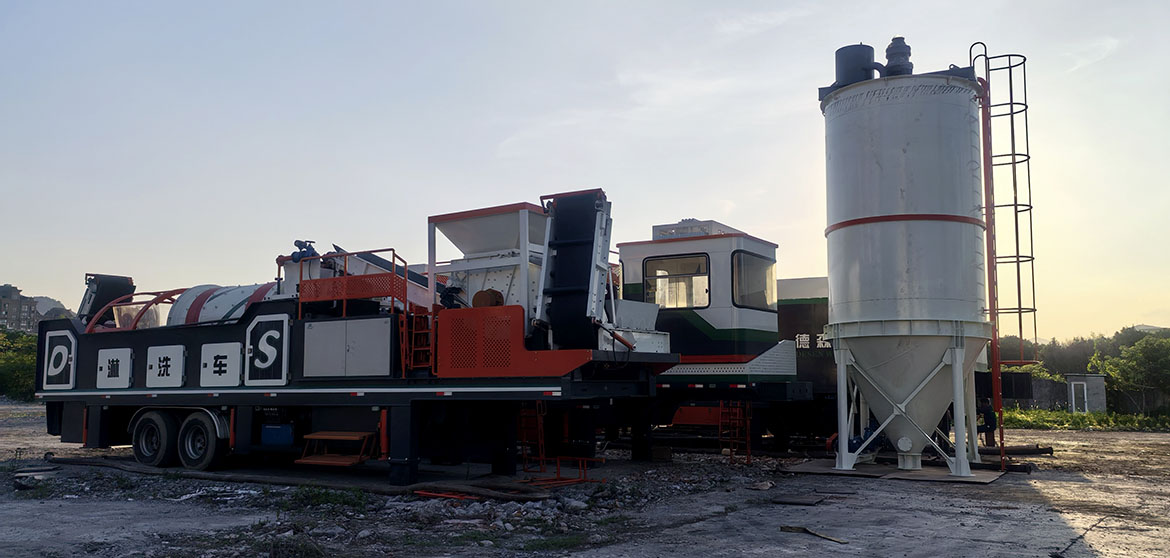
Desen Environmental builds modular and mobile soil washing equipment for heavy metal contaminated land, with references across Southeast Asia, Europe and the Middle East. Share your treatability data and site plan, and we will propose a flowsheet and plant configuration matched to your ground.