Steel Mill Site Soil Washing for Oil and Mill Scale: Recovering Land at Former Iron and Steel Works
How soil washing cleans oil and mill scale contamination at former steel works: debris screening, hot water scrubbing, scale recovery and dewatered fines disposal.
Steel Mill Site Soil Washing for Oil and Mill Scale: Recovering Land at Former Iron and Steel Works
Steel works leave behind some of the heaviest industrial land in any city. Rolling mills, casting bays, machine shops and stockyards sat on the same ground for decades, and the residue that defines these sites is unusual: mill scale, the flaky iron oxide that falls off every hot slab, mixed with oil and grease from hydraulic systems, rolling coolants and lubrication lines. Where scale stockpiles were raked out and spilled coolant was flushed into yard drains, the soil absorbed both. Steel mill site soil washing offers a route that separates the dense scale fraction from the finer soil and lifts the oil load out of the fines, so most of the excavated volume can stay in use instead of going to landfill.
What Oil and Scale Contamination Looks Like at a Steel Works
Where scale and oil settle in the ground
Mill scale is dense, granular and almost metallic, and in soil it behaves like a heavy mineral fraction rather than a dissolved chemical. It accumulates where hot product was handled: under roller tables, beside reheating furnaces, and in the scale pits that collected sludge from the mill water systems. Oil follows a different map. Rolling coolants and hydraulic oil reached the ground through leaks, spills at oil cellars, and the yard drains that carried emulsified coolant out to settling lagoons. The two contamination streams therefore overlap in specific zones — scale pits, oil cellars, lagoon footprints and the drainage runs between them — while the general yard fill is usually less loaded. Mapping those zones before excavation is what keeps the project volume realistic.
Why the contamination profile suits washing
The combination is, in fact, favourable for soil washing. Scale is a coarse, free-draining material that screening can capture almost intact, and once it is separated a large share of the site mass is immediately out of the contaminated stream. Oil binds preferentially to fine particles and organic matter, which means attrition scrubbing and size separation can move the oil load into a small volume of fines for treatment or disposal. Neither contaminant is locked into sand and gravel the way some metals are locked into clay coatings, so the washable fraction recovers well.
How a Washing Line Handles Steel Mill Soil
Pre-screening and debris removal
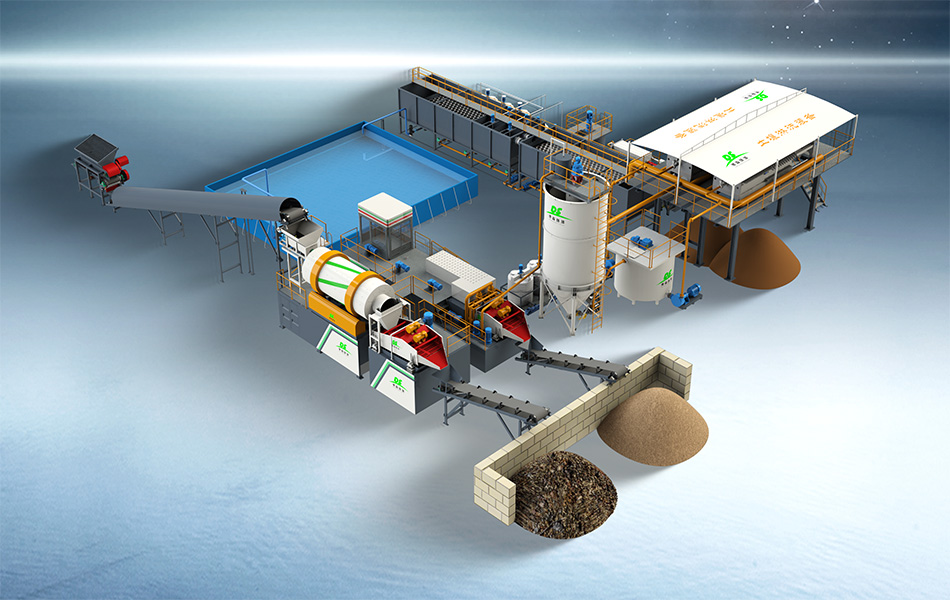
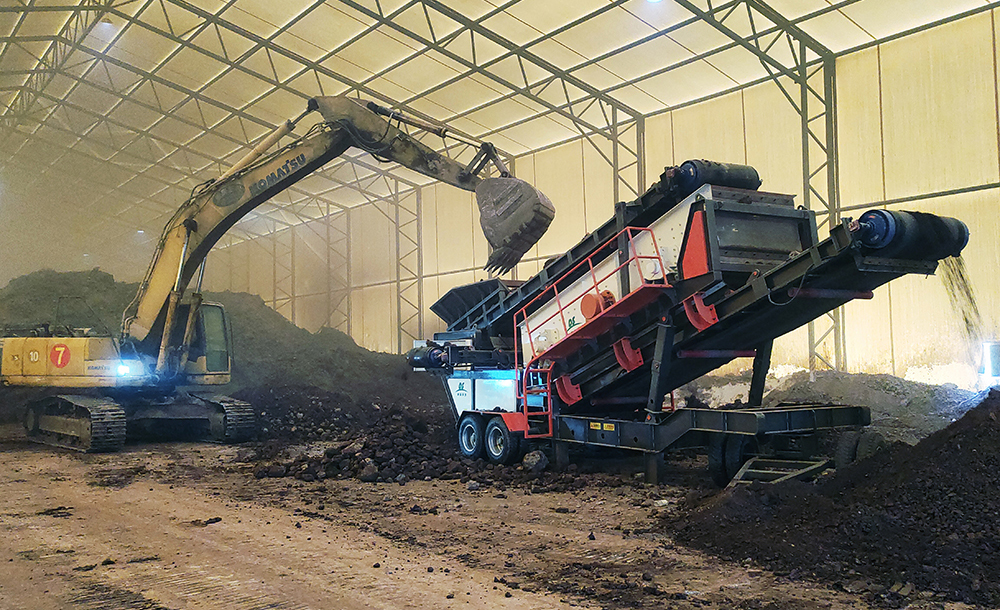
Steel mill ground carries junk that must come out before any washer sees it: rebar stubs, cable, brick rubble, chunks of skull and tramp metal. A scalping screen ahead of the plant protects the pumps and the drum, and a magnetic separator on the oversize stream pulls out loose ferrous scrap that still has scrap value. What survives this stage is soil mixed with scale, and it is this stream the plant is sized for.
Scrubbing and the size cut
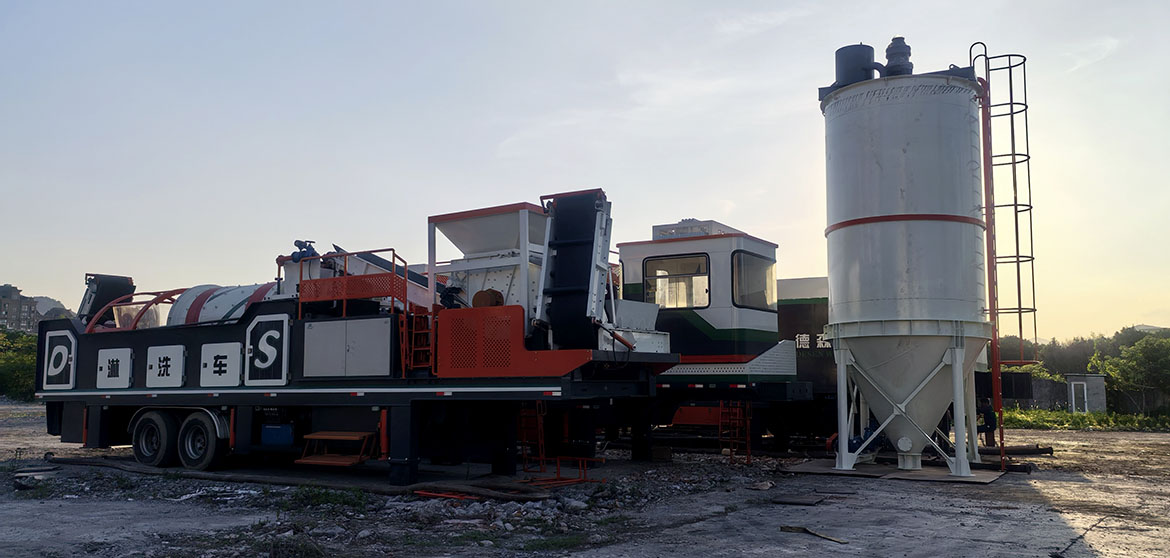
Inside the plant the material is wet-fed into a rotary drum scrubber, where abrasive action detaches oil-coated fines from the coarse grains. Hot water matters here: rolling oil emulsions break down faster above 40 degrees Celsius, which is why modular hot washing systems are specified for steel yard projects. After scrubbing, the size cut does the main work. Coarse sand and gravel are rinsed clean on vibrating screens, and the scale-rich coarse fraction comes out as a dense, identifiable product that can often be recycled as scrap substitute or construction fill after a simple verification test.
Fines, dewatering and what leaves site
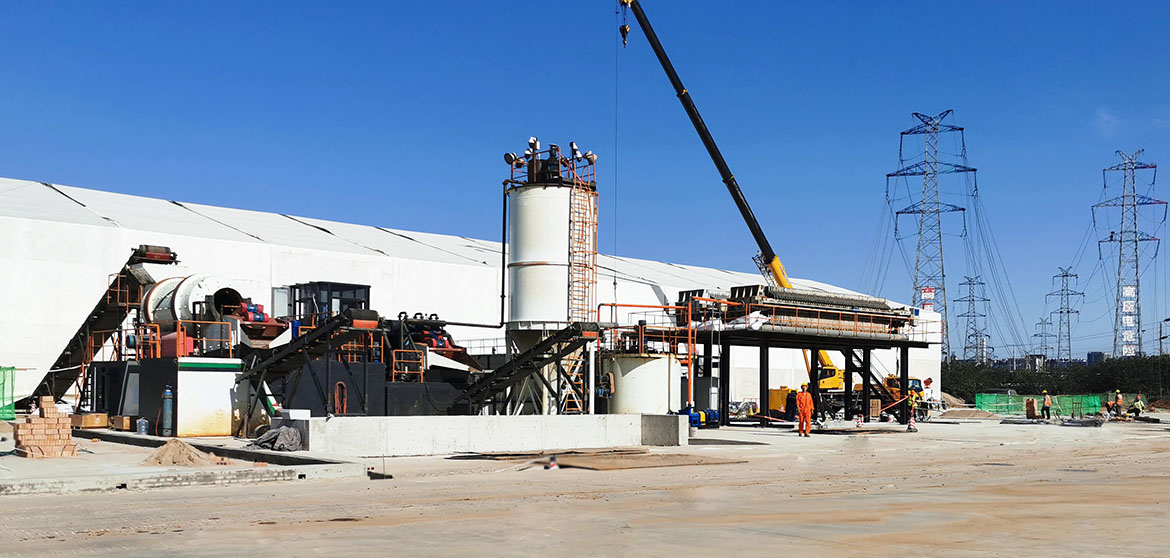
The wash water carries the oil load and the finest particles to the classification and thickening stage. Cyclones and thickeners split the slurry, and the fine fraction — where most of the oil concentration ends up — is dewatered on a filter press into a manageable cake. That cake is the disposal decision of the project: a small, defined volume that can be characterised, manifested and sent to a licensed facility, while the treated wash water is recycled back to the line.
Planning a Steel Mill Washing Project
Before quoting or mobilising, the project team works through a short list of facts that set the flowsheet:
- Volume and depth of scale-rich and oil-loaded soil, mapped from the pit, cellar and lagoon footprints rather than averaged across the whole site
- Laboratory data on total petroleum hydrocarbons and mineralogy, so the hot wash temperature and reagent dosing can be set before commissioning
- Water supply and effluent route: steel sites usually have industrial water connections, but discharge consent for treated process water still has to be confirmed
- A destination for the separated scale and the dewatered fines cake, agreed with the local waste regulator before the first tonne is dug
- Access for modular equipment, since former works yards are usually hard-standing and suit a modular washing line well
On a typical former works, the washable fraction — sand, gravel and separated scale — amounts to the large majority of the excavated volume, and it is this arithmetic that makes steel mill site soil washing worth serious consideration. Desen Environmental supplies modular and mobile soil washing plants configured for oil and scale projects, and supports overseas clients from laboratory testing through to commissioning. Project enquiries are welcome through materialwashing.com.