Tannery Site Soil Washing for Chromium Contamination: Recovering Land at Former Leather Plants
How tannery site soil washing treats chromium contamination: pre-sorting leather waste, scrubbing chromium from fines, and dewatering sludge for compliant disposal.
Tannery Site Soil Washing for Chromium Contamination: Recovering Land at Former Leather Plants
Former tannery and leather processing sites carry one of the most distinctive contamination profiles in the brownfield inventory. Chromium salts drove chrome tanning for over a century, and where hides were soaked, limed, pickled and tanned in pits and drums, the ground beneath absorbed process liquors, trimming waste and lagoon sludge. Across Europe, South and Southeast Asia and South Africa, these plots sit close to town centres, on land that cities now want back for housing and commerce. Tannery site soil washing is one of the few remediation routes that can recover that land without exporting every tonne of soil to landfill, and this guide sets out how the project is organised.

Why Chromium at Tanneries Behaves Differently
The chromium found at leather plants is overwhelmingly trivalent, the form used as basic chromium sulphate in the tanning drum. Trivalent chromium is far less mobile and less toxic than the hexavalent form found at plating works and chromate plants. But tannery soil brings complications of its own: the chromium is bound into a matrix that is rich in hide protein, fat, lime and chlorides from the pickling stage, often mixed with buried leather trimmings that have slowly composted into the fill.
Where the chromium actually sits
Contamination concentrates in three places. The pit and drum fields themselves, where liquors were spilled and pits leaked for decades. The lagoon and sludge areas, where tanning waste was settled out and left in place. And the general yard fill, where trimmings, shavings and spent bark were graded into the ground as hard-standing. A sampling grid drawn before any treatment decision should separate these zones, which differ sharply in concentration, organic content and volume.
What the lab work must settle first
Before a washing flowsheet is fixed, three questions need answers from the site data: the split between trivalent and hexavalent chromium, the share of fines under 63 microns, since chromium rides disproportionately on fine particles, and the organic and fat content that will dictate whether attrition alone can release the metal. Where hexavalent chromium is present above trace levels, a reduction stage has to be added to the flowsheet before anything else is decided.
Organising the Washing Line on Site
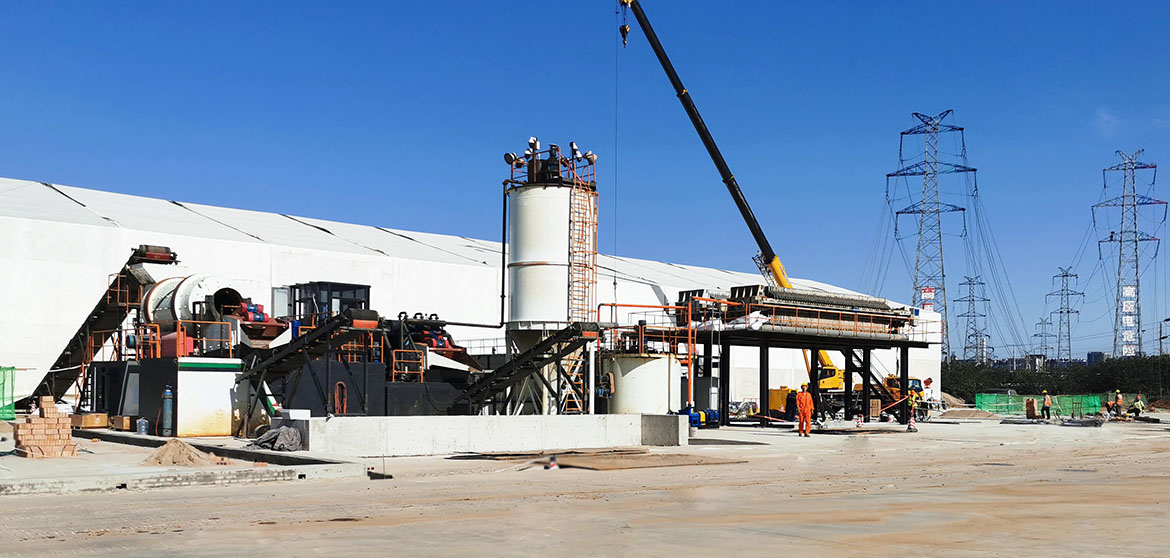
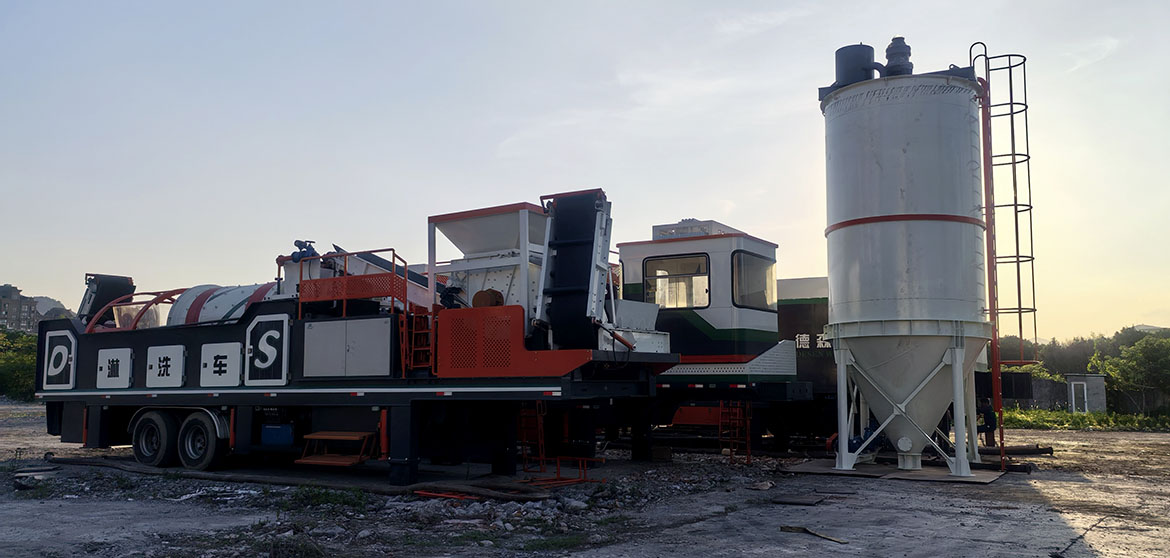
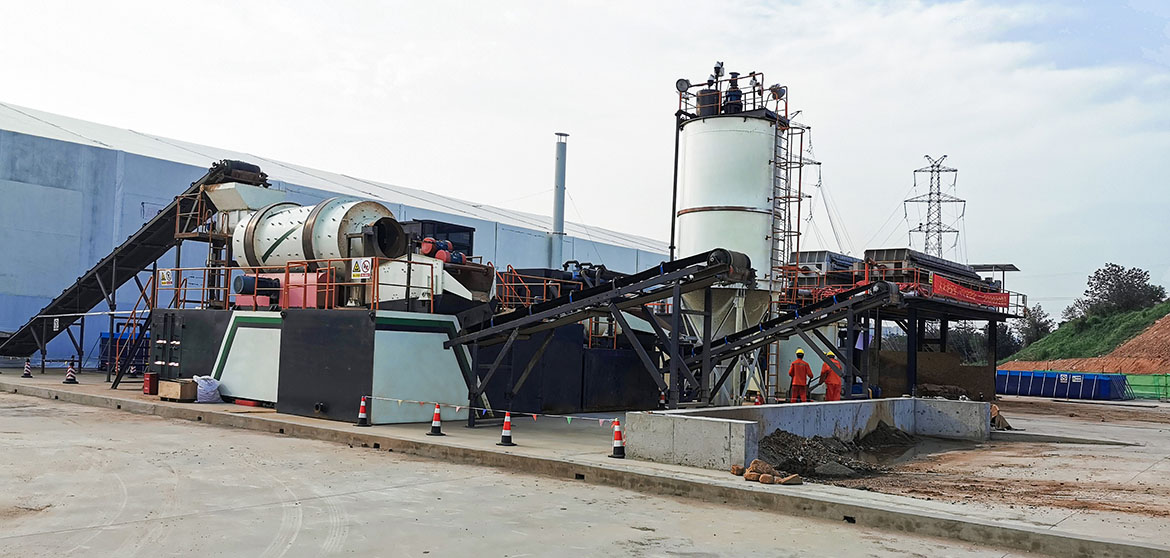
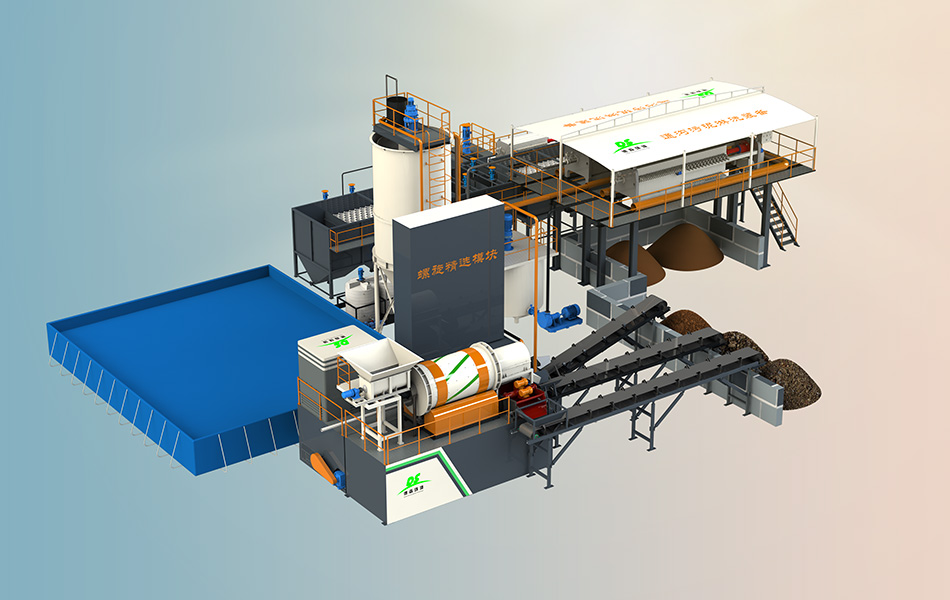
A modular washing plant handles tannery soil well because the process stages cleanly: coarse debris out first, chromium released by scrubbing second, fine sludge captured third. A typical line runs as follows.
Pre-sorting the leather and hide fragments
Trommel or star screening ahead of the washer removes the fraction that washing cannot help: whole hide pieces, shoe soles, stitching waste and construction debris from the old works. This step matters more at tanneries than at most industrial sites, because organic fragments left in the washer consume wash water, blind screens and raise the organic load sent to the water circuit. The screened residue is characterised separately for disposal.
Scrubbing and releasing chromium from the fines
The washed fraction passes through a rotary drum scrubber and attrition cells where mechanical energy strips chromium-loaded coatings off sand and gravel grains. On soils with a heavy fat and protein content, a warm wash or a small surfactant dose improves release. After scrubbing, the coarse fraction rinses clean and leaves the line as reusable aggregate, while the fines carry the contamination forward.
- Feed preparation and screening: hide fragments, debris and oversize removed
- Drum scrubbing: chromium-bearing coatings stripped from sand and gravel
- Attrition and rinsing: residual metal released from grain surfaces
- Cyclone classification: clean coarse product separated from contaminated fines
- Thickening and filter pressing: fine sludge dewatered to a stable cake
- Water treatment and recycle: process water clarified and returned to the line
Handling the Waste Streams and Closing the Loop
The commercial case for washing a tannery site rests on the split between what can be reused and what must leave the site. Sand and gravel typically make up most of the excavated volume, and once cleaned they can be reused as engineering fill on the redevelopment, subject to local waste-end criteria. The contaminated fines are another matter, and they should be planned for honestly.
Filter cake and residue disposal
Dewatered chrome-bearing fines leave the plant as a stable filter cake, typically a fraction of the original excavated tonnage. The cake is classified against local acceptance criteria, and where the chromium concentration warrants it, disposed of at a permitted facility. Because trivalent chromium is stable, many regulators accept a simpler dossier than for a hexavalent site, but acceptance testing still has to be scoped and budgeted before mobilisation.
Keeping the water circuit closed
Tannery wash water carries chlorides, fat and dissolved organics, so the water circuit needs monitoring from day one. A closed loop with a clarifier and regular bleed, topped up with fresh make-up water, keeps consumption down and shrinks the discharge question. On sites where municipal discharge consent is hard to obtain, closing the loop is usually the deciding design choice.
Tannery land is often well located and undervalued precisely because the contamination looks intimidating. With a modular washing plant, the chromium problem reduces to a managed sludge stream and a set of test reports. Desen Environmental supplies modular and mobile soil washing plant for chromium contaminated sites across Europe, the Middle East, Southeast Asia and South Africa, and supports remediation contractors with flowsheet design, pilot testing and on-site commissioning.