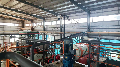
Learn about the complete soil washing process flow and technical advantages. Desen Environment offers mobile soil washing equipment for contaminated site remediation. Visit materialwashing.com for solutions.
# Soil Washing Process Flow and Technical Advantages Analysis
Soil washing equipment from **Desen Environment** (郑州德森环境) represents a breakthrough technology in environmental protection, particularly for heavy metal-contaminated sites and petroleum hydrocarbon polluted areas. This comprehensive guide explores the process flow, technical advantages, and practical applications of our mobile soil washing solutions.
## Understanding the Soil Washing Process Flow
The complete material washing process involves several critical stages that ensure efficient pollutant removal while maintaining environmental safety standards:
### Stage 1: Initial Screening and Classification
Contaminated soil first passes through an automatic vibrating screen system that separates oversized debris, stones, and rocks from the soil matrix. This preliminary step protects downstream equipment and optimizes processing efficiency. The mobile screening unit integrates advanced sensors to detect metal concentrations in real-time.
### Stage 2: Thermal Pre-treatment (Optional)
For oil-contaminated soils requiring thermal washing technology, our equipment employs hot water extraction at temperatures between 80-100°C. This pre-treatment step loosens hydrocarbon bonds with soil particles, making subsequent pollutant removal more effective. The thermal system integrates heat recovery units for energy efficiency and environmental compliance.
### Stage 3: Chemical Washing Process
The core washing stage utilizes specially formulated cleaning agents that break down heavy metal compounds and organic pollutants without generating toxic byproducts. The circulation water system maintains pH balance and removes suspended solids continuously. Our advanced water recycling technology achieves a recovery rate exceeding 95%.
### Stage 4: Separation and Concentration
After the main washing process, contaminated slurry enters the sedimentation tank where solid-liquid separation occurs naturally through gravitational settling. The clarified water recirculates for additional washing cycles, while concentrated pollutants are directed to designated treatment facilities. This closed-loop design minimizes wastewater discharge and operational costs.
### Stage 5: Final Dewatering and Quality Control
The washed soil undergoes centrifugal dewatering or filter press processing to achieve optimal moisture content (typically below 30%). Our quality control system monitors residual pollutant concentrations against regulatory standards, ensuring compliance with national environmental protection requirements for site reclamation.
## Technical Advantages of Desen's Mobile Equipment
Our **mobile soil washing plant** from materialwashing.com offers distinct advantages over traditional stationary treatment facilities:
### Rapid Deployment and Flexibility
The skid-mounted design allows transportation between contaminated sites within 24-48 hours. This modularity enables companies to address multiple projects sequentially without requiring permanent infrastructure investment. The equipment fits through standard roadways and can be positioned on compact sites with limited space constraints.
### Superior Energy Efficiency
Our energy recovery system captures waste heat from the washing process, reducing overall operational costs by up to 40%. The intelligent control system optimizes power consumption based on soil contamination levels and processing requirements. This sustainability focus aligns with global environmental regulations and corporate responsibility goals.
### Advanced Monitoring Systems
Real-time sensors track pollutant concentrations, water quality parameters, and equipment performance indicators throughout operation. The data logging system generates automated compliance reports for regulatory submissions. Remote monitoring capabilities allow operators to oversee multiple units simultaneously from centralized control rooms.
### Comprehensive Treatment Capabilities
The integrated equipment handles diverse contamination types including heavy metals (lead, cadmium, mercury), petroleum hydrocarbons, and industrial organic pollutants. Adjustable washing parameters accommodate varying soil types from clay-heavy formations to sandy substrates with high permeability characteristics.
### Environmental Compliance Features
Our systems incorporate advanced water recycling, air filtration, and noise reduction technologies. The sealed processing chamber minimizes dust emissions while the wastewater treatment subsystem ensures discharge meets or exceeds environmental protection standards. This comprehensive environmental protection approach protects workers, nearby communities, and local ecosystems.
## Practical Engineering Applications
Case studies from our remediation projects demonstrate real-world effectiveness. In a recent industrial site cleanup, **Desen Environment** reduced total petroleum hydrocarbon content from 8,000 mg/kg to below regulatory limits of 100 mg/kg within 45 days. The mobile washing equipment processed over 15,000 cubic meters of contaminated soil while achieving 92% water recycling rates.
Another project involved heavy metal-contaminated agricultural land where we applied selective chelation followed by washing extraction. Heavy metal concentrations decreased from 3,500 ppm lead to 80 ppm while maintaining soil fertility for future cultivation. The modular approach allowed parallel treatment of multiple contamination hotspots efficiently.
## Selection Considerations for Your Project
When choosing between skid-mounted mobile units and fixed installations, consider your specific requirements. Mobile equipment suits temporary or multi-site projects requiring rapid response times and minimal capital investment. For continuous operations at permanent contaminated locations, hybrid systems combining mobile flexibility with stationary capacity offer cost-effective solutions.
Contact our team at materialwashing.com for customized consultation on your remediation needs. Our engineers provide technical support for equipment selection, process optimization, and ongoing operational guidance.
---
**About Desen Environment (郑州德森环境)**
As a leading environmental protection equipment manufacturer in China, Desen specializes in mobile soil washing technology for contaminated site remediation. With over 15 years of industry experience, our solutions have been deployed across thousands of projects nationwide and internationally. Visit materialwashing.com to explore our comprehensive range of material washing equipment for environmental applications.
## FAQ Section
**Q: How long does it take to deploy mobile soil washing equipment?**
A: Our skid-mounted units can be delivered and operational within 5-7 days after order confirmation, including transportation and on-site installation.
**Q: What contamination levels can your equipment handle?**
A: The system effectively treats soils with petroleum hydrocarbon concentrations up to 10,000 mg/kg and heavy metal concentrations exceeding regulatory limits. Specific treatment capacity depends on soil type and contamination characteristics.
**Q: Can the equipment work in remote locations without permanent utilities?**
A: Yes, our mobile units are designed for field operations with self-contained power generation options, water recycling systems, and portable treatment facilities suitable for remote or constrained sites.
**Q: What is the typical operating cost per cubic meter of soil treated?**
A: Operating costs range from 15-35 RMB per m³ depending on contamination level, distance from water sources, and whether you utilize our recycling water system or supplement with fresh water intake.