Skid-Mounted Washing Plant: A Compact Soil Remediation Solution for On-Site Projects
Introduction
Contaminated soil remediation often has to happen on brownfield sites where space is limited and schedules are tight. A skid-mounted washing plant offers a practical alternati
Introduction
Contaminated soil remediation often has to happen on brownfield sites where space is limited and schedules are tight. A skid-mounted washing plant offers a practical alternative to large permanent facilities: the complete line is pre-assembled on steel skids, transported to site in standard truckloads, and connected in days instead of months. This article explains how skid-mounted washing technology works, where it fits in a remediation strategy, and what to look for when selecting a mobile soil remediation system for sale.
What Is a Skid-Mounted Washing Plant?
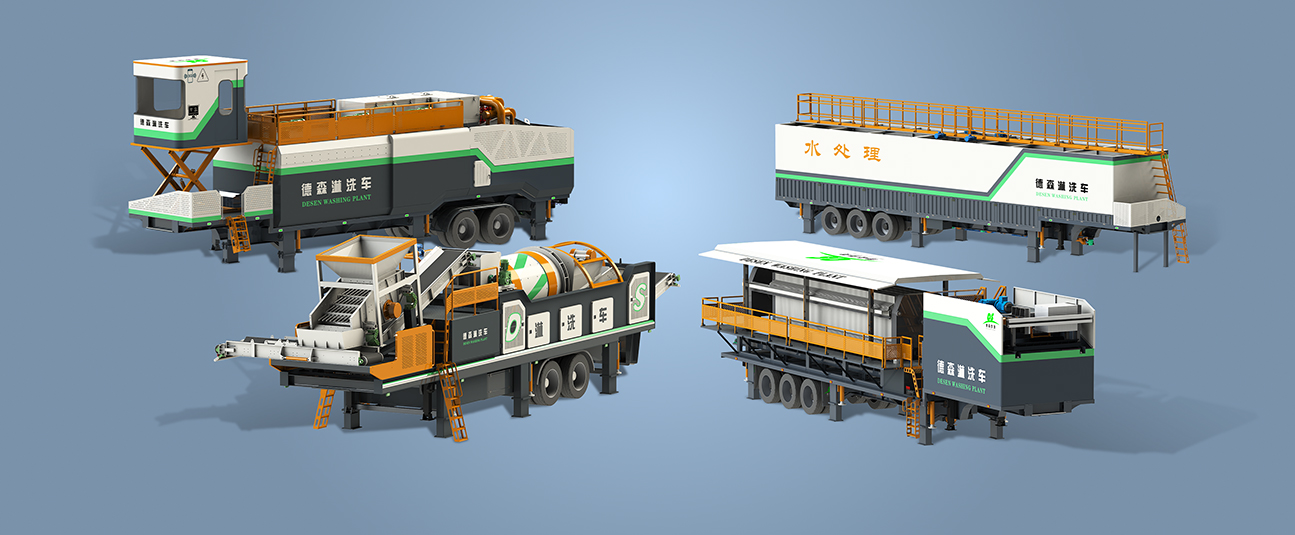
A skid-mounted washing plant integrates material feeding, scrubbing, classification, dewatering and water treatment modules on a shared steel frame. Unlike conventional fixed plants built in concrete on site, each skid is a self-contained process unit that can be loaded, transported and relocated with a crane and a flatbed. The approach is widely used for contaminated soil treatment, mineral sand washing and sludge reduction.
Key Characteristics
- Pre-wired and pre-piped modules reduce installation time to days.
- Small footprint keeps site preparation and civil works to a minimum.
- Relocatable design allows the same system to serve multiple project phases.
- Standard truck transport enables rapid deployment across long distances.
How Skid-Mounted Soil Washing Works
The process follows the classic soil washing sequence, scaled for mobility:
- Pre-screening: oversized fractions are removed to protect downstream equipment.
- Scrubbing: a drum scrubber uses friction between particles to detach contaminants such as heavy metals, petroleum hydrocarbons and fine silt from soil grains.
- Classification: hydrocyclones split coarse and fine fractions so that clean sand can be recovered.
- Dewatering: spiral classifiers and filter presses turn the fine fraction and slurry into manageable filter cakes.
- Water treatment: process water is treated, clarified and recycled, minimizing freshwater demand.
Proven Track Record
Desen Environmental Technology has applied skid-mounted and modular washing systems in more than 35 documented remediation projects, with feed rates typically ranging from 20 to 40 tonnes per hour. Representative references include a heavy metal skid-mounted soil washing project in south China rated at 30 t/h and a skid-based washing and classification system for a contaminated industrial site operating at 25-30 t/h. The company also supplies compact mobile washing units rated at 30 t/h that integrate feeding, scrubbing and fine sand classification in a single trailer.
When to Choose a Skid-Mounted System
- Phased projects: where contaminated volumes justify moving the plant between sectors.
- Restricted sites: where land acquisition or layout prevents a permanent plant.
- Oil field and industrial sites: where portable soil washing equipment for oil field remediation is needed quickly.
- Budget-sensitive tenders: where civil works must be kept low.
Conclusion
For owners and contractors managing contaminated soil treatment, a skid-mounted washing plant combines the separation efficiency of a full washing line with the flexibility of mobile equipment. Standardized modules, proven scrubbing and classification stages, and recycled process water make it a dependable choice for on-site remediation. Contact Desen Environmental Technology for a skid-mounted system sized to your project.
Keywords
skid-mounted washing plant, portable soil washing equipment for oil field, contaminated soil treatment, mobile soil remediation equipment, soil washing plant