Modular Sand Washing Plant: A Middle East Solution for Oil-Contaminated Sandy Soil
Introduction
The Middle East presents one of the most demanding environments for soil remediation. Desert terrain, extreme heat, high salinity and vast volumes of oil-contaminated sandy so
Introduction
The Middle East presents one of the most demanding environments for soil remediation. Desert terrain, extreme heat, high salinity and vast volumes of oil-contaminated sandy soil call for equipment that is efficient, robust and quick to deploy. A modular sand washing plant answers this need by combining washing, classification and water treatment into transportable units that can be scaled to project size. This article reviews how modular washing technology addresses oil-contaminated soil treatment in the region and what buyers should evaluate.
Why Sandy Soil Needs a Dedicated Approach
Sandy strata in the Gulf region typically have low silt content but carry petroleum hydrocarbons such as TPH, BTEX and PAHs that bind loosely to grain surfaces. Because the contaminants are surface-bound rather than absorbed deep inside clay particles, physical scrubbing with water separates the oil phase effectively, making soil washing remediation a proven route for this soil type. The treatment objective is to recover clean sand and concentrate pollutants into a small fraction for off-site disposal.
Regional Project Characteristics
- Large volumes, often from 50,000 to 1,000,000 m³ per site.
- Short schedules that favor mobile and modular equipment.
- High summer temperatures from 45-50°C that demand robust electrical and cooling design.
- Saline conditions requiring corrosion-resistant materials and reliable pumps.
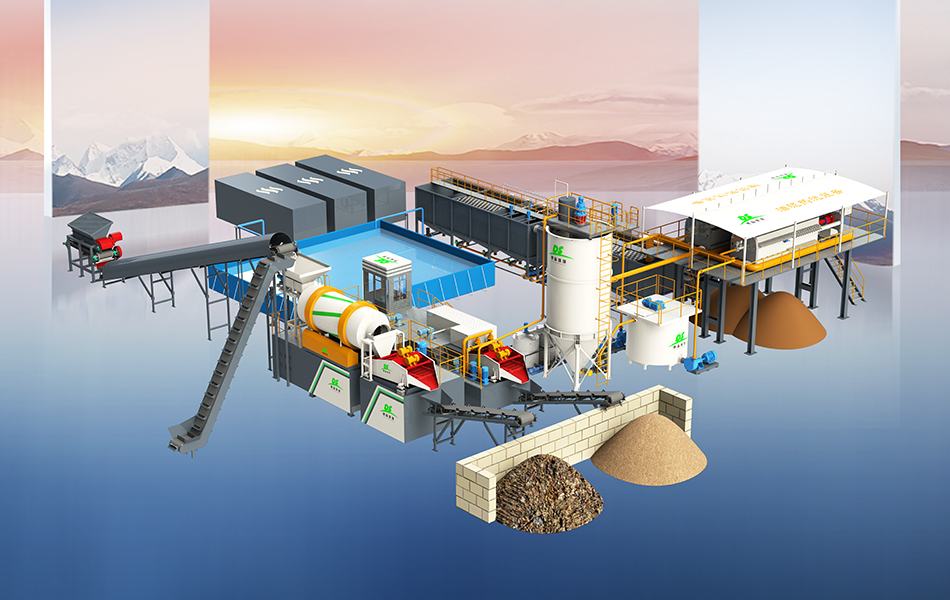
How a Modular Sand Washing Plant Is Configured
Washing and Scrubbing
Feed material is pre-screened and passed through a drum scrubber, where friction and water detach petroleum films and fine particles from sand grains. This stage is the core of the separation process for oil-contaminated soil.
Classification and Recovery
Hydrocyclones and spiral classifiers recover clean sand fractions, while screens separate the remaining fines for further treatment, maximizing the proportion of material that can be reused on site.
Water Treatment and Recycling
Process water is clarified and treated before reuse, which is essential in water-scarce regions. Integrated water treatment modules keep the plant operating with a small water footprint.
Case Reference: Oil-Contaminated Soil Remediation
Desen Environmental Technology delivered a mobile scrubbing and washing solution for an oil-contaminated sandy soil project in the Middle East, processing 25-30 t/h over a total volume of roughly 300,000 m³. The site treated soil with average petroleum hydrocarbon concentrations of 5-8%, combining soil washing with biological polishing. The project demonstrated that modular washing plant technology can meet the scale and schedule demands of regional brownfield contracts.
Selection Checklist for Buyers
- Confirm feed rate matches project volume and timeline.
- Check compatibility with local soil characteristics, including salt and clay content.
- Verify corrosion protection, cooling and dust resistance for desert operation.
- Review water recycling rates and discharge compliance.
- Assess logistics: container or skid configuration, transport weight, and local erection time.
Conclusion
For contractors and owners tackling oil-contaminated sandy soil, a modular sand washing plant delivers the separation performance of a fixed washing line with the logistics of transportable equipment. With proven Middle East references and desert-oriented engineering, Desen Environmental Technology offers systems sized for regional remediation programs. Contact the team to discuss a modular solution matched to your site.
Keywords
modular sand washing plant, oil contaminated soil treatment, contaminated soil remediation, modular washing plant UAE, soil washing technology