Landfill Mining and Screening: Turning Legacy Waste into Recoverable Resources
Screening in Practice: Field References
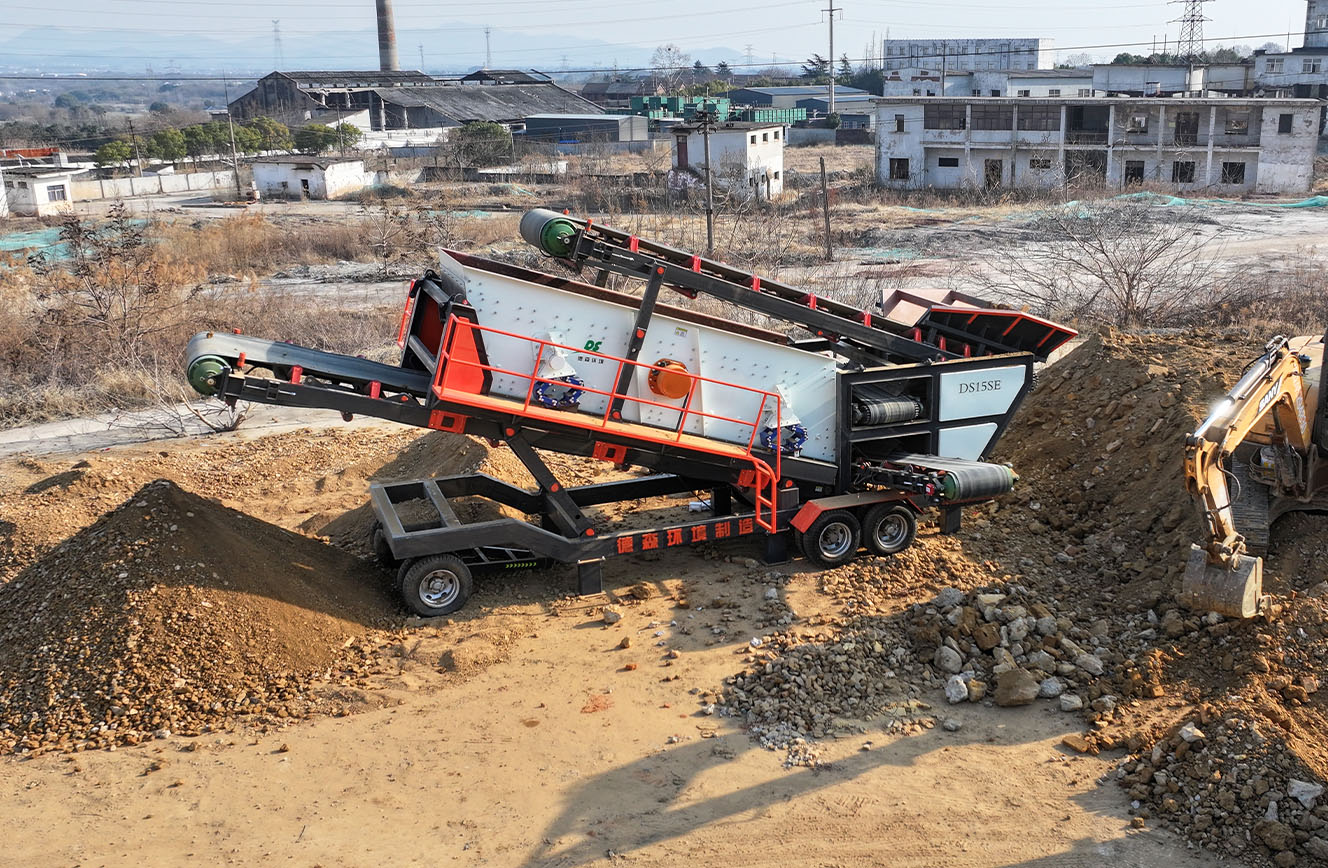
Fixed and mobile screens supplied by Zhengzhou Desen Environmental Technology Co., Ltd. have been used in several landfill and solid-waste projects in China, demonstrating the workflow described above.
Municipal Landfill Screening at 200 t/h
In one municipal landfill project in Dongguan, southern China, the contractor needed to screen aged landfill waste at high throughput to reclaim the site. Desen supplied a screening solution capable of processing 200 tonnes per hour, quickly separating the excavated material into manageable streams for further sorting and recovery.
Separating Plastics, Stones and Sand
In a landfill waste segregation and resource recovery project in Shenzhen, the mobile screening plant was used to handle the highly variable legacy refuse on site. Through multi-stage screening, the operation separated plastics and thin films, oversized stones, sand and soil-like fines. The separation achieved waste volume reduction, material sorting and recovery of aggregate fractions - the three outcomes that make landfill mining economically meaningful.
For operations where the feed is heavier and the site wider, track-mounted screening units and screening buckets can also be configured, but the mobile screening plant remains the most common choice for landfill campaigns because it balances mobility, capacity and cost.
Environmental and Economic Benefits
Well-executed landfill mining with proper screening delivers benefits across three dimensions:
- Volume reduction: a smaller residual volume means the remaining waste can be re-landfilled in a fraction of the original footprint, preserving remaining landfill capacity or enabling site closure.
- Resource recovery: recovered aggregates, soil-like material and fuel-grade fractions reduce the demand for primary resources.
- Risk reduction: removing, sorting and properly treating legacy waste lowers the long-term risk of leachate and gas emissions from degraded waste.
From an economic perspective, the recovered material streams can offset a meaningful share of the excavation and processing cost. Sand and fine fractions are valuable for cover material and civil works, while aggregate and scrap metal have direct market value.
Choosing the Right Screening Solution
Several factors should guide the selection of screening equipment for a landfill mining project:
- Feed characteristics: particle size distribution, moisture and the share of oversized, sticky or abrasive material;
- Throughput requirements: from dozens to hundreds of tonnes per hour;
- Site layout and access: whether the machine must be towed between working faces regularly;
- Cut points required: the desired size fractions for downstream sorting and recovery;
- Power and maintenance: low-power, low-maintenance designs reduce operating cost over a long campaign.
Desen's screening equipment is designed for wide applicability, covering soil remediation, mineral separation, coal processing, chemical material handling, construction aggregate screening, solid waste classification and landfill waste resource recovery. Because the units are assembled and tested before dispatch and require no permanent civil works, they can be deployed quickly and moved as the project phase changes.
Conclusion
Landfill mining is no longer a theoretical concept; it is a practical response to ageing waste sites, growing land pressure and the global demand for recovered resources. Screening is the enabling technology that turns a mixed excavation pile into clean, usable and disposable streams. Mobile screening plants give operators the flexibility to work where the waste actually is, adapt to changing material conditions and keep the whole campaign productive from the first bucket to the final backfill. For project owners evaluating landfill reclamation, a well-specified mobile screening solution is the most direct route from a liability to a resource.