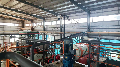
Compare skid-mounted and fixed soil washing equipment for contaminated site remediation. Desen Environment from Zhengzhou offers both solutions with expert guidance for optimal equipment selection at materialwashing.com.
# Skid-Mounted vs Fixed Soil Washing Equipment: Complete Selection Guide - Desen Environment
## Introduction to Soil Washing Equipment Types
Selecting the appropriate soil washing equipment represents a critical decision for environmental remediation projects. **Desen Environment** (郑州德森环境) offers both skid-mounted and fixed soil washing systems, each designed to address specific project requirements and site conditions. Understanding the fundamental differences between these equipment types ensures optimal investment decisions and project outcomes for contaminated site restoration.
## Skid-Mounted Soil Washing Equipment Overview
Skid-mounted soil washing equipment features modular design with pre-assembled components mounted on steel frames. This configuration enables rapid deployment and minimal on-site installation requirements. Our **mobile washing systems** integrate crushing, screening, washing, and dewatering functions within a compact footprint typically ranging from 15-40 square meters.
### Key Characteristics of Skid-Mounted Systems
- **Deployment Speed**: Operational within 24-48 hours after site arrival
- **Transportation**: Standard truck transport without special permits in most regions
- **Processing Capacity**: 5-25 cubic meters per hour depending on configuration
- **Mobility**: Designed for multiple site relocations throughout equipment lifecycle
- **Installation**: Minimal foundation requirements, often just leveled ground
The modular architecture of skid-mounted systems allows component replacement and capacity upgrades without complete system redesign. **Desen Environment** engineers these units for harsh field conditions, incorporating dust suppression, noise reduction, and weather protection features.
## Fixed Plant Soil Washing Equipment Overview
Fixed soil washing plants represent permanent or semi-permanent installations designed for high-volume, long-term remediation operations. These systems occupy dedicated facilities with concrete foundations, utility connections, and supporting infrastructure. Fixed plants from **materialwashing.com** deliver superior processing capacity and automation levels.
### Key Characteristics of Fixed Plant Systems
- **Processing Capacity**: 30-150+ cubic meters per hour based on configuration
- **Automation**: Advanced PLC controls with real-time monitoring and data logging
- **Utilities**: Permanent electrical, water, and wastewater treatment connections
- **Lifespan**: 15-20 year operational expectancy with proper maintenance
- **Customization**: Extensive process integration and equipment arrangement options
Fixed installations enable sophisticated multi-stage washing processes, chemical dosing systems, and comprehensive water treatment circuits. The permanent nature allows optimization for specific contaminant profiles and soil characteristics.
## Technical Comparison: Skid-Mounted vs Fixed Equipment
### Processing Capacity and Efficiency
Skid-mounted systems excel in projects requiring 5,000-50,000 cubic meters total treatment volume. The batch-processing approach suits variable soil conditions and contamination levels. Fixed plants achieve optimal efficiency for volumes exceeding 100,000 cubic meters where consistent soil characteristics enable process fine-tuning.
### Site Requirements and Infrastructure
| Parameter | Skid-Mounted Equipment | Fixed Plant System |
|-----------|------------------------|-------------------|
| Footprint | 15-40 m² | 500-2000 m² |
| Foundation | Leveled ground or simple pad | Reinforced concrete |
| Power Supply | Generator or grid connection | Dedicated substation |
| Water System | Tanker supply or temporary connection | Permanent pipeline |
| Wastewater | Containerized treatment | On-site WWTP |
### Cost Analysis and Return on Investment
Initial capital expenditure for **skid-mounted washing equipment** typically ranges 30-50% lower than comparable fixed installations. However, the total cost of ownership calculation must consider:
- Mobilization/demobilization costs for multi-site operations
- Equipment depreciation and resale value
- Operating labor requirements
- Utility consumption efficiency
- Maintenance accessibility and spare parts logistics
For projects spanning 3+ years at a single location, fixed plants often demonstrate superior lifetime economics despite higher initial investment.
## Selection Criteria for Different Application Scenarios
### Urban Brownfield Redevelopment Projects
Urban remediation frequently involves space constraints, sensitive receptors, and aggressive timelines. **Skid-mounted systems** from Desen Environment offer distinct advantages:
- Minimal site disruption during deployment
- Reduced noise and dust through enclosed design
- Flexible positioning to accommodate existing structures
- Rapid cleanup meeting redevelopment schedules
### Mining and Industrial Site Remediation
Large-scale contaminated sites benefit from fixed plant installations when:
- Treatment volumes exceed 100,000 cubic meters
- Multiple contaminant types require specialized treatment trains
- Long-term operation (5+ years) justifies infrastructure investment
- Centralized processing serves multiple extraction points
### Emergency Response and Disaster Cleanup
When contamination events require immediate intervention, **mobile equipment** provides the only practical solution. Skid-mounted systems deploy to oil spills, chemical releases, and natural disaster contamination within days rather than months required for fixed plant construction.
## Technology Integration and Process Optimization
### Soil Washing Process Flow
Both equipment types implement similar fundamental processes:
1. **Pre-treatment**: Coarse screening and debris removal
2. **Size Reduction**: Crushing to optimal particle size (2-30mm)
3. **Desorption/Washing**: Chemical and mechanical contaminant removal
4. **Separation**: Hydrocyclones and screens classify washed material
5. **Dewatering**: Filter presses or centrifuges reduce moisture content
6. **Water Treatment**: Effluent purification for recycle or discharge
### Automation and Control Systems
Fixed installations incorporate comprehensive SCADA systems with remote monitoring capabilities. Skid-mounted units feature compact PLC controls with local HMI interfaces. **Desen Environment** offers optional remote diagnostics and performance optimization services for both equipment categories.
## Environmental Performance and Sustainability
Both skid-mounted and fixed systems from **materialwashing.com** achieve comparable contaminant removal efficiency when properly configured. Environmental performance metrics include:
- Heavy metal removal rates: 70-95% depending on contaminant and soil type
- Water recycling: 80-95% through closed-loop design
- Soil recovery: 60-85% of processed material suitable for beneficial reuse
- Energy consumption: 15-35 kWh per cubic meter treated
## FAQ Section
### Q: When should I choose skid-mounted over fixed equipment?
**A**: Select skid-mounted systems for projects under 50,000 m³, multiple site operations, space-constrained locations, or when rapid deployment is essential. Fixed plants suit large, long-term operations with consistent soil characteristics.
### Q: Can skid-mounted equipment achieve similar treatment performance to fixed plants?
**A**: Yes, both configurations utilize identical washing principles. Performance depends more on proper equipment sizing and chemical formulation than installation type.
### Q: What is the typical mobilization time for skid-mounted systems?
**A**: Desen Environment skid-mounted units achieve operational status within 24-48 hours after site arrival, compared to 2-4 weeks for fixed plant construction.
### Q: How do maintenance requirements compare between the two types?
**A**: Skid-mounted systems feature modular components designed for field replacement, minimizing downtime. Fixed plants offer better maintenance access but require dedicated maintenance staff and spare parts inventory.
## Conclusion
The choice between skid-mounted and fixed soil washing equipment fundamentally depends on project scale, duration, site conditions, and budget parameters. **Desen Environment** provides comprehensive technical consultation to evaluate your specific requirements and recommend optimal equipment configurations. Our Zhengzhou-based engineering team brings decades of experience in material washing technology to every project assessment.
Visit **materialwashing.com** to explore detailed equipment specifications, request customized quotations, or schedule technical consultations with our remediation specialists. Whether your project demands rapid-deployment mobile systems or high-capacity permanent installations, Desen Environment delivers proven solutions backed by successful implementations across diverse contaminated site conditions.
For personalized equipment selection guidance, contact our technical team with site characterization data, treatment volume estimates, and project timeline requirements. We provide detailed cost-benefit analyses comparing both equipment approaches for your specific application scenario.