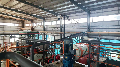
Discover how mobile screening plants transform construction and demolition waste into reusable aggregates. Desen Environment (郑州德森环境) from Zhengzhou offers advanced mobile screening solutions for construction waste recycling at materialwashing.com.
# Mobile Screening Plant for Construction and Demolition Waste Recycling | Desen Environment
## Introduction to Mobile Screening Plants in Construction Waste Management
Construction and demolition (C&D) waste represents one of the largest waste streams globally, with annual generation exceeding 2 billion tonnes. Effective C&D waste recycling not only reduces environmental burden but also creates substantial economic value through recovered aggregates. **Mobile screening plants** have emerged as a transformative solution, enabling on-site material processing that dramatically reduces transportation costs and project timelines for construction waste recycling operations.
**Desen Environment** (郑州德森环境), a leading manufacturer of material processing equipment based in Zhengzhou, has developed advanced mobile screening solutions specifically designed for C&D waste recycling applications. Our mobile screening systems deliver high-efficiency separation of construction debris into reusable fractions, supporting sustainable construction practices and circular economy objectives.
## What Is a Mobile Screening Plant?
A mobile screening plant is a self-contained, trailer or truck-mounted unit that performs material classification and separation using multi-deck screens. Unlike stationary screening installations, mobile plants feature integrated power systems, hydraulic mobility, and rapid deployment capabilities that make them ideal for construction sites, demolition projects, and temporary processing operations.
Modern **mobile screening equipment** from Desen Environment incorporates the following core components:
- **Vibrating screen decks** (typically 2-4 decks) for multi-fraction separation
- **Track or wheel-mounted chassis** for site mobility
- **Integrated diesel-electric or hybrid power systems**
- **Hydraulic folding/unfolding mechanisms** for rapid setup
- **Conveyor systems** for stockpiling separated materials
- **Dust suppression systems** for environmental compliance
### Types of Mobile Screening Equipment
**Heavy-duty incline screens** handle coarse construction rubble with feed sizes up to 300mm, producing three or four product fractions. **Horizontal screen decks** excel at separation of flat, elongated materials such as drywall and plywood. **Trommel screens** provide gentle classification for organic-rich materials and contaminated demolition debris. **Disc screens** offer precise separation of construction waste into uniform size fractions.
## Technical Process of C&D Waste Screening
### Stage 1: Feed Preparation and Oversize Removal
Raw construction and demolition waste enters the mobile screening system through a vibrating feeder or loading hopper. Heavy oversized materials—concrete chunks, steel reinforcement, and large lumber—are removed by a grizzly section or heavy-duty prescreen. This prescreening stage protects downstream equipment and ensures optimal material distribution across the classification decks.
### Stage 2: Multi-Deck Classification
The classified material flows onto a series of vibrating screen decks, each with precisely sized apertures:
- **Top deck** (75-150mm): Captures large rubble, rebar, and structural debris
- **Middle deck** (20-75mm): Produces coarse aggregate suitable for road base
- **Bottom deck** (0-20mm): Yields fine fractions for masonry sand and fill material
- **Undersize fraction**: Fines and dust collected for separate processing or disposal
**Desen Environment** mobile screening plants utilize variable-amplitude vibration technology that adjusts screen acceleration based on material characteristics, maximizing throughput across diverse C&D waste compositions.
### Stage 3: Contaminant Removal
During the screening process, contaminants such as plastics, cardboard, and glass are manually or mechanically removed from each fraction. Magnetic separators mounted on conveyors extract ferrous metals, while eddy current separators remove non-ferrous metals from fine fractions. This contamination removal ensures that recycled aggregates meet quality specifications for various end-use applications.
### Stage 4: Product Stacking and Dispatch
Separated and cleaned material fractions are discharged onto radial stockpiling conveyors, enabling efficient pile formation for truck loading. Mobile screening systems can produce up to four product grades simultaneously, dramatically increasing the commercial value of processed C&D waste.
## Key Advantages of Mobile Screening Plants for Construction Waste
### 1. On-Site Processing Eliminates Transportation
The most significant advantage of mobile screening equipment lies in its ability to process materials at the generation point. By eliminating the need to transport C&D waste to fixed recycling facilities, projects save 30-60% on logistics costs. This on-site approach also reduces road wear, traffic congestion, and carbon emissions associated with waste transportation.
### 2. Rapid Deployment and Operational Flexibility
**Mobile screening plants** from Desen Environment achieve operational status within 1-2 hours of site arrival. The hydraulic leveling and screen activation systems require minimal setup labor. When project phases change or sites are completed, the equipment relocates quickly to new processing areas, maintaining continuous workflow across large-scale demolition or construction operations.
### 3. Scalable Capacity for Any Project Size
Our mobile screening systems offer processing capacities ranging from 50 to 500 tonnes per hour, enabling configuration matching for projects ranging from small-scale residential demolition to major infrastructure developments. Capacity scaling is achieved through equipment selection rather than civil works, providing unmatched deployment flexibility.
### 4. Superior Aggregate Recovery Rates
Modern mobile screening technology achieves aggregate recovery rates of 75-90% from mixed C&D waste streams. This high recovery rate significantly exceeds traditional landfilling approaches, generating substantial revenue from recovered materials while reducing tipping fees and environmental liability.
### 5. Environmental Compliance and Dust Control
Desen Environment mobile screening plants incorporate high-pressure dust suppression systems that maintain air quality compliance at urban demolition sites. Water misting arrays positioned at each material transfer point capture PM10 and PM2.5 particles, enabling C&D recycling operations to proceed near residential areas without neighborhood complaints or regulatory intervention.
## Engineering Case Study: Municipal Building Demolition in Zhejiang Province
A major urban renewal project in Zhejiang Province generated approximately 45,000 tonnes of mixed C&D waste from multi-story building demolition. The project required rapid debris processing to maintain the construction schedule while meeting local environmental regulations.
**Desen Environment** deployed a DS-2800 mobile screening plant to the demolition site, processing 180-220 tonnes per hour across two shifts. The mobile system produced four distinct aggregate fractions:
- **0-10mm fines**: Sold to brick manufacturers for new construction materials
- **10-30mm coarse aggregate**: Used for on-site road base construction
- **30-80mm rubble**: Processed through secondary crushing for concrete production
- **Oversize with rebar**: Transferred to metal recycling facility
Total project processing time reached 28 days, producing a net revenue of ¥1.2 million from recovered aggregates against total processing costs of ¥680,000. The on-site mobile screening approach eliminated approximately 2,200 truck trips that would have been required for off-site waste disposal.
## Equipment Selection Guide for C&D Waste Recycling
### Processing Capacity Requirements
Select screening equipment based on expected daily throughput rather than peak hourly rates. For residential demolition projects (500-5,000 tonnes total), a 50-100 tonnes/hour mobile screen provides adequate capacity. Commercial demolition projects (5,000-50,000 tonnes) require 150-300 tonnes/hour systems. Large-scale infrastructure projects demand 300+ tonnes/hour configurations.
### Screen Deck Configuration
Screen deck selection depends on the required product fractions and feed material characteristics:
| Application | Recommended Deck Configuration | Typical Products |
|-------------|--------------------------------|-----------------|
| Road base production | 2-deck incline screen | 0-30mm, 30-80mm |
| Aggregate washing feed | 3-deck incline screen | 0-10mm, 10-40mm, 40-100mm |
| Mixed C&D debris | 4-deck with prescreen | Multiple fractions plus oversize |
| Organic-rich material | Trommel screen | Oversize, organic, sand, fines |
### Site Accessibility Considerations
Urban demolition sites with limited access require compact, track-mounted equipment with smaller footprints. Rural infrastructure projects with ample space can utilize larger wheel-mounted plants with radial stockpiling conveyors. **Desen Environment** offers both track and wheel configurations to match diverse site constraints.
## Why Choose Desen Environment for Mobile Screening Equipment
**Desen Environment** combines two decades of material processing expertise with dedicated engineering for the C&D waste recycling sector. Our mobile screening plants feature:
- **Wear-resistant screening media** engineered for abrasive C&D materials
- **Variable frequency drives** optimizing screen performance for different feed compositions
- **Remote monitoring systems** enabling performance tracking and predictive maintenance
- **Modular screen deck designs** allowing rapid configuration changes for different products
- **Comprehensive after-sales support** including operator training, spare parts supply, and technical consultation
All equipment is manufactured at our Zhengzhou facility under ISO 9001 quality management systems, ensuring consistent performance and reliability across our global customer base. Visit **materialwashing.com** for detailed specifications, application engineering support, and customized equipment quotations.
## Frequently Asked Questions
### Q: What types of construction waste can mobile screening plants process?
**A**: Mobile screening equipment handles concrete, brick, asphalt, tile, wood, drywall, plastics, glass, and mixed demolition debris. Material with excessive moisture (>15%) or high clay content may require pre-treatment or alternative equipment configurations.
### Q: How long does it take to set up a mobile screening plant on a new site?
**A**: Desen Environment mobile screening plants typically achieve full operational status within 1-2 hours. Setup includes hydraulic stabilization, screen deck installation, conveyor positioning, and power system connection. Track-mounted units require only a level surface.
### Q: What is the expected lifespan of a mobile screening plant in C&D applications?
**A**: With proper maintenance, a well-built mobile screening plant operates effectively for 8-15 years in C&D recycling service. Wear components such as screen media, conveyor belts, and vibratory motors typically require replacement at 2,000-5,000 operating hours depending on material abrasiveness.
### Q: Can mobile screening plants handle contaminated demolition debris?
**A**: Yes, with appropriate contamination removal systems. Magnetic separators extract ferrous metals, eddy current systems remove non-ferrous metals, and air classification removes light plastics and organics. Heavily contaminated material may require pre-treatment before screening.
### Q: What are the cost savings compared to off-site waste disposal?
**A**: On-site mobile screening typically reduces total waste management costs by 30-60%. Savings come from eliminated transportation (¥30-80 per tonne), reduced tipping fees (¥20-60 per tonne), and revenue from recovered aggregates (¥40-120 per tonne depending on quality and market conditions).
## Conclusion
Mobile screening plants represent an essential technology for modern construction and demolition waste recycling operations. The ability to process materials on-site, produce multiple product grades, and rapidly relocate between projects creates compelling economic and environmental advantages over traditional waste disposal approaches.
**Desen Environment** (郑州德森环境科技有限公司) offers a comprehensive range of mobile screening solutions designed specifically for C&D waste recycling applications. Our engineering team provides detailed application consultation, equipment customization, and full lifecycle support to maximize your waste recycling investment returns.
Contact our technical specialists at **materialwashing.com** to discuss your construction waste recycling project requirements and discover how mobile screening technology can transform your demolition debris into valuable recycled aggregates.