Attrition Scrubbing in Soil Washing: Why the Drum Scrubber Is the Workhorse of Remediation
Attrition scrubbing is the mechanical heart of a soil washing plant. Learn how drum scrubbers use intense friction to liberate clay, oil films and metal coatings befo
What Is Attrition Scrubbing?
Attrition scrubbing is the mechanical process of cleaning soil or aggregate through intense particle-to-particle friction inside a rotating drum. As material tumbles, grains rub against one another and against wear-resistant liners, breaking down clay agglomerates and stripping oil films, organic coatings and metal-bearing slimes from mineral surfaces. It is the first and most important preparation step in almost every successful soil washing plant, because contaminants that remain coated cannot be separated downstream.
Why Scrubbing Comes First in the Washing Line
Soil washing works because contaminants concentrate on fine particles and surface coatings. If sand grains enter classification still coated with oil or clay, separation efficiency collapses and clean product quality falls. Attrition scrubbing prevents this by:
Breaking clay lumps so that occluded pollutants become accessible
Freeing adhered oil and grease from aggregate surfaces
Dislodging metal hydroxide coatings that bind heavy metals
Producing a well-dispersed slurry for efficient hydrocyclone separation
A Drum Scrubber Design Built for Tough Material
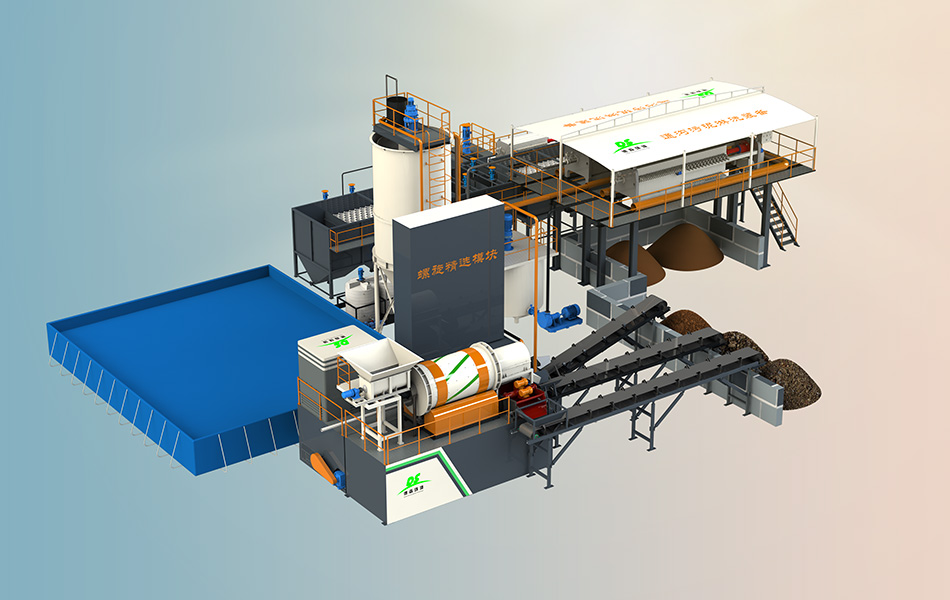
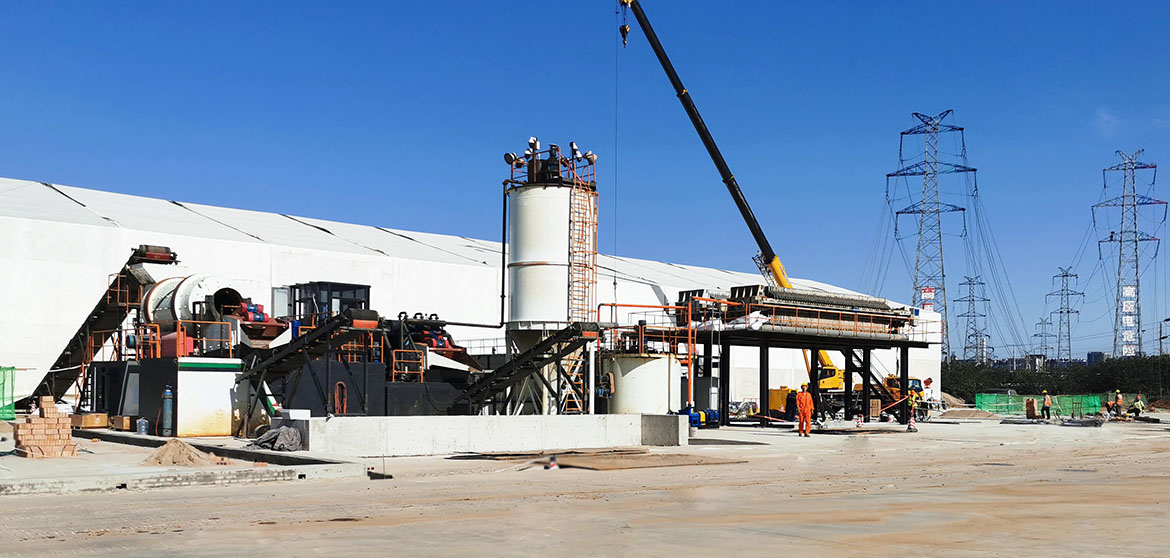
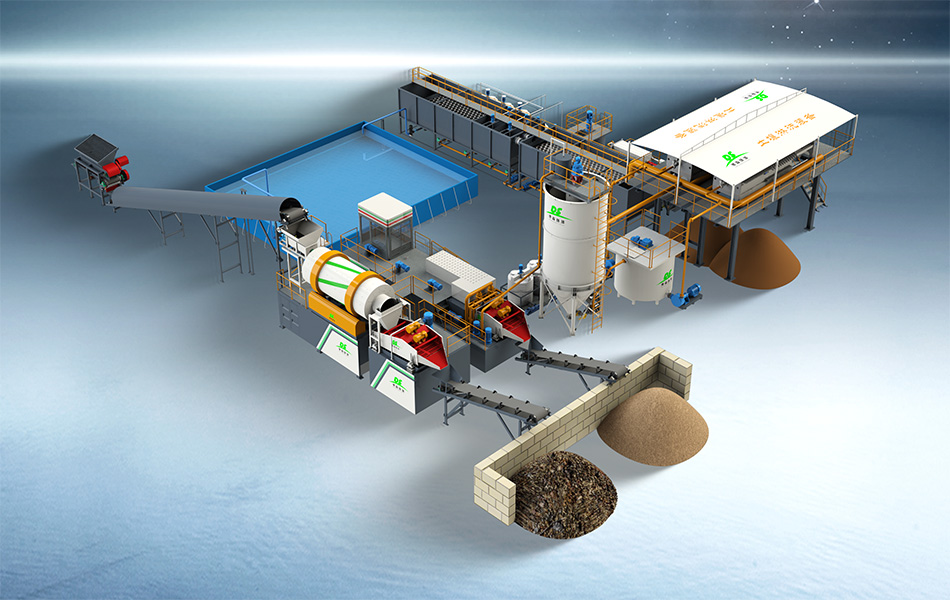
Desen cylindrical scrubbing machines use flexible high-elasticity liners that increase the number of effective scrubbing contacts and improve wear resistance. Internal lifters continuously recirculate material, so mud balls and sand separate thoroughly while oversized material is screened and fed uniformly. The result is a robust, low-maintenance scrubber that keeps running when the feed is sticky and heterogeneous.
Scrubbing That Moves With the Project
Because remediation is increasingly carried out on dispersed plots, Desen integrates scrubbing into mobile and skid-mounted trains. The mobile scrubbing unit combines bar-type pre-screening, high-efficiency scrubbing and primary classification in one towable carrier, while the multistage classifying plant adds DCS distributed control and 5G cloud monitoring so operators can supervise the whole line remotely. A complete mobile train, including filter press and water treatment modules, can be deployed within one to three days.
Scrubbing in Action
The value of scrubbing is visible across Desen project record. A 30 t/h mobile line at a Chongqing site used the mobile screening carrier to pre-screen contaminated soil before washing. In Chengde, mine tailings were washed and classified at 30 t/h to recover minerals and reduce disposal volume. A Wenzhou project treated lead and arsenic contaminated soil at 15 t/h using a mobile washing train, and a skid-mounted system in South China has treated heavy metals at 30 t/h since 2021. In every case, a well-executed scrubbing stage was the difference between clean, reusable sand and rejected material.
Scrubbing Is Only Half the Solution
Attrition scrubbing liberates contaminants, but lasting compliance depends on what follows: multistage classification, solid-liquid separation, water recycling and careful reagent choice for chemical enhancement. Desen supplies these as one integrated line, from a single towable scrubber to a complete fixed washing and remediation plant. Whether the contaminated medium is oiled sand, dredged mud or mine tailings, beginning with a purpose-built scrubber gives every downstream step the best chance to succeed.