Chemical Enhanced Soil Washing: Removing Heavy Metals and Organics with the Right Reagents
Chemical enhanced soil washing combines attrition scrubbing with surfactants, chelating agents and oxidants to remove heavy metals and complex organic pollutants from
What Is Chemical Enhanced Soil Washing?
Chemical enhanced soil washing is a physical-chemical treatment that loosens and removes contaminants from excavated soil using water, mechanical energy and small doses of chemical reagents. Unlike standard washing, which relies on water and friction alone, the enhanced route adds surfactants, chelating agents, acids or oxidants that dissolve and mobilise pollutants so they can be separated from clean mineral particles. The result is higher removal for heavy metals, petroleum hydrocarbons and chlorinated compounds, often at a fraction of the cost of thermal desorption.
Why Standard Washing Can Fall Short
Many contaminants adhere tightly to clay and silt surfaces or exist as non-aqueous phase liquids that water cannot dislodge. Physical washing alone may leave target concentrations above regulatory thresholds. Chemical enhancement closes this gap in four ways:
Surfactants emulsify oil films so that hydrocarbons separate from sand grains
Chelating agents bind heavy metals such as lead, arsenic and chromium into soluble complexes
Oxidants break down organics that resist simple mechanical release
Reaction time and mixing energy are managed so that clean fractions remain reusable
How a Chemical Enhanced Washing System Works
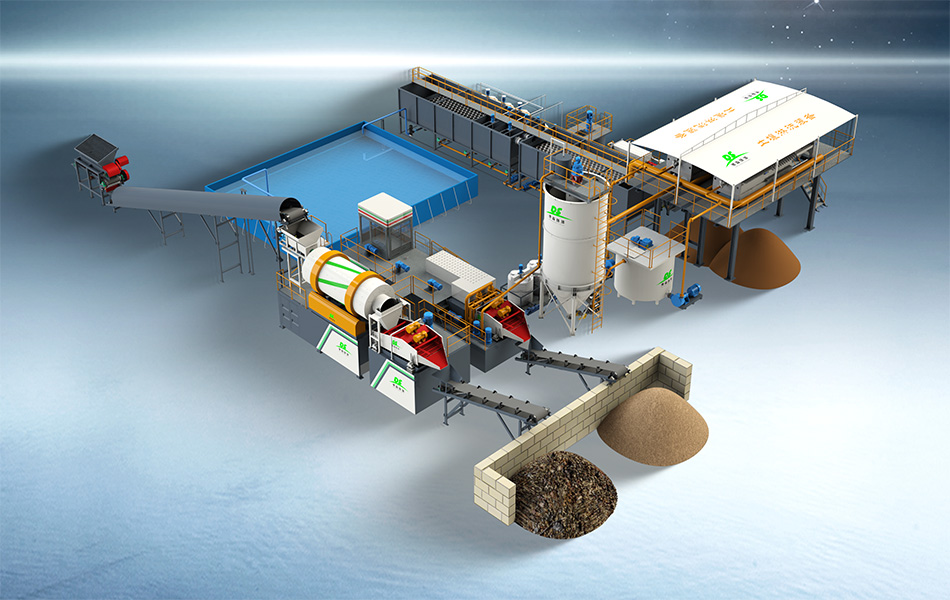
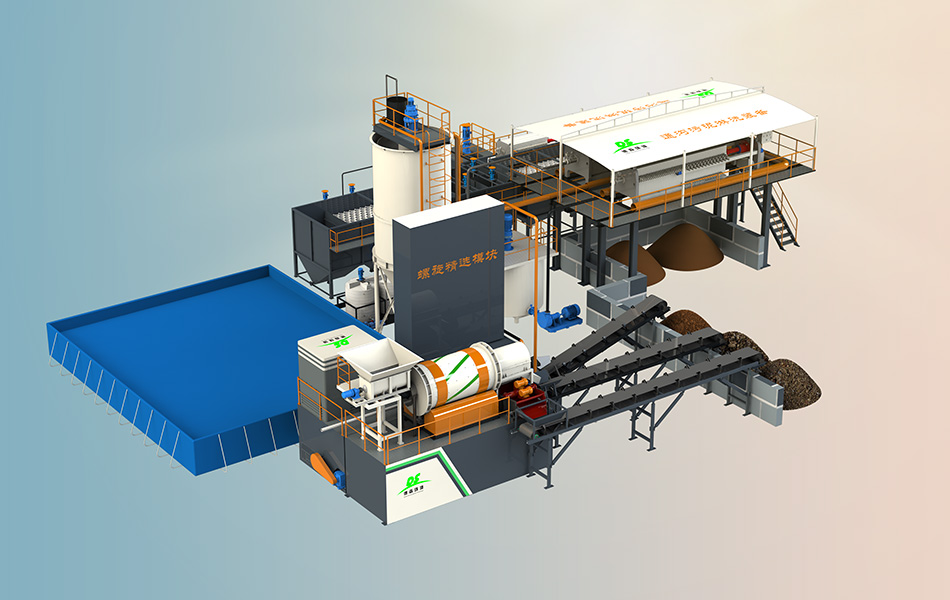
Oversize material is removed first and a drum scrubber applies intensive friction, detaching clay lumps and exposing pollutant surfaces before any reagent is introduced.
1. High-Efficiency Soaking and Reagent Contact
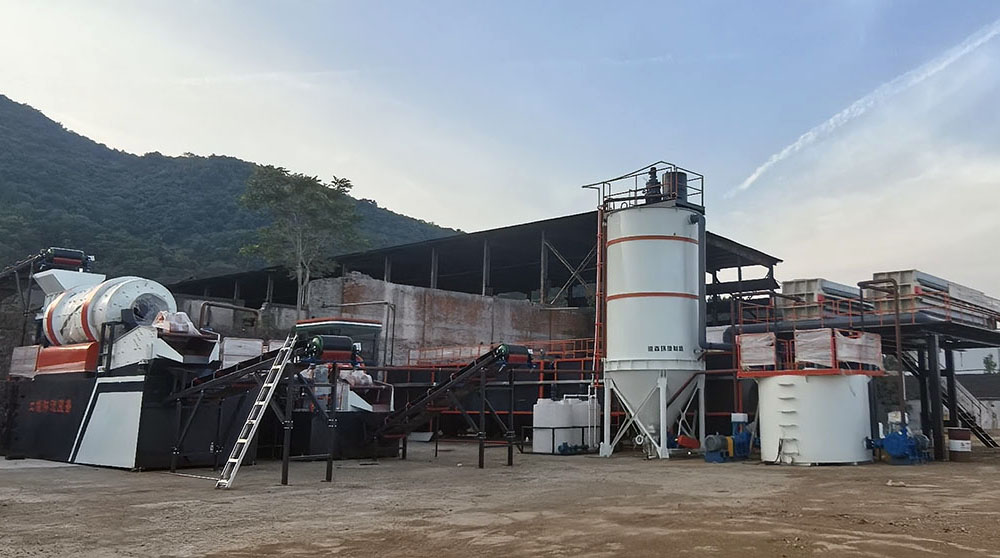
Desen high-efficiency soaking modules blend chemical or biological solvents into the slurry. A lifting mixer and adjustable-speed classification keep reagents in contact with contaminant particles, improving reaction efficiency while preventing the slurry from settling.
2. Multistage Classification and Dewatering
Hydrocyclones separate fine fractions, and coarse sand is dewatered by spiral classifiers so it can be reused. Fine slurry moves to a deep cone thickener and filter press, producing a dry cake for off-site disposal.
3. Water Treatment and Closed-Loop Reuse
Process water passes through inclined tube settling and staged reaction tanks with dosing, mixing and aeration before being recycled, achieving a reuse rate of 90 percent or more.
Field Evidence from Real Remediation Projects
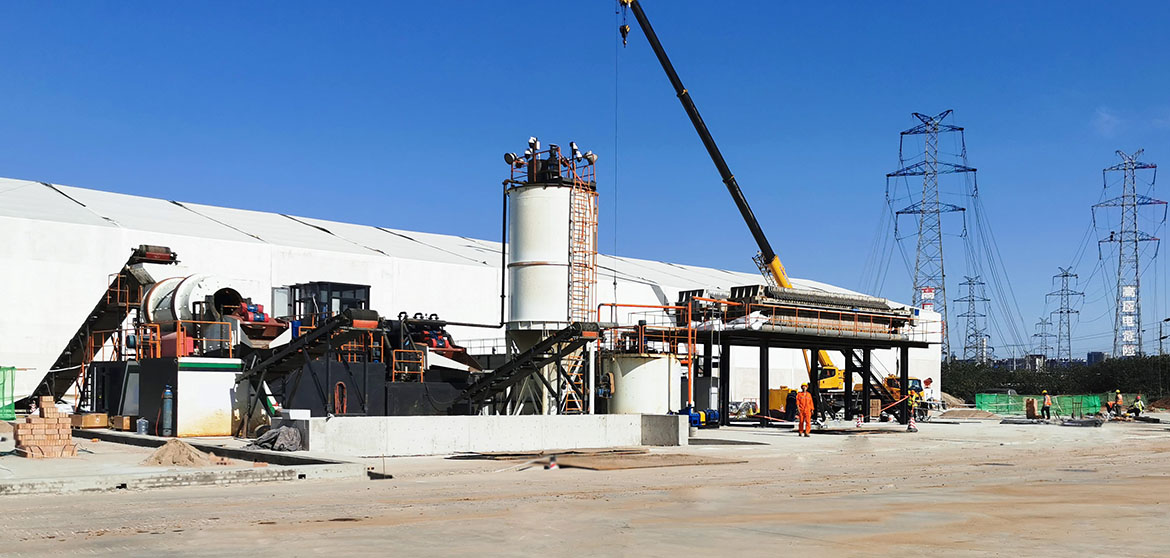
Desen has applied enhanced washing on challenging sites across China. A mobile washing truck carried out ex-situ chemical washing for arsenic-contaminated soil in Beijing, while a Guangzhou plant treated arsenic, mercury, nickel and lead at 60 t/h. The former Hangzhou Steel site was remediated with a chemical washing train at 30 t/h, and a smaller Hangzhou project treated chemically contaminated soil at 10 m3/h. These projects confirm that a well-designed reagent scheme can bring heavy metals below acceptance criteria even on difficult clay-rich soils.
Choosing a Chemical Washing Partner
Demand process validation: confirm reagent selection and dosage through a laboratory test before mobilisation
Verify the water balance: a strong plant recycles most of its process water and limits waste
Check mobility: skid-mounted and truck-mounted systems allow fast relocation between dispersed plots
Review discharge compliance: treated water and filter cake must meet local regulatory standards
While physical scrubbing liberates contaminants, chemistry closes the gap to compliance. Combined in a properly engineered system, the two create a versatile and cost-effective route for heavy metal and organic contamination.