T/CMES 07003 Modular Soil Washing Standard: A Procurement Guide for International Buyers
T/CMES 07003-2022 is the first Chinese group standard for ex-situ modular soil washing equipment. See what it specifies and how Desen applies it to its modular and mobile plants.
T/CMES 07003 Modular Soil Washing Standard: A Procurement Guide for International Buyers
When remediation equipment is ordered from another country, the buyer's main risk is not the price list — it is the absence of a documented engineering basis behind the offer. T/CMES 07003-2022 addresses exactly that gap. Compiled with Zhengzhou Desen Environmental Technology Co., Ltd. as the lead drafting unit and implemented on September 5, 2022, it is the first Chinese group standard covering ex-situ soil washing and remediation, and it defines how a modular skid-mounted washing plant should be configured, built and operated. This article explains what the standard specifies and how buyers in the Middle East, Europe, Southeast Asia and North America can use it during procurement.
What T/CMES 07003-2022 Actually Specifies
Scope and structure of the standard
The full English title of the document is "Ex-situ soil washing and remediation — Technical requirements of modular skid mounted equipments — Part 1: Process and assembly". It was issued within the group standard system of the China Mechanical Engineering Society (CMES) and is the opening part of a planned series. Its content covers three areas that matter directly to project owners: the remediation objects and acceptance indicators the equipment must serve, the process flow of an ex-situ washing project, and the technical requirements for each piece of equipment in the line. The standard is positioned as a reference for the equipment composition and operation management of ex-situ soil washing remediation projects — in practical terms, a checklist against which a proposed plant design can be reviewed.
The seven process modules
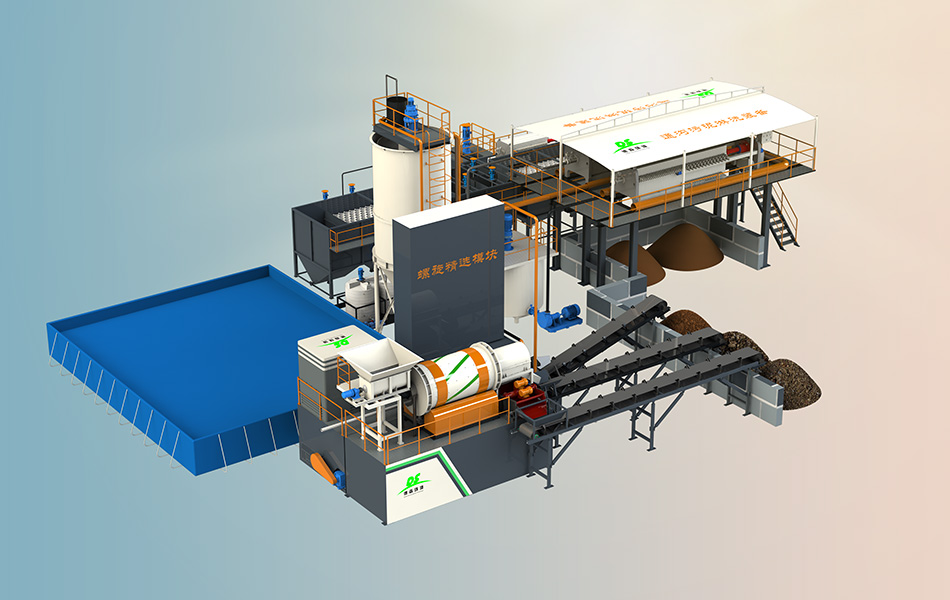
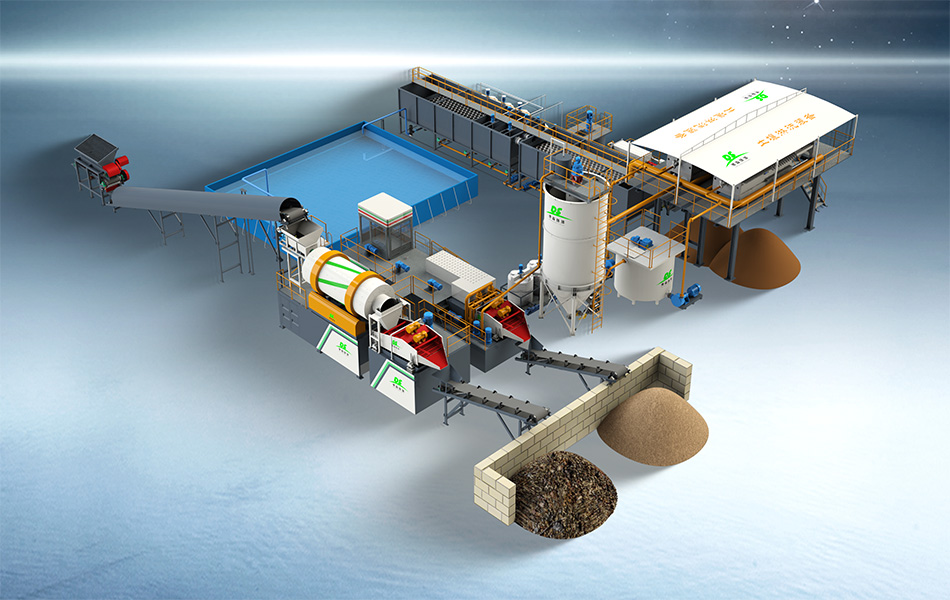
A defining feature of the standard is its modular view of the washing process. Instead of describing a washing plant as one monolithic machine, it breaks the process flow into seven functional modules:
- Crushing and feeding — preparing excavated soil into a workable, controlled feed.
- Scrubbing — the attrition stage that detaches contaminants from soil particles.
- Hydraulic classification — separating the fraction that has been cleaned from the fines that carry the contamination load.
- Enhanced washing — additional washing intensity for heavily contaminated or oily material.
- Cyclone dewatering — removing process water from washed sand fractions.
- Thickening and filter pressing — concentrating slurry and dewatering captured fines into manageable cakes.
- DCS-based control — remote monitoring and centralized control that links the modules into one supervised process.
Because each module has a defined role, a plant built to this logic can be scaled up or reconfigured by adding or removing modules — the reason modular skid-mounted equipment has become the default format for soil washing lines.
Why the Standard Matters to Buyers Outside China
A shared technical language for procurement
For an importer or a remediation contractor in Saudi Arabia, the UAE or Southeast Asia, the hardest part of buying a washing plant is comparing offers that describe the same process in different words. A published standard gives both sides a common vocabulary: when a supplier says its plant includes scrubbing, hydraulic classification and thickening-filter pressing, those terms carry defined meanings and expected functions. Acceptance indicators in the standard also give buyers a neutral basis for factory acceptance tests and commissioning, instead of relying solely on marketing claims.
From standard to delivered plant
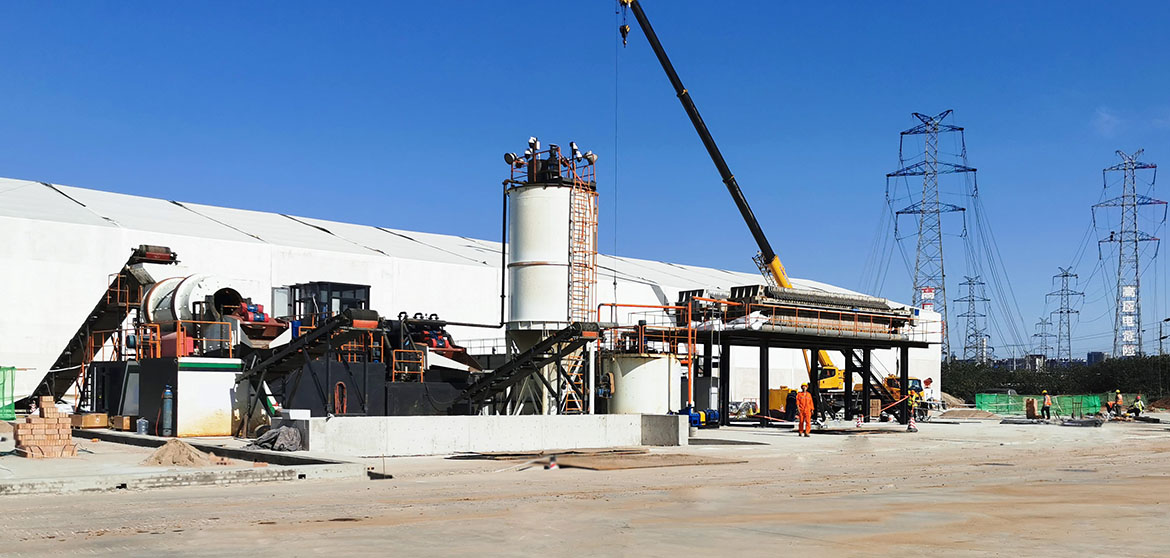
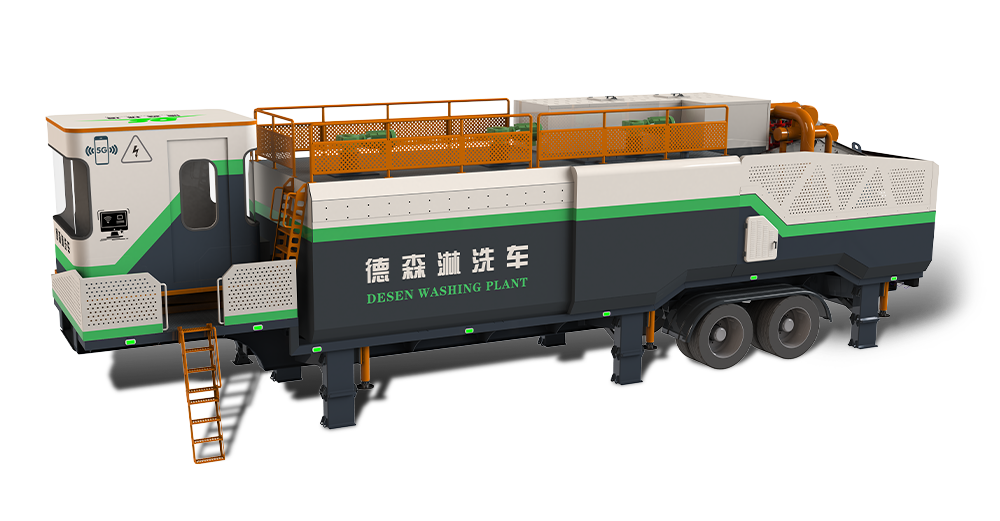
Desen applies this framework directly in its product range. The HLF1080 modular grading and classifying plant — rated at 30 TPH with 75 kW of installed power and PLC centralized control — is built around the same module logic, with hydraulic supporting and a trailer chassis for relocation. The DSLXC series mobile washing units extend the same standard to a self-propelled format, with models covering roughly 15 to 90 TPH depending on configuration. At the process level, every Desen modular washing and remediation plant is assembled from four basic modules — scrubbing, classifying, solid-liquid separating and water treatment — with modules added or removed according to the feed material of each project.
How to Use T/CMES 07003-2022 in Your Next Tender
If you are evaluating washing plant suppliers, the standard converts well into a short technical questionnaire:
- Ask the supplier to map its proposed flow sheet against the seven modules and identify any module it proposes to omit, with justification.
- Request the acceptance indicators proposed for your contaminant — heavy metals, petroleum hydrocarbons or oily sludge — before the contract is signed.
- Confirm that fines handling is engineered end to end: cyclone dewatering plus thickening and filter pressing, not a settling pond left as an afterthought.
- Check the control architecture: a DCS-based system with remote monitoring is what allows one supervisor to run the full line.
A plant that can be reviewed against a published standard is easier to specify, easier to test and easier to defend to a project owner. Desen Environmental, as the lead drafting unit of T/CMES 07003-2022, supplies modular and mobile soil washing equipment built to this framework and supports clients worldwide from tender review through commissioning. Contact desengroups@gmail.com to discuss your project.