Soil Washing Water Treatment Closed Loop Recycling: How Modular Plants Cut Fresh Water Demand in the Middle East
Soil washing water treatment with closed loop recycling reuses process water and cuts fresh water demand. See how Desen modular plants keep remediation sites running in arid regions.
Soil Washing Water Treatment Closed Loop Recycling: How Modular Plants Cut Fresh Water Demand in the Middle East
Water is the hidden variable in every soil washing project. Each tonne of contaminated soil passing through a washing plant carries away process water that must be replaced, and in arid regions such as Saudi Arabia and the United Arab Emirates, that replacement water is expensive, sometimes scarce, and increasingly regulated. Soil washing water treatment built around closed loop recycling addresses the problem at its source: the same water is treated, clarified and returned to the washing circuit instead of being discharged. This article explains how Desen Environmental integrates water recycling into its modular soil washing plant, and what operators in water-stressed regions should look for in such a system.
Why Water Is the Deciding Cost Factor in Middle East Soil Washing
A typical washing circuit consumes roughly 1.5 to 3 cubic metres of water per tonne of soil, depending on clay content and the washing intensity required for the contaminant. On a project treating 10,000 tonnes, that is a water volume no site can draw from a municipal supply or tanker delivery without a significant budget line. In Gulf countries, desalinated water carries a high unit cost, while groundwater extraction is restricted by abstraction permits.
Discharge rules tighten the equation
Even where water is available, discharging wash water is rarely straightforward. Effluent leaving a remediation site carries fine suspended solids and, in many cases, residual contaminants, so it must meet local discharge limits before release. Permits take time, monitoring adds cost, and any exceedance exposes the project owner to compliance risk. A plant that recycles its process water internally removes most of this exposure: the only water leaving the site is the moisture retained in dewatered soil and sludge cakes.
How a Closed-Loop Water System Works in a Modular Soil Washing Plant
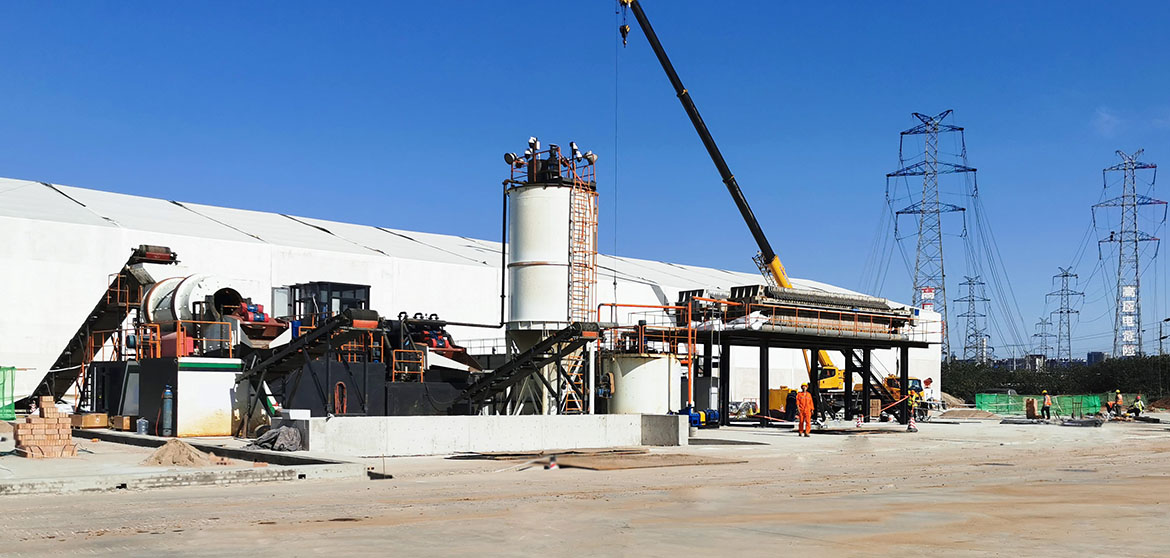
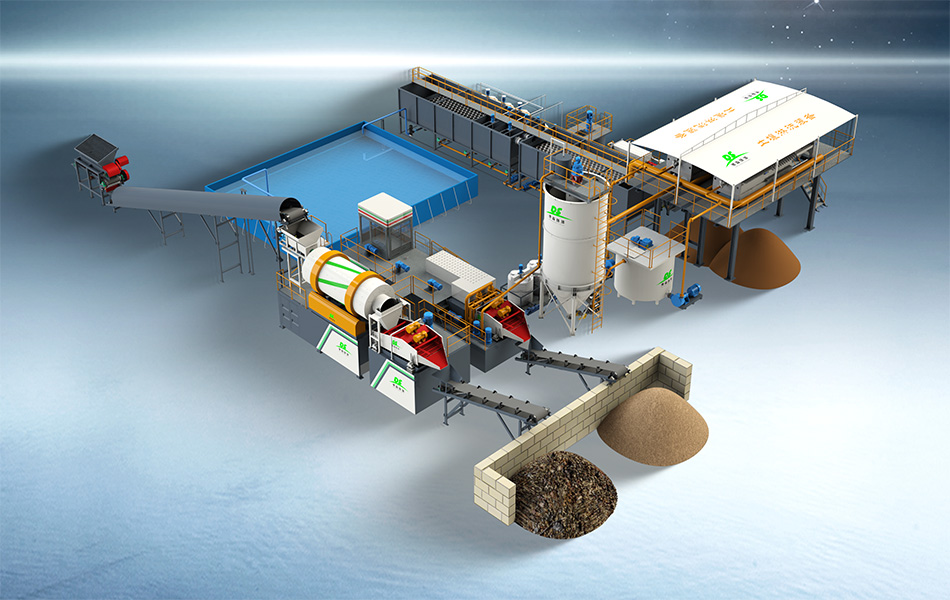
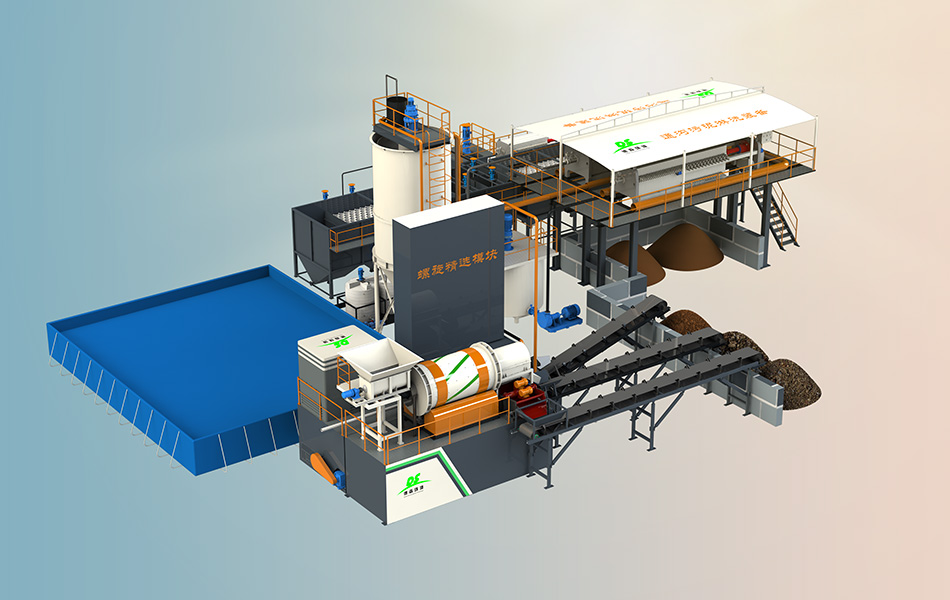
In a Desen modular plant, water treatment is not an add-on located at the end of the flow sheet; it is designed into the modules so that wash water circulates continuously. The closed loop runs through four stages:
- Primary classification and collection — wash water leaving the washing and screening modules, carrying sand, silt and clay fines, drains into a collection tank or sedimentation basin.
- Fines settlement — fine particles settle in the tank or in a cyclone-and-thickener arrangement; settled sand is recovered by a dewatering screen and returned to the product line, while silt and clay concentrate as underflow slurry.
- Clarification — the supernatant water is polished, typically with flocculant dosing, so that suspended solids drop to a level suitable for reuse in the washing circuit.
- Return to the circuit — clarified water is pumped back to the agitators, attrition cells and spray points, closing the loop with only limited top-up water.
Sludge handling completes the loop
The water loop only stays closed if the captured solids are removed continuously. Filter presses or decanter centrifuges dewater the settled slurry into compact filter cakes that can be stockpiled, tested and disposed of, while the filtrate — clear water — flows straight back into the recycling system. Without this dewatering stage, sediment tanks fill within days and the plant must stop and dig them out by hand.
What Closed-Loop Recycling Delivers on Site
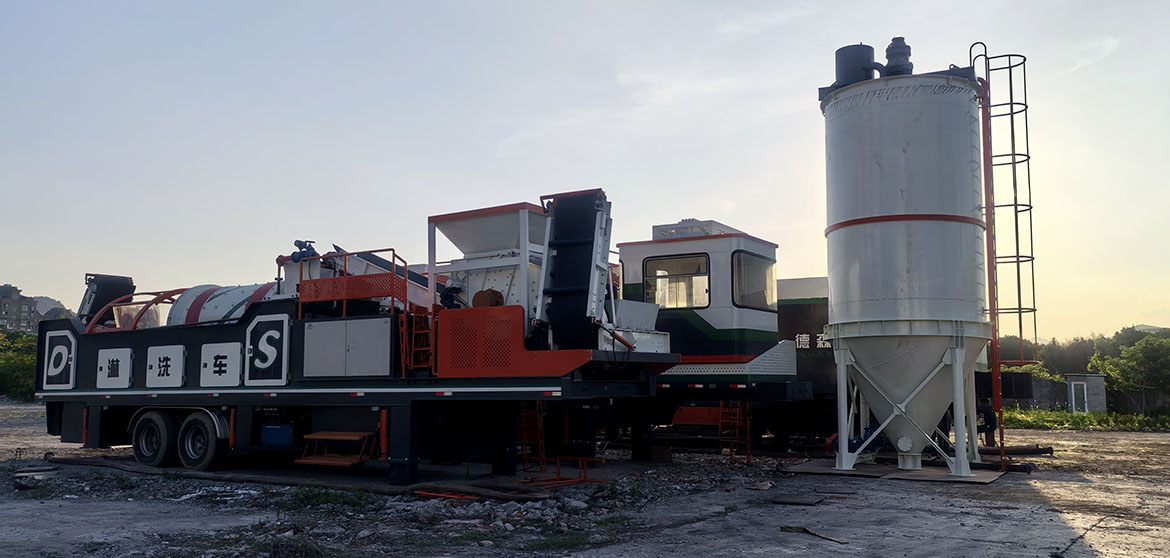
On operating sites, a properly balanced water system changes the economics of the project in three ways. Fresh water demand falls to the volume needed only for top-up, which in the Middle East can reduce the water budget by a large share compared with once-through use. Discharge permitting becomes simpler or unnecessary, shortening the approval phase before mobilization. And because the water volume in circulation is managed rather than intermittent, washing parameters stay stable, which protects washing efficiency and product quality.
Design points to check before ordering
When comparing suppliers, the water treatment section deserves the same scrutiny as the washing modules themselves. Desen Environmental recommends confirming the expected water balance at design throughput, the solids loading the clarification stage can absorb, the dewatering technology offered for captured sludge, and the footprint of tanks and basins within the plant layout. Details of the modular plant configurations and case references are available at materialwashing.com, where projects across the Middle East, Europe and Southeast Asia are documented.
Closed loop water recycling has become a practical requirement for soil washing in water-stressed regions rather than an optional extra. Treating the water circuit as a core part of the plant design keeps remediation projects viable where every cubic metre of water counts.