Skid-Mounted vs Fixed Soil Washing Equipment: The Ultimate Selection Guide for Contaminated Site Remediation
Compare skid-mounted vs fixed soil washing equipment for contaminated site remediation. Learn about technical advantages, cost analysis, application scenarios, and equipment selection guide by Desen Environment. Visit materialwashing.com.
In the field of soil remediation, choosing the right washing equipment is one of the most critical decisions for project success. Project managers and environmental engineers frequently face the choice between skid-mounted soil washing equipment and fixed soil washing equipment. Each configuration offers distinct advantages tailored to specific project requirements. Desen Environment, a leading Zhengzhou-based environmental technology company operating through materialwashing.com, provides both equipment types with comprehensive technical support to help clients make informed decisions.
Understanding Skid-Mounted Soil Washing Equipment
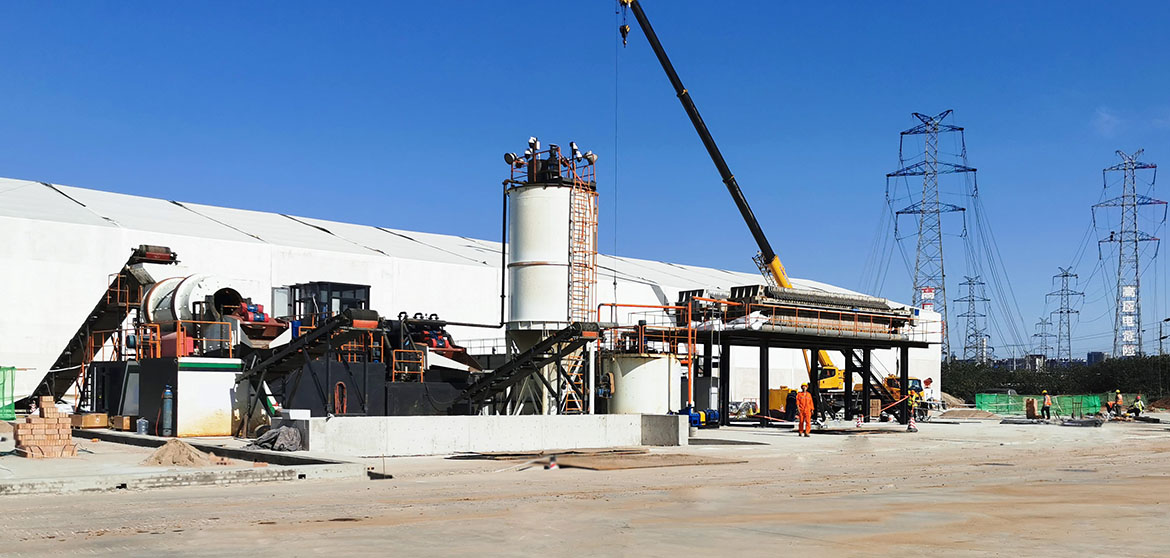
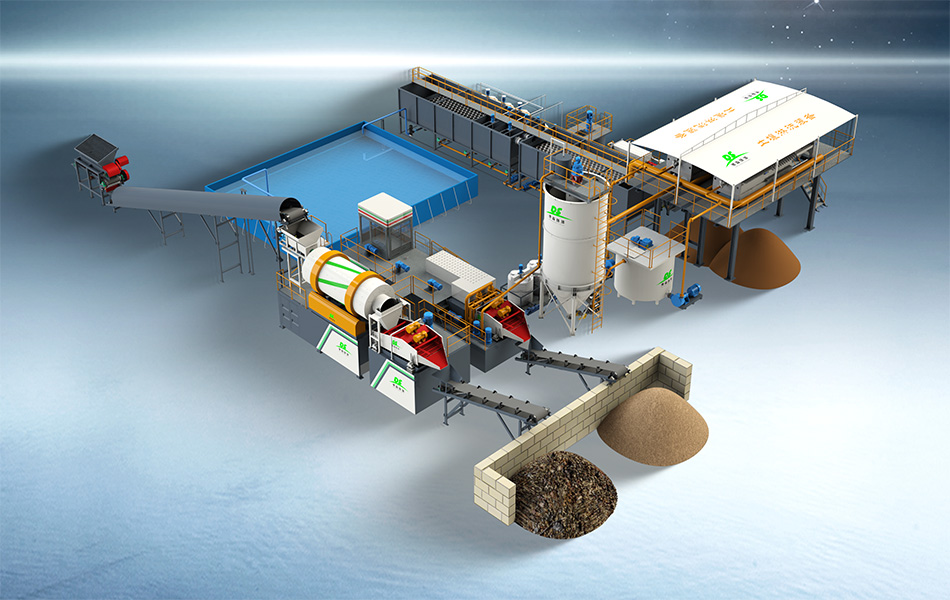
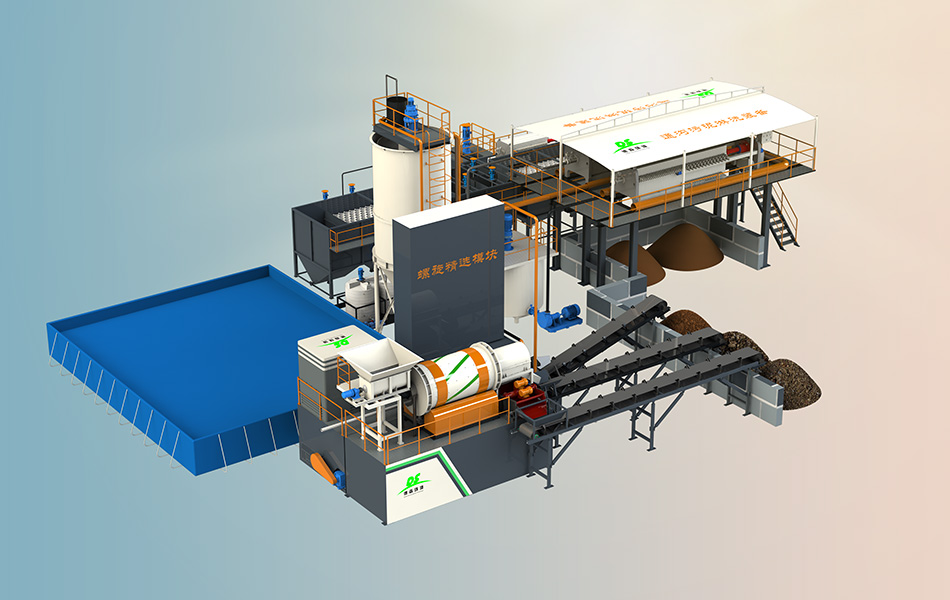
Skid-mounted soil washing equipment, also known as 撬装式淋洗设备, integrates all treatment components—including washing tanks, screens, spiral classifiers, slurry pumps, and control systems—onto a standardized steel frame base. This design enables rapid transportation and deployment to contaminated sites without requiring permanent civil infrastructure.
Key characteristics include:
- High mobility: Can be transported by standard flatbed trucks to remote or difficult-to-access sites
- Fast deployment: Operational within 1-3 days of arrival on site
- Scalable configuration: Multiple units can be connected to increase treatment capacity
- Lower initial investment: Approximately 40-50% less capital cost compared to fixed installations
- No foundation requirements: Equipment rests on ground level with leveling plates
Understanding Fixed Soil Washing Equipment
Fixed soil washing equipment refers to permanently installed treatment systems built with dedicated civil engineering foundations. These installations are typically used in long-term remediation projects or at centralized treatment facilities where large volumes of contaminated soil require continuous processing over extended periods.
Key characteristics include:
- Continuous operation: Designed for uninterrupted 24/7 treatment cycles
- Higher throughput: Processing capacities of 100-500+ cubic meters per hour
- Durability: Built with reinforced structures for heavy-duty, long-term operation
- Custom integration: Can incorporate complex pre-treatment and post-treatment processes
- Higher capital cost: Requires significant investment in civil works and infrastructure
Detailed Technical Comparison
When evaluating soil washing equipment selection, several technical factors must be considered. The table below summarizes the key differences:
| Feature | Skid-Mounted Equipment | Fixed Equipment |
|---|---|---|
| Deployment Time | 1-3 days | 4-8 weeks |
| Mobility | Highly mobile | Stationary |
| Treatment Capacity | 30-150 m³/h | 100-500+ m³/h |
| Capital Investment | Lower (40-50% less) | Higher |
| Site Preparation | Minimal | Extensive civil works |
| Best Suited For | Short-term projects, remote sites | Long-term operations, large volumes |
| Operational Flexibility | High – relocate between sites | Limited to one location |
| Maintenance Access | Open design, easy access | Built-in maintenance platforms |
Application Scenarios for Skid-Mounted Equipment
Skid-mounted soil washing equipment excels in the following scenarios:
- Emergency remediation projects: Rapid response to accidental spills or environmental incidents requiring immediate action
- Remote contaminated sites: Mining sites, oil fields, or industrial areas far from treatment centers
- Brownfield redevelopment: Urban sites requiring cleanup before residential or commercial construction
- Multi-site remediation programs: Contractors managing several projects across different locations
- Seasonal or intermittent projects: Operations with irregular material supply or funding schedules
- Petroleum hydrocarbon contamination: Sites affected by oil spills, fuel depots, or petrochemical facilities
- Heavy metal contaminated soil: Areas near electroplating, battery manufacturing, or metal processing plants
Application Scenarios for Fixed Equipment
Fixed soil washing equipment is preferred in these situations:
- Centralized treatment facilities: Regional hubs processing contaminated soil from multiple sources
- Large-scale remediation projects: Sites with contamination volumes exceeding 100,000 cubic meters
- <
- Continuous processing requirements: Projects with steady supply of contaminated material and clear timelines
- Complex treatment processes: Sites requiring multi-stage treatment including chemical stabilization
- Regulated industrial zones: Permanent facilities within designated industrial parks
Technical Process and Treatment Efficiency
Both equipment types operate on the same fundamental soil washing principle: mixing excavated soil with water and chemical agents to separate contaminants from clean soil particles. The washing process typically includes:
- Pre-screening: Removal of oversized materials such as stones, rubble, and debris
- Size classification: Separation of soil fractions using screens and hydrocyclones
- Attrition scrubbing: Mechanical agitation to detach contaminants from soil particles
- Heavy medium separation: Removal of heavy metal-bearing particles through density differences
- Flotation treatment: Extraction of oil and organic contaminants
- Solid-liquid separation: Dewatering of treated soil using spiral classifiers or filter presses
- Water recycling: Clarification and reuse of process water to minimize consumption
Desen Environment equips both skid-mounted and fixed systems with advanced PLC control systems enabling real-time monitoring of critical parameters including flow rates, pH levels, turbidity, and pollutant concentrations. Remote monitoring capabilities allow technical teams to optimize treatment parameters without constant on-site presence.
Cost Analysis and Project Economics
Project cost is often the deciding factor in equipment selection. While fixed installations offer lower per-unit operating costs at high volumes, skid-mounted equipment eliminates several significant expenses:
- No civil engineering costs: Skid-mounted equipment eliminates the need for concrete foundations, buildings, and drainage systems
- Reduced installation labor: Mechanical connections rather than structural construction
- Transportation flexibility: Equipment asset can be redeployed across multiple projects, spreading capital costs
- Faster project commencement: Earlier revenue generation due to reduced setup time
For projects with uncertain timelines or evolving contamination profiles, the flexibility of skid-mounted equipment significantly reduces financial risk. Many clients begin with skid-mounted units and transition to fixed installations once project scope is fully defined.
Case Study: Rapid Remediation of an Oil-Contaminated Site
materialwashing.com documented a remediation project at a decommissioned fuel depot where skid-mounted soil washing equipment was deployed to treat 8,000 cubic meters of petroleum hydrocarbon-contaminated soil. The equipment arrived on site within 5 days of contract signing and began operation within 48 hours.
The mobile system achieved a treatment efficiency of 94% for total petroleum hydrocarbons (TPH), reducing concentrations from 12,000 mg/kg to below 700 mg/kg—well within the regulatory reuse threshold. The project was completed in 45 days, compared to an estimated 6-month timeline if fixed equipment had been installed. Total project cost was 38% lower than comparable fixed-plant remediation, demonstrating the significant economic advantages of skid-mounted equipment for time-sensitive projects.
How to Choose the Right Equipment
Consider the following decision framework when selecting soil washing equipment:
- Project duration: Less than 6 months → skid-mounted; more than 2 years → fixed
- Contamination volume: Under 50,000 m³ → skid-mounted; above 100,000 m³ → fixed
- Site accessibility: Remote or multiple sites → skid-mounted; urban with good infrastructure → either
- Budget constraints: Limited capital → skid-mounted; available long-term funding → fixed
- Regulatory timeline: Urgent deadlines → skid-mounted; flexible schedules → either
- Future use: One-time remediation → skid-mounted; ongoing operations → fixed
Environmental and Regulatory Considerations
Both equipment configurations must comply with local environmental regulations for soil remediation. Key compliance considerations include:
- Wastewater discharge standards: Process water must be treated before discharge or recirculated
- Air emission controls: Dust and volatile organic compound (VOC) capture systems may be required
- Sludge disposal: Concentrated contaminants must be disposed of at licensed facilities
- Soil reuse verification: Treated soil must meet concentration thresholds for intended use
- Monitoring and reporting: Regular sampling and documentation per regulatory requirements
Desen Environment provides comprehensive compliance documentation and technical support for all equipment deployments, ensuring projects meet or exceed regulatory requirements across different jurisdictions.
Frequently Asked Questions
What is the typical treatment capacity of skid-mounted soil washing equipment?
Skid-mounted soil washing equipment from Desen Environment typically processes 30 to 150 cubic meters of contaminated soil per hour, depending on soil type, contamination levels, and specific process configuration. Multiple units can be combined to achieve higher throughput when needed.
How long does it take to set up skid-mounted soil washing equipment?
Most skid-mounted systems can be operational within 1 to 3 days of arrival at the contaminated site. This includes equipment positioning, leveling, connection of external power and water supplies, and system commissioning. Desen Environment provides on-site installation supervision and operator training as part of the service package.
Can skid-mounted equipment handle heavy metal contamination?
Yes. Skid-mounted soil washing equipment is highly effective for heavy metal remediation. The washing process separates metal-bearing fine particles from coarse sand and gravel fractions. For challenging contaminants, the system can be configured with chemical leaching stages, precipitation tanks, and sludge dewatering units to achieve regulatory compliance.
What is the lifespan of skid-mounted soil washing equipment?
With proper maintenance, skid-mounted equipment from Desen Environment has an operational lifespan of 10-15 years or more. The modular design facilitates component replacement and system upgrades, extending service life while incorporating newer technologies as they become available.
Is skid-mounted equipment suitable for petroleum hydrocarbon contamination?
Absolutely. Skid-mounted washing equipment configured with flotation cells and oil-water separation units effectively removes petroleum hydrocarbons from contaminated soil. The system achieves 85-97% removal rates for total petroleum hydrocarbons (TPH), making it suitable for sites affected by oil spills, fuel storage facilities, and petrochemical operations.
Conclusion
Both skid-mounted and fixed soil washing equipment serve essential roles in modern environmental remediation. The choice ultimately depends on project-specific factors including duration, volume, budget, and site conditions. For rapid response needs, multi-site programs, or projects with limited capital, skid-mounted equipment offers unmatched flexibility and cost efficiency. For large-scale, long-term operations, fixed installations provide higher throughput and lower per-unit operating costs.
Zhengzhou Desen Environment, trading as materialwashing.com, offers comprehensive consultation services to help clients evaluate their specific requirements and select the optimal equipment configuration. With years of experience in soil remediation technology, Desen Environment delivers turnkey solutions that restore contaminated land to productive use while meeting the most stringent environmental standards.
Contact the Desen Environment technical team to discuss your project requirements and receive a customized equipment proposal tailored to your remediation objectives.