Heavy-Duty Screening Equipment for High-Hardness Materials: Built for Efficiency and Durability
In industries such as mining, construction waste recycling, and mineral processing, screening high-hardness materials—including granite, basalt, and concrete blocks—poses significant challenges. Conventional screening equipment often suffers from rapid wear, low screening efficiency, and frequent
In industries such as mining, construction waste recycling, and mineral processing, screening high-hardness materials—including granite, basalt, and concrete blocks—poses significant challenges. Conventional screening equipment often suffers from rapid wear, low screening efficiency, and frequent material clogging. Under continuous impact from hard materials, standard machines are prone to screen deformation, frame cracking, and unplanned downtime, making them unsuitable for large-scale, high-intensity operations.
To address these challenges, Desen Environment has developed heavy-duty screening equipment specifically engineered for high-hardness materials, delivering superior wear resistance, high efficiency, and strong adaptability.
Multi-Deck Precision Screening for Diverse Production Needs
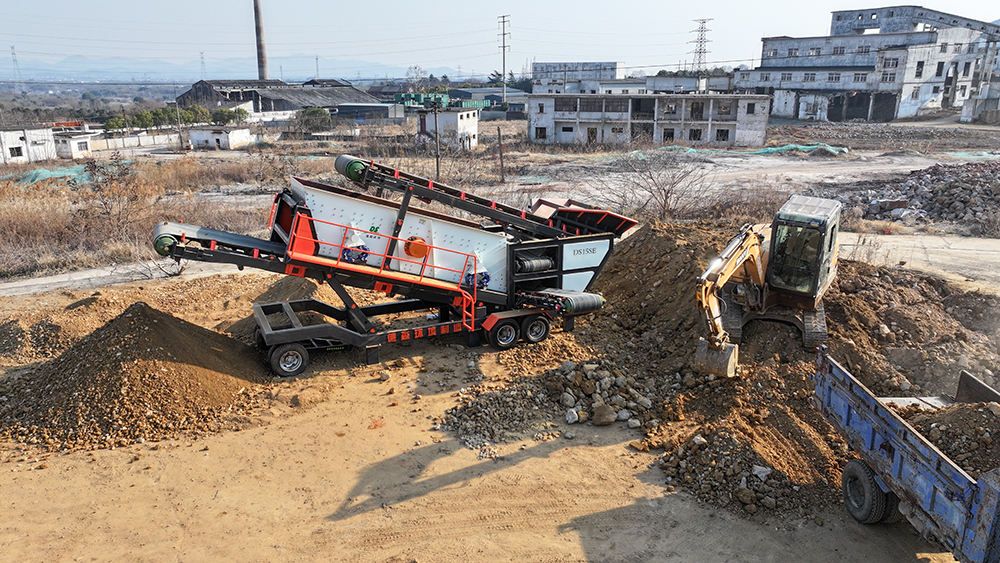
Desen screening equipment can be configured with 2 to 5 screening decks featuring different mesh sizes. Based on material hardness and target particle size requirements, screening layers and apertures can be flexibly adjusted to achieve multi-stage separation with a single feed.
In construction waste recycling projects, the system accurately separates concrete blocks, steel reinforcements, bricks, and aggregates, providing high-quality raw materials for downstream recycling processes. With a screening efficiency of over 95% and processing capacities ranging from 50 to 500 tons per hour, the equipment is suitable for both small-scale operations and large industrial production lines.
Wear-Resistant Design Ensuring Long-Term Stability
Designed for continuous operation under harsh conditions, the equipment features high-strength structural steel, reinforced frames, and wear-resistant screen media. These components effectively withstand prolonged impact and abrasion from hard materials, significantly extending service life and reducing maintenance frequency. In demanding environments, the equipment maintains stable performance, ensuring consistent output and reliable operation.
Intelligent and User-Friendly Operation
The system is equipped with an intelligent vibration frequency control system that automatically adjusts excitation force and vibration frequency based on material hardness and moisture content, preventing efficiency loss caused by excessively hard feed materials.
An online monitoring module continuously tracks key indicators such as screen wear and bearing temperature, issuing real-time alerts in case of abnormalities to minimize the risk of unexpected downtime. Additionally, the modular quick-disassembly design allows screen replacement without specialized tools, greatly reducing maintenance time and operating costs.
Proven Performance in Real-World Applications
Desen screening equipment has demonstrated outstanding adaptability across multiple projects. In a granite mining operation, the equipment operated continuously for 24 hours under high load, maintaining a stable screening efficiency of over 92%, while screen lifespan was extended three times longer than comparable systems.
At a construction waste recycling facility, the system successfully processed concrete debris into recycled aggregates, increasing overall material recovery rates to 90%, significantly improving both environmental and economic returns.
A Reliable Solution for High-Hardness Material Screening
By combining wear resistance, high efficiency, and intelligent control, Desen Environment’s screening equipment effectively overcomes the limitations of conventional machines that “cannot endure impact or achieve clean separation.” It provides a reliable foundation for the recycling and utilization of high-hardness materials, helping mining, construction, and recycling industries reduce costs, improve productivity, and advance sustainable development.