How Mobile Soil Washing Equipment Lowers Oil-Contaminated Soil Remediation Costs by Up to 40%
Oil-contaminated soil is one of the most challenging environmental liabilities facing petroleum operations worldwide. Discover how Desen mobile soil washing equipment cuts remediation costs by up to 40% through on-site processing, high throughput, and integrated thermal washing technology. Learn about the Abu Dhabi 100,000-ton success case and why modular mobile systems are the future of oil sludge treatment.
Published: July 7, 2026 | Author: Desen Environmental Technical Team | Category: Oil-Contaminated Soil Remediation
Oil-contaminated soil remains one of the most persistent and expensive environmental challenges facing the petroleum industry today. From oilfield drilling sites and refinery spill zones to decommissioned gas stations and tank farm leakages, petroleum hydrocarbons infiltrate soil matrices, disrupt ecosystems, and pose long-term risks to groundwater resources. Traditional remediation approaches—excavation followed by off-site thermal desorption or landfill disposal—often carry costs exceeding $150–$300 per ton, driven largely by transportation logistics and treatment facility fees.
Yet a paradigm shift is underway. Mobile soil washing equipment, designed for on-site deployment and integrated processing, is proving capable of reducing total remediation costs by up to 40% while maintaining—or even exceeding—the treatment efficacy of centralized facilities. This article examines how mobile soil washing technology achieves these savings, the engineering principles behind it, and what operators should evaluate when selecting equipment for oil-contaminated soil remediation projects.
The Cost Structure of Traditional Oil-Contaminated Soil Remediation
To understand where savings originate, one must first examine the cost breakdown of conventional remediation workflows:
Excavation and loading: 10–15% of total project cost
Transportation to off-site facility: 15–25% (highly variable with distance and fuel prices)
Treatment / disposal fees: 40–55% (thermal desorption, incineration, or landfill tipping fees)
Site restoration and backfill: 10–15%
Regulatory compliance and monitoring: 5–10%
In this model, logistics represent a disproportionately large share—often 30–40% of total expenditure when transportation and treatment facility fees are combined. For projects in remote oilfields or regions with limited remediation infrastructure, costs escalate further.
How Mobile Soil Washing Equipment Eliminates Logistics Bottlenecks
On-Site Processing: The Core Cost Advantage
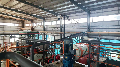
A mobile soil washing plant brings the treatment process directly to the contaminated site. The entire system—including feed hoppers, scrubbing units, hydrocyclone classification, and dewatering modules—is integrated onto wheeled or skid-mounted platforms. Upon arrival, the equipment can be operational within 1–3 days, eliminating the months-long permitting and construction cycles required for fixed treatment centers.
This on-site capability removes the transportation cost entirely from the equation. Rather than trucking thousands of tons of contaminated material across highways, the soil is excavated, processed, and placed back—all within the site boundary. For a 50,000-ton project at a 100 km distance from the nearest treatment facility, transportation savings alone can exceed $500,000.
Integrated Multi-Stage Processing in a Single Footprint
The Desen washing plant exemplifies this integrated approach. The system combines multiple processing stages that would traditionally require separate equipment spreads:
Pre-screening and debris removal: Vibrating grizzly and trommel screens separate oversize materials (>50 mm) and construction debris
High-intensity scrubbing: Rotating drum scrubbers apply mechanical shear and chemical eluents to detach petroleum hydrocarbons from soil particle surfaces
Hydrocyclone classification: Multi-stage cyclones separate soil into coarse sand (0.15–2 mm), fine sand (0.075–0.15 mm), and silt/clay fractions (<0.075 mm)
Oil-water-solid separation: Gravity separation tanks and dissolved air flotation units recover free-phase oil while conditioning slurry for water recycling
Filter press dewatering: High-pressure plate-and-frame filter presses produce stackable filter cake with moisture content below 40%
All of these stages operate within a closed-loop water system achieving ≥90% water recycling, dramatically reducing freshwater consumption and eliminating secondary wastewater discharge.
Thermal Washing: When Temperature Accelerates Treatment
For heavier petroleum fractions—crude oil, bunker fuel, weathered hydrocarbons—ambient-temperature washing alone may not suffice. Thermal washing systems heat the washing solution to 40–80°C, reducing oil viscosity and enhancing surfactant effectiveness. Desen's oil-contaminated soil thermal washing equipment incorporates heated scrubbing chambers, insulated piping, and heat recovery exchangers that minimize energy consumption while maximizing hydrocarbon removal.
Thermal washing is particularly effective for soil with total petroleum hydrocarbon (TPH) concentrations up to 50,000 mg/kg, achieving post-treatment levels below 2,000 mg/kg—compliant with environmental standards in most jurisdictions.
Case Study: Abu Dhabi 100,000-Ton Oil-Contaminated Soil Project
Project Profile — Abu Dhabi, UAE (2025–Present)
The Desen DS-MSW-100 mobile soil washing system was deployed to treat approximately 100,000 tons of oil-contaminated soil with initial TPH concentrations averaging ~8% (80,000 mg/kg). Operating in extreme desert conditions with ambient temperatures exceeding 50°C, the system achieved:
Stable throughput of 100 tons per hour
Post-treatment TPH consistently below 2,000 mg/kg (UAE regulatory compliance)
Recovery of approximately 5,000 tons of crude oil for recycling
Continuous operation exceeding 6 months with minimal downtime
Total project cost estimated at 35–40% below the off-site treatment alternative
This project validated the reliability of mobile soil washing equipment under harsh field conditions while demonstrating that recovered oil can offset a meaningful portion of treatment costs.
Smart Monitoring: The 5G-Enabled Washing Plant
Modern mobile washing equipment goes beyond mechanical processing. The Desen washing plant is equipped with a 5G intelligent cloud monitoring system that provides:
Real-time operational data streaming (throughput, water quality, power consumption)
Automated chemical dosing based on inline TPH sensors
Remote diagnostics and predictive maintenance alerts
Regulatory compliance reporting with timestamped data logs
This connectivity reduces on-site staffing requirements to 2–3 operators per shift and enables centralized technical support across multiple project sites simultaneously.
Selecting the Right Equipment: Key Considerations
When evaluating mobile soil washing equipment for an oil-contaminated site, project managers should assess:
Soil characterization: Particle size distribution, clay content, and organic matter percentage directly affect washability. Soils with >30% silt/clay fraction may require additional chemical conditioning.
Contaminant profile: TPH concentration, carbon chain length distribution (C6–C40), and presence of co-contaminants (heavy metals, PAHs) determine the washing chemistry and process configuration.
Throughput requirements: Mobile systems range from 10–100 tons per hour. Match equipment capacity to project timeline, not the other way around.
Site constraints: Available footprint, power supply, water access, and proximity to sensitive receptors all influence equipment selection and deployment strategy.
End-use requirements: Clean soil reuse standards vary by jurisdiction. Ensure the equipment can consistently meet the target remediation criteria.
Conclusion: The Economics Are Clear
Mobile soil washing equipment represents a structural cost improvement over traditional remediation models—not merely an incremental optimization. By eliminating transportation logistics, integrating multi-stage processing, and recovering valuable hydrocarbons, well-designed mobile systems can reduce total project costs by 30–40% while delivering equivalent or superior treatment outcomes.
For oilfield operators, environmental contractors, and government agencies managing petroleum-contaminated sites, the question is increasingly not whether to adopt mobile washing technology, but how quickly it can be deployed.
Start Your Project with Desen Environmental
Our engineering team provides complimentary site assessments and process flow recommendations tailored to your project's soil characteristics and regulatory requirements. Contact our experts to discuss your oil-contaminated soil remediation needs.