Modular Soil Washing Systems: The Smart Approach to Heavy Metal Contaminated Soil Remediation
Heavy metal contamination—chromium, lead, cadmium, and arsenic—demands precision remediation strategies. Modular soil washing systems from Desen Environmental offer customizable, scalable treatment for complex industrial sites. Learn how ex-situ soil leaching achieves 80%+ removal efficiency across multi-metal contamination scenarios, supported by the Changsha chromate plant case study.
Published: July 7, 2026 | Author: Desen Environmental Technical Team | Category: Soil Washing and Remediation
Heavy metal contamination is a silent environmental crisis. Unlike petroleum hydrocarbons that naturally attenuate over time, chromium, lead, cadmium, arsenic, and mercury persist indefinitely in soil matrices—leaching into groundwater, accumulating in food chains, and rendering land unsuitable for redevelopment. According to global estimates, over 10 million contaminated sites worldwide involve heavy metal pollutants, with industrial legacy sites (smelters, tanneries, electroplating facilities, and chemical plants) representing the largest share.
The challenge is not just the toxicity but the complexity: real-world sites rarely contain a single contaminant. A decommissioned chromate plant may host hexavalent chromium (Cr⁶⁺), trivalent chromium (Cr³⁺), lead, and arsenic simultaneously—each requiring different chemical conditions for effective removal. This is where modular soil washing systems provide a decisive advantage over one-size-fits-all remediation approaches.
Why Heavy Metals Demand Specialized Remediation
The Chemistry Problem
Heavy metals in soil exist in multiple forms: adsorbed onto clay minerals, precipitated as insoluble compounds, complexed with organic matter, or incorporated into crystalline mineral structures. Effective remediation requires understanding the speciation—not just the total concentration—of each metal:
| Metal | Common Forms in Soil | Mobility | Key Remediation Challenge |
|---|---|---|---|
| Chromium (Cr) | Cr⁶⁺ (chromate, highly toxic, mobile); Cr³⁺ (less toxic, insoluble) | High (Cr⁶⁺) / Low (Cr³⁺) | Cr⁶⁺ to Cr³⁺ reduction required before washing |
| Lead (Pb) | PbCO₃, PbSO₄, PbS, adsorbed Pb²⁺ | Low–Moderate | Strong affinity for fine particles; requires aggressive scrubbing |
| Cadmium (Cd) | Cd²⁺ adsorbed, CdCO₃, CdS | Moderate–High | High mobility at low pH; acid washing risks groundwater |
| Arsenic (As) | Arsenate (As⁵⁺), Arsenite (As³⁺) | Moderate–High | Anionic form requires different extraction chemistry than cationic metals |
Why Excavation-and-Disposal Falls Short
Simply excavating contaminated soil and hauling it to a hazardous waste landfill is increasingly untenable. Landfill capacity is declining, tipping fees are rising, and regulatory frameworks (particularly in the EU and increasingly in the Middle East and Asia) are mandating treatment over disposal. More importantly, excavation alone does not solve the problem—it merely relocates it.
Modular Soil Washing: Precision Through Process Design
Ex-situ soil washing—also called soil leaching—physically and chemically separates contaminants from soil particles. The principle is straightforward: heavy metals predominantly adsorb onto fine particles (silt and clay, <0.075 mm), so separating these fines from coarse material (sand and gravel) concentrates the contamination into a small volume for further treatment while the clean coarse fraction can be returned to the site.
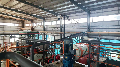
The Desen modular soil washing system (DSLX series) achieves this through a carefully sequenced seven-module process:
Module 1: Feed Preparation
Contaminated soil is fed through a pre-screening unit that removes oversize debris (>100 mm) and homogenizes the feed stream. Consistent particle size distribution is critical for downstream process stability.
Module 2: Attrition Scrubbing
A high-shear rotating drum applies mechanical energy and chemical eluents (acids, chelating agents such as EDTA or citric acid, or surfactants depending on the metal profile) to detach contaminants from particle surfaces. For chromium-contaminated soil, reducing agents are added to convert toxic Cr⁶⁺ to insoluble Cr³⁺ before physical separation.
Module 3: Primary Classification
Vibrating screens separate material at a 2 mm cutoff. The >2 mm fraction—typically clean gravel and coarse sand—is discharged as cleaned product after rinsing.
Module 4: Fine Particle Separation
Hydrocyclones and spiral classifiers separate the 0.15–2 mm sand fraction from the <0.15 mm silt/clay slurry. The sand fraction, having low surface area and therefore low contaminant loading, is typically clean enough for site reuse after a final rinse.
Module 5: Sludge Thickening
The contaminant-laden silt/clay slurry enters a high-efficiency deep cone thickener, where flocculants (PAM) aggregate fine particles and accelerate settling. The thickened underflow—now containing the concentrated contaminants in a dramatically reduced volume—proceeds to dewatering.
Module 6: Filter Press Dewatering
High-pressure membrane filter presses reduce the thickened sludge to a filter cake with ≤40% moisture content. This cake—representing typically 15–30% of the original soil mass—contains the vast majority of heavy metal contamination and requires further treatment or secure disposal.
Module 7: Water Treatment and Recycle
Process water passes through chemical precipitation, sedimentation, and pH adjustment stages before returning to the scrubbing circuit. The system achieves ≥90% water recycling, minimizing fresh water demand and eliminating liquid discharge.
Key Performance Data (DSLX Series, 30 tph configuration):
Footprint: ~1,200 m² | Installed power: ≤400 kW | Power consumption: ~260 kWh
Water consumption: 60–100 m³/h (circulating) | Operators: 3–4 per shift
Installation & commissioning: 15 days | Equipment service life: ≥10 years
Typical contaminant removal: 80–95% for heavy metals
Case Study: Changsha Chromate Plant — China's Largest Single-Site Remediation Project
The Changsha chromate plant remediation project stands as a landmark in industrial contaminated site treatment. Decades of chromate production had left the site with extensive hexavalent chromium contamination—one of the most challenging heavy metal pollutants due to its high toxicity, mobility, and the difficulty of complete Cr⁶⁺ to Cr³⁺ conversion.
Desen's modular soil washing system was deployed as the core treatment technology, processing over 2 million cubic meters of contaminated soil in total across multiple phases. The system's ability to integrate chemical reduction, physical separation, and water treatment within a single continuous process proved essential for meeting the stringent remediation targets. This project—now recognized as China's largest single-site contaminated soil remediation—demonstrated that modular washing technology can scale to handle the most demanding industrial legacy sites.
The Modular Advantage: Scalability and Flexibility
Unlike fixed-plant designs that are locked into a specific capacity, modular systems offer genuine operational flexibility:
Phased deployment: Start with a 15 tph module and add parallel trains to reach 100+ tph as project scope expands
Process reconfiguration: Swap chemical dosing modules when contaminant profiles change across different site zones
Equipment redeployment: Upon project completion, disassemble modules and transport to the next site—treating equipment as a reusable asset rather than a sunk cost
Risk mitigation: If one module requires maintenance, parallel trains continue operating—unlike single-train fixed plants where any downtime stops all production
Integrating Smart Controls for Heavy Metal Treatment
Heavy metal remediation demands precise process control. Over-dosing of acid or chelating agents wastes chemicals and risks secondary pollution; under-dosing leaves contaminants in place. The Desen DCS (Distributed Control System) with 5G cloud connectivity addresses this through:
Inline pH and conductivity sensors with automated acid/base dosing
Real-time turbidity monitoring in the water treatment circuit
Remote access for process engineers to review performance data and adjust parameters
Automated compliance reporting with timestamped water quality and throughput logs
This level of control is particularly important for multi-metal sites where chemical conditions must be optimized for several contaminants simultaneously—often a delicate balancing act between competing extraction chemistries.
When to Choose Soil Washing vs. Other Technologies
| Site Condition | Recommended Approach | Rationale |
|---|---|---|
| High heavy metal concentration, sandy soil (<30% fines) | Ex-situ soil washing | Maximum contaminant removal; clean sand returned to site |
| Low concentration, large area, long timeline acceptable | Phytoremediation or monitored natural attenuation | Lower cost but years-to-decades timeframes |
| High concentration, clay-rich soil (>50% fines) | Chemical stabilization / solidification | Washing efficiency drops sharply with high clay content |
| Mixed organic + heavy metal contamination | Sequential washing (organic removal → metal removal) | Different extraction chemistry for different contaminant classes |
Conclusion: Precision Engineering for Complex Contamination
Heavy metal contaminated site remediation is not a commodity service—it is an engineering discipline that demands site-specific process design, rigorous chemical management, and equipment built for harsh operating conditions. Modular soil washing systems provide the flexibility to tailor treatment to the contamination profile while maintaining the throughput and reliability expected in industrial operations.
With proven performance across chromium, lead, cadmium, and multi-metal sites—including China's largest remediation project—Desen's modular washing technology demonstrates that effective heavy metal remediation at scale is both technically feasible and economically viable.
Evaluate Your Site's Washability
Desen Environmental offers laboratory-scale treatability studies using your site's actual soil samples. Our process engineers will recommend the optimal modular configuration and provide projected throughput and cost estimates. Contact our technical team to initiate a site assessment.