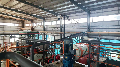
Modular Soil Washing Equipment: The Smart Approach to Heavy Metal Remediation
Heavy metal contamination from industrial activities demands precise, scalable solutions. Explore how modular soil washing equipment provides cost-effective remediation for chromium, lead, arsenic, and other metal pollutants across diverse site conditions.
Industrial activities spanning mining, electroplating, steel manufacturing, and chemical processing have left behind a global legacy of heavy metal-contaminated sites. Metals such as chromium, lead, cadmium, and arsenic persist in soil for centuries, posing severe risks to groundwater, ecosystems, and human health. Traditional remediation approaches often fall short on cost, speed, or effectiveness.
Why Heavy Metals Demand Specialized Remediation
Unlike organic pollutants that naturally degrade over time, heavy metals are elemental and indestructible. They bind strongly to clay and silt fractions, requiring physical or chemical separation to remove from soil matrices. Simple containment strategies only postpone the problem, while landfilling contaminated soil consumes valuable space and creates long-term liability.
The Modular Washing Advantage
Modular soil washing equipment represents a paradigm shift in remediation technology. Rather than building fixed treatment plants, modular systems break the washing process into discrete functional units — feeding, scrubbing, classification, concentration, dewatering, and water treatment — each housed in standardized, containerized modules. This architecture delivers several transformative benefits:
- Rapid deployment: Modules arrive pre-assembled and can be commissioned within 15 days, without foundation construction
- Flexible configuration: System layout adapts to site constraints, and modules can be added or removed as project needs evolve
- Scalable capacity: Processing rates from 15 to 100 tons per hour accommodate projects of any size
- Precision chemistry: Automated dosing of chelating agents and washing reagents optimized for specific metal species
- Zero-waste design: Multi-stage water treatment achieving over 90% recycling, with cleaned coarse fractions available for construction reuse
Verified Results Across Multiple Projects
Field performance data confirms the technology's effectiveness. At a former chromium salt production site in Changsha — one of China's largest single-site remediation projects — the modular system achieved hexavalent chromium removal rates exceeding 98%. At a lead-contaminated industrial plot in Beijing, soil lead concentrations dropped from 850 mg/kg to below 35 mg/kg after washing, with the treated material reused directly for road base construction.
Intelligent Process Control
The integration of DCS automation and 5G IoT connectivity enables real-time monitoring of contaminant concentrations throughout the washing circuit. The system dynamically adjusts reagent dosage, residence time, and separation parameters based on incoming feed characteristics, ensuring consistent output quality while minimizing chemical consumption. At an arsenic-contaminated site in Qinghai, this adaptive control maintained removal rates above 95% despite variable feed composition.
Economic and Environmental Alignment
Compared to traditional dig-and-dump approaches, modular soil washing reduces overall project costs by 30% to 50% while eliminating long-distance contaminated soil transport. The technology supports the circular economy by recovering clean sand and aggregate fractions for beneficial reuse, transforming environmental liabilities into construction resources. As brownfield redevelopment accelerates globally, modular washing equipment provides the technical foundation for sustainable land regeneration.