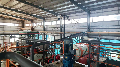
How Oil-Contaminated Soil Washing Equipment Transforms Remediation
Oil contamination poses serious threats to soil and groundwater. Discover how advanced oil-contaminated soil washing equipment with thermal washing technology delivers efficient, cost-effective remediation for petroleum-polluted sites worldwide.
Oil contamination in soil presents one of the most persistent environmental challenges across industries worldwide. From aging oil fields and leaking storage tanks to pipeline ruptures and refinery legacy sites, petroleum hydrocarbons can render vast areas of land unusable for decades. The need for efficient, scalable remediation technology has never been more urgent.
The Challenge of Petroleum-Contaminated Soil
Petroleum hydrocarbons seep deep into soil matrices, binding with fine particles and creating complex contamination profiles that resist conventional cleanup methods. Simple excavation and landfill disposal merely relocate the problem, while bioremediation can take years to achieve meaningful results. The industry demands faster, on-site solutions that minimize transportation costs and secondary pollution risks.
Advanced Thermal Washing Technology
Modern oil-contaminated soil washing equipment combines physical scrubbing with thermal washing to separate hydrocarbons from soil particles. The process begins with pre-screening and crushing to homogenize feedstock, followed by high-intensity scrubbing at carefully controlled water-to-soil ratios. Thermal washing elevates the slurry temperature, reducing oil viscosity and enabling efficient three-phase separation of clean sand, recovered oil, and wash water.
Key Operational Advantages
- High throughput: Processing capacities from 15 to 100 tons per hour, adaptable to project scale
- Oil recovery: Captures and recovers crude oil for reuse, creating economic value from waste
- Closed-loop water system: Over 90% wastewater recycling rate eliminates secondary pollution
- Mobile deployment: Vehicle-mounted design enables rapid site-to-site transfer without fixed infrastructure
- Intelligent control: DCS automation with 5G cloud monitoring for real-time performance optimization
Proven Performance in Challenging Environments
Field deployments have demonstrated exceptional reliability under harsh conditions. In a major Middle Eastern project processing over 100,000 tons of oil-contaminated soil with average hydrocarbon content of 8%, the equipment maintained steady 100 tons per hour throughput for more than six months of continuous operation. The treated soil achieved hydrocarbon levels below 2,000 mg/kg, meeting stringent environmental standards while recovering approximately 5,000 tons of crude oil.
Comprehensive Solution for Diverse Applications
This technology is not limited to oil fields. It effectively addresses contaminated soil at abandoned gas stations, petrochemical plant sites, machinery workshops, port terminals, and tank farm leakage zones. The modular configuration adapts to varying contamination profiles, supporting both dedicated oil remediation and combined treatment of mixed organic-heavy metal contamination.
As global environmental regulations tighten and land reuse pressure mounts, advanced oil-contaminated soil washing equipment represents a proven, economically viable path forward for petroleum site remediation.