How to Choose Soil Washing Equipment for Site Remediation?
Discover key factors for selecting soil washing equipment for contaminated site remediation. Learn how Desen modular systems deliver efficient cleanup.
Selecting the right soil washing equipment is one of the most critical decisions in any contaminated site remediation project. With growing environmental regulations and increasing demand for brownfield redevelopment, project managers need reliable, efficient, and cost-effective treatment solutions. This guide outlines the key considerations when evaluating soil washing systems for your next remediation project.
Understand Your Contaminant Profile
The first step is to characterize the contamination. Different pollutants require different treatment approaches. For heavy metal contamination from industrial sites such as smelters or electroplating plants, physical separation and chemical leaching are effective. For petroleum hydrocarbon contamination from oil fields or gas stations, thermal washing combined with surfactant treatment yields optimal results. Desen Environmental washing equipment supports both scenarios with flexible process configurations.
Evaluate Equipment Mobility Requirements
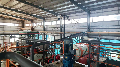
Project location and site conditions heavily influence equipment choice. For urban remediation projects with limited space or projects requiring rapid deployment, mobile soil washing plants integrated on trailer platforms offer distinct advantages. They can be operational within 1-3 days of arrival and require no concrete foundation. For large-scale industrial sites, modular fixed washing systems with higher throughput capacity up to 100 tons per hour provide better long-term economics while maintaining the flexibility to relocate between project phases.
Assess Processing Capacity and Efficiency
Throughput requirements vary significantly between projects. Desen modular washing systems can be configured from 15 to 100 tons per hour, allowing project teams to match capacity to site requirements. Key efficiency metrics include water recycling rates reaching 90 percent or higher, power consumption, and operator requirements. The DCS intelligent control system with 5G IoT connectivity enables real-time monitoring and automated process optimization.
Consider Environmental Compliance
Modern soil washing equipment must meet strict environmental standards. Closed-loop water circulation minimizes wastewater discharge, while enclosed processing prevents fugitive dust and secondary contamination. Desen equipment features integrated water treatment modules that enable near-zero liquid discharge, making it suitable for environmentally sensitive project sites.