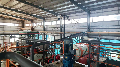
通沟污泥处理技术与设备:工艺流程与工程案例全解
通沟污泥处理技术全解:工艺流程、核心设备(筛分、擦洗、水力分级、压滤)、技术优势与50 t/h工程案例,郑州德森环境materialwashing.com专业提供。
Drainage sediment — commonly referred to as 通沟污泥 (gully silt or drainage channel sediment) — accumulates continuously in municipal stormwater pipes, culverts, intercepting wells and pumping station wet wells. Unlike domestic sewage sludge, drainage sediment is a heterogeneous mixture of sand, gravel, organic detritus, heavy metals, oil and grease, and plastics. Left untreated, it creates blockages, reduces hydraulic capacity, generates offensive odours, and constitutes a significant disposal liability for municipal authorities. Effective drainage sediment treatment turns this waste stream into clean reusable aggregates and substantially reduces tipping fees.
Desen Environment (Zhengzhou Desen Environment Technology Co., Ltd.) — operating through the materialwashing.com technical platform — has designed, manufactured and commissioned more than sixty drainage sediment treatment plants in China and internationally over the past decade. This article explains the composition and hazards of drainage sediment, the technical principles of modern treatment, the equipment Desen Environment supplies, and the results achieved in real engineering projects.
Sources and Characteristics of Drainage Sediment (通沟污泥)
Drainage sediment enters the sewer system from three principal pathways. First, inflow grit and sediment wash in through roadside inlets and catch basins during rainfall, carrying coarse sand, road dust and construction debris. Second, settled solids accumulate in low-velocity pipe sections as a consequence of inadequate flushing or insufficient gradient. Third, organic matter and lightweight debris — leaves, litter, food packaging, fibres — collect in pumping stations and wet wells between dewatering cycles.
The resulting material typically exhibits the following characteristics:
- Grain size distribution: 5%–35% coarse gravel and stones (>10 mm), 20%–45% sand (0.1–10 mm), 20%–40% silt and clay (<0.1 mm)
- Moisture content: 40%–80% depending on collection method and dewatering history
- Organic content (LOI): 8%–25%, varying with catchment land use and season
- Heavy metal contamination: zinc, lead, copper and chromium at concentrations reflecting urban traffic and industrial land use
- Oil and grease: 1%–8% in intercepting wells near fuel stations, bus depots and mechanical workshops
- Plastic and inert debris: bags, cigarettes, textiles, glass and ceramics requiring physical separation
Technical Principles of Drainage Sediment Treatment
The treatment objective is to separate the sediment into three or four clean output streams: reusable coarse aggregate (10–40 mm), washed manufactured sand (0.1–10 mm), fine slurry for thickening and dewatering, and oversized inert debris for landfill. Each stream is processed using different physical separation mechanisms.
Physical Separation by Particle Size
Grit chambers, trommel screens and vibrating grizzlies make the initial size cut. Particles above 40 mm — stones, bricks, concrete rubble, plastics — are removed as oversize debris. Particles below 40 mm proceed to scrubbing and washing.
Attrition Scrubbing and Contaminant Stripping
High-shear attrition scrubbers with opposing impeller blades apply intense shear to break down clay clusters, strip iron oxide coatings, and emulsify oil and grease films adhering to sand grains. Without effective attrition, subsequent classification simply separates dirty lumps rather than clean particles. A minimum 3–5 minute retention time at 75%–85% solids consistency is required for heavily contaminated sediment.
Hydraulic Classification and Heavy-Metal Segregation
Multi-stage hydrocyclones classify the scrubbed slurry by particle size and density. Cyclone overflow — the fine slimes carrying most of the heavy metals and organics — reports to the water treatment loop. Cyclone underflow — clean sand — proceeds to dewatering. Differential settling velocities exploit the density contrast between silica sand (2.65 g/cm3) and heavy metal hydroxides (4–7 g/cm3) to achieve partial heavy-metal pre-concentration in the fines stream.
Water Treatment and Sludge Dewatering
Clarified water from thickener overflow is recycled to the washing circuit. The thickened sludge (4%–8% solids) is fed to a chamber or membrane filter press, producing a 55%–65% solids filter cake suitable for hazardous-waste landfill or, where regulations permit, land application. Polymer flocculant dosing optimises the settling rate and filter cake formation.
Drainage Sediment Treatment Equipment: Core Units
Trommel Screen and Vibrating Grizzly
The first barrier in any Desen Environment drainage sediment treatment line is a heavy-duty trommel drum (mesh 10–40 mm) combined with a vibrating grizzly for oversize removal. Stainless-steel screen panels resist corrosion from the acidic, high-chloride drainage environment.
Heavy-Duty Attrition Scrubber
Desen Environment's attrition cells feature chrome-nickel alloy casing, replaceable polyurethane impeller blades and a sealed shaft assembly tolerant of grit and debris. The cell is available in 15 t/h, 30 t/h and 60 t/h nominal capacities, scalable by parallel installation.
Hydrocyclone Cluster
A two-stage hydrocyclone cluster — 150 mm primary cyclone followed by 75 mm secondary unit — makes a sharp classification cut at approximately 200 microns in the first stage and 75 microns in the second. Ceramic-lined cyclones withstand the abrasive sand load.
Dewatering Screen
Linear-motion dewatering screens with wedge-wire or polyurethane panels drain washed sand to 12%–18% moisture without thermal drying. Integrated spray bars provide final contaminant rinse.
Filter Press
A chamber filter press (630–1,000 mm plate size) handles the slimes slurry, producing a dry filter cake suitable for disposal. Membrane plate variants enable automatic cloth release and higher throughput at lower cycle time.
Technical Advantages of Desen Environment Drainage Sediment Equipment
Desen Environment's drainage sediment treatment equipment is purpose-engineered for this demanding application, with the following differentiators:
- Mobile and modular configurations — self-contained trailer-mounted units deploy to multiple sites without civil works, ideal for municipal contracts covering distributed drainage assets
- Heavy-duty wear package — ceramic-lined cyclones, rubber-lined slurry pumps and replaceable screen panels extend service intervals in high-abrasion grit duty
- Compact footprint — integrated process modules occupy less than 200 m2 for a 30 t/h plant, fitting within existing depot compounds
- Low water consumption — closed-loop recycling recovers 85%–90% of process water; make-up demand is limited to filter cake moisture and evaporation
- Integrated PLC automation — touchscreen HMI with auto-start, fault diagnostics and production logging; remote monitoring via materialwashing.com IoT portal
- Odour containment — enclosed feed hopper, sealed scrubber and covered conveyors control H2S and NH3 emissions within regulatory limits
- Multi-contaminant capability — the same circuit handles sand-dominated inflow sediment and organic-rich wet-well sludge by adjusting retention time and chemical dosing
Engineering Case: Municipal Drainage Sediment Treatment Plant, 50 t/h
A prefecture-level city in Central China faced a growing accumulation of drainage sediment in 23 pumping stations and 480 km of stormwater mains. Annual generation was estimated at 18,000 tonnes (wet basis). The municipal drainage authority required a treatment solution that could be relocated between sites as each pumping station was cleared.
Desen Environment supplied a skid-mounted, four-stage drainage sediment treatment plant with a rated capacity of 50 t/h wet feed. The circuit comprised a feed hopper and vibrating grizzly, a 30 t/h attrition scrubber, a two-stage hydrocyclone cluster, a linear dewatering screen, a 12 m high-rate thickener, a 630 mm chamber filter press, and an enclosed odour-control system.
Operational results over a twelve-month campaign across eight pumping stations:
- 75% of feed mass converted to clean washed sand and aggregate meeting local road-base specification (GB/T 14685-2011)
- Filter cake at 58% solids, disposed of at licensed hazardous-waste facility at significantly reduced volume
- Water recycling rate of 88%, with zero discharge to municipal sewer during normal operation
- Average throughput of 47 t/h wet feed across all sites, with the highest single-site peak of 53 t/h
- Plant availability of 94%, with planned maintenance completed during shift changeovers
Frequently Asked Questions About Drainage Sediment Treatment
Is drainage sediment classified as hazardous waste?
In most Chinese provinces, drainage sediment is classified as Category II general solid waste under GB 34330-2017. However, where heavy metal concentrations exceed screening thresholds or where industrial effluent has entered the drainage system, it may be reclassified as hazardous. Desen Environment conducts representative sampling and analytical testing as part of its project scoping service.
What is the minimum moisture content achievable without thermal drying?
Wedge-wire dewatering screens reduce washed sand moisture to 12%–18% without any heat input. Filter-press cake reaches 55%–65% solids. Thermal drying is rarely required and significantly increases operating cost.
Can the same equipment treat both stormwater sediment and municipal sewage sludge?
Partially. The size classification and washing stages are similar, but sewage sludge has a much higher organic content and requires biological digestion or advanced oxidation before the washing circuit. Desen Environment engineers hybrid configurations for facilities receiving both streams.
How long does it take to commission a modular drainage sediment treatment plant?
A skid-mounted Desen Environment unit is typically installed, connected to power and water, and producing specification-compliant product within 10 to 20 days of arrival on site, depending on site preparation status.
What quality standard must treated sand meet for reuse?
Treated sand from the Desen Environment circuit routinely meets GB/T 14684 (construction sand) and GB/T 14685 (aggregate) specifications for particle size distribution, methylene blue value, chloride content and heavy metal leaching limits, enabling use in concrete production, road base and masonry applications.
Conclusion
Drainage sediment treatment is a practical and economically sound solution to a growing municipal problem. Modern physical separation technology — heavy-duty screening, attrition scrubbing, hydraulic classification and filter-press dewatering — converts a disposal burden into reusable aggregate, clean recycled water and a small-volume filter cake. The key success factors are representative feed characterisation, correct sizing of the classification and dewatering stages, and equipment selected for the specific abrasiveness and contaminant profile of the drainage sediment stream.
Desen Environment (Zhengzhou Desen Environment Technology Co., Ltd.) supplies complete drainage sediment treatment equipment packages — from laboratory test work and process design through to installation, commissioning and after-sales support — through materialwashing.com. To discuss a treatment solution for your drainage network, contact the Desen Environment technical team for a no-obligation feasibility assessment and indicative proposal.