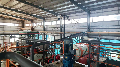
移动式土壤洗淤装备在重金属污染场地修复中的应用
移动式土壤洗淤装备在重金属污染场地修复中的应用:工艺原理、设备配置、化学洗液策略与铅锌熔炊遗址6.5万吨工程案例。Desen Environment专业提供,materialwashing.com
Heavy metal contamination in soil poses one of the most persistent environmental challenges facing industrial sites, former manufacturing campuses, mining districts and smelter zones across China and Southeast Asia. Unlike organic pollutants that can degrade over time, heavy metals — lead (Pb), cadmium (Cd), arsenic (As), chromium (Cr) and zinc (Zn) among them — persist indefinitely in the soil matrix, bioavailable through dust inhalation, dermal contact or food-chain uptake. Movable soil washing equipment has emerged as a highly effective remediation technology for contaminated soils containing heavy metals, offering faster treatment cycles than in-situ methods and superior contaminant removal rates compared to conventional excavation-and-landfill approaches.
Desen Environment, operated by Zhengzhou Desen Environment Technology Co., Ltd. (郑州德森环境), has designed and deployed more than forty mobile soil washing systems for heavy metal remediation projects in China over the past eight years. Through its international technical platform materialwashing.com, the company now exports modular wash-plant configurations to sites across Southeast Asia, Africa and Central Asia. This article examines why movable soil washing equipment is the preferred choice for heavy-metal-contaminated site restoration, how the core technology works at a process level, what Desen Environment offers in terms of integrated mobile solutions, and results from completed field campaigns.
Why Heavy Metal Contamination Requires Specialised Treatment
The remediation challenge posed by heavy-metal-contaminated soil differs fundamentally from organic-pollutant cases. Lead, cadmium and arsenic do not biodegrade; they must be physically removed or immobilised in place. Excavation followed by off-site disposal is the simplest but most expensive option — typical tipping fees for contaminated soils in eastern China range from RMB 150 to 300 per tonne, making full excavation uneconomic for sites exceeding 10,000 tonnes of affected soil.
Contaminated heavy metal-impacted soils typically show a distinct particle-size partitioning. Fine-grained fractions — silt and clay particles below 63 microns — carry the highest concentrations because heavy-metal ions adsorb preferentially onto colloidal surfaces with high specific area. By contrast, coarse sand and gravel tend to remain relatively clean unless directly contaminated by point-source discharge (molten metal spillage, slag dumping). This grain-size partitioning is precisely what soil washing technology exploits: separating the fine, metal-laden fraction for targeted treatment while returning cleaned coarser material directly to backfill.
Key remediation targets in Chinese heavy-metal-contaminated soil projects include:
- Cadmium (Cd): total content typically 2–30 mg/kg above background, leachable fraction drives ecological risk assessment
- Lead (Pb): often exceeding GB 15618-2018 screening values of 400–900 mg/kg in former smelter buffer zones
- Arsenic (As): present at elevated levels near gold-copper polymetallic mines; mobility strongly pH-dependent, requiring acid or chelating-wash strategies
- Cromium (Cr): hexavalent Cr from tannery and electroplating sites is far more toxic than trivalent chromium and demands targeted chemical reduction before washing
- Zinc (Zn) / Copper (Cu) common co-occurring metals at battery-manufacturing or galvanising facilities; frequently remediated as a combined wash circuit rather than sequentially
Movable Soil Washing Equipment: Process Design Principles
A complete mobile soil washing plant for heavy-metal remediation follows a sequential physical-chemical processing line. Understanding each stage clarifies why movable equipment outperforms fixed installations in many field scenarios.
Stage 1 — Primary Screening and Pre-Washing
Excavated contaminated soil is dumped directly into the feed hopper of the mobile unit, where a grizzly or coarse trommel screen (typically 40–60 mm aperture) removes oversized debris: concrete chunks, steel reinforcement bars, construction rubble. A high-pressure spray bar installed in the grizzly housing begins preliminary washing, detaching fines from rocks and reducing downstream volumetric load.
Stage 2 — Attrition Scrubbing
This is where most heavy-metal removal occurs at a physical level. The scrubber uses counter-rotating impellers within a water-filled tank to generate intense shear forces that break down clayey agglomerates and liberate contaminant-coated particle surfaces. In the context of heavy metal remediation, attrition scrubbing does not chemically remove metals — it dislodges them from sand grains so they can report with the fines fraction to subsequent separation stages.
A typical Desen Environment heavy-duty attrition scrubber for soil washing delivers 3–5 minutes of retention at 70%–80% solids consistency, sufficient to achieve more than 90% liberation efficiency on standard clays and moderate iron-oxide coatings. For highly weathered lateritic profiles with refractory metal-bearing clay minerals, longer residence times or mild chemical conditioning (pH adjustment) may be prescribed.
Stage 3 — Hydraulic Classification: Hydrocyclones
The scrubbed slurry is fed to a cluster of hydrocyclones that split the material by particle size and density simultaneously. In heavy-metal scenarios, this dual-action classification has an extra advantage:
- Cyclone overflow (typically below 20–45 microns) concentrates both fine particles and any associated metal hydroxides or adsorbed metals.
This fines fraction is the primary target for chemical washing. The cyclone underflow, consisting of clean to moderately contaminated sand (45 μm – 10 mm), may be discharged directly as backfill if analytical testing confirms it meets reuse thresholds — a cost-saving that often justifies the mobile plant investment on its own.
Stage 4 — Chemical Washing
The fine slimes concentrate (often containing more than 60% of total metal loading) enters a chemical wash reactor. Here, Desen Environment typically applies one or more strategies depending on target metals:
- Acid washing: dilute H₂SO₄ or citric acid at pH 2–3 solubilises Pb, Zn and Cd from particle surfaces; the resulting metal-rich liquor is then neutralised to precipitate recoverable compounds.
- Chelating-agent washing: EDTA or DTPA solutions selectively bind heavy metals even at near-neutral pH, reducing corrosion risk and sludge volume compared with acid methods. This approach is preferred when the site will be converted to residential use.
- Biosurfactant-enhanced washing: for mixed organic-inorganic contamination (e.g., PAHs + metals), biosurfactants like rhamnolipids assist both metal desorption and co-contaminant solubilisation in a single stage.
Desen Environment's mobile chemical wash skid is fully contained with automated dosing pumps, closed-tank design (no vapour emission) and integrated pH/ORC control loops for safe field operation.
Stage 5 — Water Treatment and Sludge Dewatering
After chemical washing, the slurry contains dissolved or suspended metals that must be removed before water recycle. A thickener (high-rate Lamella clarifier) concentrates the solids to approximately 8%–12%. The underflow enters a filter press producing 50%–65% dry cake for regulated disposal as hazardous waste. Overflow clarified water, optionally treated with sequential precipitation and carbon polishing when required, is recycled back to the wash circuit at more than 90% recovery rate.
Stage 6 — Treated Material Discharge
Clean washed sand from dewatering screens (moisture approximately 15%) exits through a conveyor directly into stockpile or reuse application. If the treated product meets regulatory standards, it can be reused for site grading, road base construction or backfill within the same remediation project — dramatically reducing disposal costs.
Movable vs Fixed Soil Washing Plants: When to Choose Mobile
Movable soil washing equipment offers specific advantages over fixed plants in heavy-metal-remediation contexts:
- Rapid deployment: trailer-mounted or skid-mounted units can be positioned adjacent to the excavation face on standard transport vehicles; site preparation is limited to a compact concrete pad and temporary utilities. Commissioning typically takes 5–10 days versus months of civil works for permanent plants.
- Multi-site flexibility: large brownfield sites may contain multiple contamination hotspots scattered across hectares; one mobile plant can be relocated sequentially, whereas a fixed plant serves only one location and requires costly repeated mobilisation if the project scope expands to adjacent parcels.
- Lower capital requirement: for moderate-volume projects (5,000–30,000 tonnes), leasing or renting mobile wash equipment is substantially cheaper than constructing a permanent plant with supporting water-treatment and sludge-handling infrastructure.
- Weather-adapted operation: fully enclosed processing modules protect against rain contamination of the process circuit and allow year-round commissioning, even in northern Chinese winters where temperatures drop below minus 10 degrees Celsius (Desen Environment's equipment includes trace-heating on critical pipelines).
Engineering Case: Former Lead-Zinc Smelter Site Remediation
A former Pb–Zn smelting facility in Henan Province, China covered 8.5 hectares with historical slag disposal and tailings storage areas. Soil sampling revealed extensive heavy metal contamination extending to depths of up to 3 metres beneath the ground surface:
- Lead (Pb): average 2,400 mg/kg across impacted zones; maximum peak more than 18,000 mg/kg near former slag piles
- Cadmium (Cd): mean concentration of 35 mg/kg in the upper horizon
- Zinc (Zn): elevated at approximately 1,800 mg/kg throughout former operational footprint
Desen Environment deployed a movable soil washing plant rated at 30 t/h wet-feed capacity to treat approximately 65,000 tonnes of contaminated overburden. The unit was configured with:
- A mobile grizzly feeder and trommel pre-screen (20 mm cut)
- Two parallel attrition scrubbers (30 t/h each) running in rotating shift
- A 150/75 hydrocyclone cluster operating at 2–3 bar feed pressure for size-density classification
- An acid-wash reactor (dilute sulphuric acid, pH approximately 2.5) followed by neutralisation and precipitation of the fines stream containing most Pb and Cd
The treatment campaign ran continuously for 9 months across two seasons:
- Pb removal efficiency averaged more than 87% on treated soil reaching below GB 36600-2018 Class II screening value (Pb less than 450 mg/kg)
- Cd concentrations reduced by over 92%, with post-treatment values consistently under the regulatory limit of 3 mg/kg
- Reclaimed sand volume: approximately 68% of original excavated mass qualified for on-site reuse as engineered fill, generating substantial cost avoidance compared to full off-site disposal
- Average throughput achieved: 27 t/h across the full campaign (operational efficiency 90%) with single-shift capacity peaking at 35 t/h under optimal feed conditions
- Filter cake production: approximately 8,200 tonnes of Cd-enriched and Pb-rich sludge was encapsulated in stable cementitious matrix before hazardous-waste disposal; the treatment rendered it below TCLP leaching thresholds for regulatory release as non-hazardous residue (where permitted by local environmental bureau)
Frequently Asked Questions About Movable Soil Washing Equipment for Heavy Metals
What soil types are most suitable for mobile soil washing?
Sandy, sandy-silt and gravelly soils respond best to physical wash-plant treatment because heavy metals adsorbed on particle surfaces can be liberated through attrition scrubbing. Highly plastic clays require extended retention times or chemical pre-conditioning but remain treatable. Desen Environment's laboratory test service analyses soil grain-size distribution, metal speciation and clay mineralogy before recommending a tailored process design.
How does heavy-metal removal efficiency compare with other remediation methods?
Movable soil washing typically achieves 85%–95% total contaminant reduction for lead, zinc and cadmium — significantly higher than in-situ solidification/stabilisation (60%–75%) or bioremediation (20%–40%). Unlike excavation-and-landfill which merely relocates contamination without destruction, soil washing physically separates contaminants into a concentrated waste stream suitable for safe disposal while producing reusable clean aggregate.
What regulatory standards must treated heavy metal contaminated soil meet?
In China the primary standard is GB 36600-2018 (National Environmental Quality Standard for Soil Contamination Risk Control of Construction Land), which sets screening values by land-use category. Class I restricts to residential/greenfield; Class II covers industrial, commercial and transportation sites. Desen Environment designs wash circuits so that treated output reliably achieves compliance with both class limits on lead (less than 400 mg/kg for Class II vs less than 70 mg/kg) within the specified regulatory matrix.
Can mobile soil washing equipment handle mixed organic-inorganic contamination?
Yes. Many heavy-metal-impacted industrial sites also carry PAH, petroleum hydrocarbon or solvent residues from historical operations. Desen Environment's mobile plants integrate a mild surfactant-washing stage ahead of chemical metal extraction when co-contaminants are detected during the site survey phase. This single-pass approach avoids deploying separate treatment trains for each contaminant class.
How quickly can a movable soil washing unit reach full production capacity on-site?
A trailer-mounted Desen Environment mobile wash plant requires approximately 5–10 days from arrival to commissioning and stable throughput at nameplate rating. This includes foundation pad levelling, power connection (typically three-phase 380 V), water supply tie-in, process piping assembly and operator training.
Conclusion
Movable soil washing equipment represents the most practical remediation pathway for heavy-metal-contaminated soils on large or multi-zone brownfield sites. By combining attrition scrubbing, hydrocyclone classification, targeted chemical extraction and closed-loop water management into a single mobile processing line — Desen Environment delivers full contamination removal in 5–10 days of deployment time at commercial-scale throughputs (20–60 t/h). The resulting clean aggregate is suitable for on-site reuse or construction application, generating substantial cost savings compared to excavation-and-disposal alternatives.
Desen Environment — Zhengzhou Desen Environment Technology Co., Ltd. (郑州德森环境) — designs and manufactures mobile soil washing systems engineered specifically for heavy-metal remediation at contaminated industrial sites across China and internationally. For a detailed feasibility assessment tailored to your project's contaminant profile, contact the technical team via materialwashing.com.