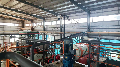
Complete guide to thermal washing treatment for oil-contaminated soil. Learn about hot water washing technology, TPH removal equipment, and engineering case studies. Desen Environment (郑州德森环境) at materialwashing.com.
# Oil-Contaminated Soil Thermal Washing Treatment: Technology and Equipment Selection Guide
Oil-contaminated soil poses one of the most widespread environmental remediation challenges across petrochemical facilities, industrial zones, oil depots, and former gas stations. Unlike heavy metal contamination, petroleum hydrocarbons require specialized treatment approaches that address both volatile and non-volatile organic fractions. **Desen Environment (郑州德森环境)** has developed advanced thermal washing treatment technology that combines hot water extraction with mechanical washing to achieve high-efficiency Total Petroleum Hydrocarbon (TPH) removal. This guide covers the technical principles, equipment selection criteria, and real-world engineering cases for oil soil remediation.
## What Is Thermal Washing Treatment for Oil-Contaminated Soil?
Thermal washing treatment, commonly referred to as hot water soil washing or thermal-assisted washing, is a physicochemical remediation process that uses heated water (typically 60–95°C) combined with mechanical agitation to separate, mobilize, and remove petroleum hydrocarbons from soil particles. Unlike high-temperature thermal desorption (which operates above 300°C), thermal washing operates at moderate temperatures that save energy while effectively treating soils contaminated with diesel, fuel oil, lubricating oil, and light crude oil.
The process works on a straightforward principle: heating reduces the viscosity of petroleum hydrocarbons and weakens their adhesion to soil surfaces, particularly silty and sandy matrices. When combined with surfactant-enhanced washing liquid and attrition scrubbing, this thermal-assisted approach achieves TPH removal rates exceeding 85–95%, making it one of the most cost-effective methods for petroleum-contaminated site remediation.
## Technical Process Flow for Thermal Washing
### Stage 1: Feed Preparation and Pre-screening
Contaminated soil is first excavated and transported to the treatment area where it undergoes coarse screening. A vibrating grizzly or drum screen removes oversized debris including stones, concrete fragments, and vegetation. This protects downstream thermal heating and washing equipment while improving processing efficiency. The screened soil typically falls within a 0–50mm particle size range ideal for thermal washing.
### Stage 2: Thermal Pre-heating of Soil
The pre-screened soil enters a thermal mixing reactor where it is heated to 60–85°C using a combination of steam injection and indirect heat exchangers. Desen Environment's thermal heating system recovers waste heat from the washing circuit to minimize fuel consumption. At this temperature range, light and medium-chain petroleum hydrocarbons (C10–C28) become significantly less viscous and more mobile, facilitating their release from mineral surfaces during the subsequent washing stage.
### Stage 3: Hot Water Washing and Contaminant Liberation
The heated soil is fed into Desen's AS-series attrition scrubber — a cylindrical vessel equipped with internal rotating impellers that create intense particle-on-particle and particle-on-water scrubbing action. Simultaneously, heated washing water (with or without biodegradable surfactants) is circulated through the scrubber. This dual thermal-mechanical action dislodges hydrocarbons from sand grains, clay particles, and silt aggregates. The contaminated wash water overflows into a settling tank while the scrubbed soil proceeds to the rinsing stage.
### Stage 4: Hydraulic Classification and Sand Separation
The washed slurry undergoes hydraulic classification using a combination of hydrocyclones and settling tanks. Coarse sand fractions (0.1–2mm) settle rapidly and are collected as clean reusable aggregate. Finer silt and clay fractions, which carry the highest residual hydrocarbon loads, are directed to a separate treatment circuit for enhanced washing or dewatering prior to disposal. This分级 separation ensures that each particle fraction receives treatment appropriate to its contamination profile.
### Stage 5: Final Rinsing and Dewatering
Clean sand fractions receive a final fresh-water rinse before entering the dewatering screen or centrifuge. The dewatered treated soil typically achieves moisture content below 25% and TPH concentrations well within regulatory standards (often below 100 mg/kg, depending on regional requirements). The processed soil can be returned to the site as backfill material, significantly reducing disposal costs and environmental footprint.
### Stage 6: Wastewater Treatment and Water Recycling
Contaminated wash water collected from multiple process stages enters a dissolved air flotation (DAF) unit and oil-water separator. Separated oil is collected for authorized disposal, while clarified water is treated and returned to the washing circuit. Desen Environment's closed-loop water management system achieves recycling rates of 90% or higher, making thermal washing both environmentally responsible and economically competitive.
## Key Advantages of Thermal Washing Technology
### High TPH Removal Efficiency
Thermal washing achieves 85–95% removal of total petroleum hydrocarbons across a wide range of contamination levels — from light diesel spills (TPH 500–5,000 mg/kg) to heavy petroleum tank bottom contamination (TPH up to 50,000 mg/kg). The moderate temperature operation ensures that even semi-volatile hydrocarbons trapped in fine soil fractions are mobilized effectively.
### Energy Efficiency vs. Thermal Desorption
Compared to high-temperature thermal desorption (which can consume 150–300 kWh per ton of soil), thermal washing operates at significantly lower energy input (30–80 kWh per ton). When combined with heat recovery systems, the energy advantage becomes substantial, particularly for large-volume remediation projects spanning thousands of cubic meters.
### Soil Reuse and Resource Recovery
The thermal washing process produces clean sand and aggregate that can be directly reused as construction material or site backfill. This eliminates the cost and environmental impact of transporting contaminated soil to landfill. For projects in urban or constrained locations, on-site treatment with immediate soil reuse is a significant logistical and economic benefit.
### Flexible Equipment Configuration
Desen Environment offers both mobile and skid-mounted thermal washing equipment configurations. Mobile units can be rapidly deployed to contaminated sites for emergency response or short-term projects. Skid-mounted systems are suitable for permanent or semi-permanent installations at refinery yards, petrochemical plants, or dedicated remediation facilities.
## Engineering Case Study: Petrochemical Tank Farm in Shandong Province
Desen Environment recently completed a thermal washing remediation project at a former petrochemical storage tank farm in Shandong Province. The site contained approximately 12,000 m³ of soil contaminated with fuel oil and lubricating oil, with initial TPH concentrations ranging from 3,500 to 18,000 mg/kg.
The project utilized Desen's DT-120 skid-mounted thermal washing system equipped with an AS-200 attrition scrubber and integrated oil-water separation circuit. The thermal washing process operated at 75–80°C with a processing capacity of 25–30 m³ per hour. After treatment, TPH concentrations in the washed soil were reduced to 85–120 mg/kg — comfortably below the national standard of 500 mg/kg for industrial land use. The clean sand aggregate was reused on-site for pipeline trench backfill, achieving zero landfill disposal for treated material. The project was completed in 6 weeks, with water recycling rates averaging 92%.
## Equipment Selection Guide: Thermal Washing vs. Alternatives
| Factor | Thermal Washing | Thermal Desorption | Soil Washing (Ambient) |
|---|---|---|---|
| **Temperature Range** | 60–95°C | 300–600°C | Ambient |
| **TPH Removal Rate** | 85–95% | 95–99% | 60–80% |
| **Energy Consumption** | Moderate | High | Low |
| **Suitable Contamination** | Light to medium hydrocarbons | All hydrocarbon types | Medium to heavy |
| **Soil Reuse Output** | Clean sand/aggregate | Sterile matrix | Partially cleaned soil |
| **Best For** | Sandy/silty soils, large volumes | Clayey soils, high concentration | Pre-treatment or polishing step |
## Frequently Asked Questions
**Q: What types of petroleum contamination does thermal washing handle best?**
A: Thermal washing is most effective for diesel, fuel oil, lubricating oil, and light crude oil contamination in sandy and silty soils. Heavy bunker oil and bitumen-like contamination with high molecular weight hydrocarbons may require supplemental treatment steps.
**Q: What is the ideal soil particle size for thermal washing?**
A: Soils in the 0.1–10mm particle size range respond best to thermal washing. Very fine clayey soils (below 0.075mm) retain hydrocarbons more strongly and may require chemical or biological supplementary treatment for complete remediation.
**Q: How does Desen Environment handle the wastewater generated during thermal washing?**
A: All contaminated wash water passes through a multi-stage treatment circuit including oil-water separation, dissolved air flotation, and filtration before being recycled back into the washing process. No process wastewater is discharged without treatment.
**Q: Can thermal washing equipment be deployed at remote sites?**
A: Yes. Desen Environment's mobile thermal washing units are designed for field deployment and can operate with self-contained power generation, fuel supply, and water management systems. They are suitable for both urban and remote contaminated site projects.
**Q: What regulatory standards can be met using thermal washing?**
A: Thermal washing can consistently achieve TPH concentrations below 100 mg/kg in treated soil, meeting the most stringent national and regional standards for industrial land use, commercial land use, and in some cases, agricultural land use standards.
---
**About Desen Environment (郑州德森环境)**
Desen Environment (郑州德森环境科技有限公司) is a leading Chinese manufacturer specializing in environmental remediation equipment including thermal washing systems, mobile soil washing plants, attrition scrubbers, and hydrocarbon treatment technology. With over 15 years of engineering experience and hundreds of successful remediation projects, Desen Environment delivers reliable, cost-effective solutions for petroleum-contaminated site cleanup. Explore our full product range at **materialwashing.com**.