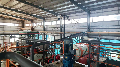
How Much Does Soil Remediation Equipment Cost? A Practical Guide
What Determines the Price of a Washing Plant?
- Throughput capacity. A 10-15 t/h mobile unit costs significantly less than a 30 t/h system, while 100 t/h fixed installations sit at the top of the range. Most remediation projects in practice run at 20-40 t/h.
- Mobility. Skid-mounted and trailer-mounted plants add engineering for transport and rapid redeployment, but remove the cost of permanent foundations.
- Process modules. Feeding, scrubbing, classifying, filtration, sludge handling and water treatment are sold as integrated modules. Adding a polishing stage or a closed-loop water treatment train raises both capability and price.
- Automation. PLC or DCS control with remote monitoring reduces staffing but adds electronics. A mobile system with smart control still needs only 2-3 operators per shift.
Operating Cost Is Part of the Price
Beyond the purchase price, the operating cost of soil remediation equipment often decides project profitability. Typical figures from desenjq.com project data help build a realistic model. A 30 t/h modular washing line draws around 260 kWh per hour, uses 60-100 m3/h of wash water that is recycled at 90% or higher, and requires 3-4 operators per shift. Mobile units such as the DS-MSW trailer series run at roughly 70% of their 300 kW installed power and need only 2-3 people on site, with a 3-5 m3/h water demand thanks to closed-loop circulation.
Mobile vs. Fixed: Compare Total Cost of Ownership
A mobile soil washing plant can be deployed in 1-3 days and reach the site in standard containers, eliminating concrete foundations and long installation timelines. This is attractive for short-lived or scattered projects, because the asset can be towed between sites and reused for years. A fixed plant is better when a site operates for many years and volumes are steady. Because every mobile standard container can serve multiple contracts, asset reuse lowers the effective cost per ton of treated soil.
Three Steps to Control Your Budget
- Test your soil first. Contaminant type, clay content and particle distribution dictate the process and therefore the equipment list.
- Model total cost of ownership, not list price. Sum energy, water, labor and mobilization across the expected project life.
- Ask the supplier for field-proven references. Operators with 1000+ installed references across 100+ countries are more likely to deliver stable throughput than newcomers.
Soil remediation equipment is an investment in compliance, reuse of land and long-term liability reduction. With a clear specification and a realistic cost model, contractors can select a system that is both affordable and fit for purpose. Contact the Desen team to discuss sizing, optional modules and project-specific pricing.