Industrial Soil Remediation: Reclaiming Contaminated Plant Sites with Soil Washing
Common Contaminant Profiles on Industrial Land
- Heavy metals: lead, arsenic, mercury, nickel and chromium are the most reported pollutants in industrial remediation projects.
- Petroleum hydrocarbons: C6-C9 and C10-C40 fractions appear around refineries, depots and underground storage tanks.
- Semi-volatile organics: benzo(a)pyrene and other PAHs, together with chlorinated compounds, are typical of former coke and chemical works.
- Mixed contamination: many industrial sites show metals and organics together, which demands a combined washing and oxidation strategy.
Field Evidence: Washing Plants in Action
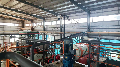
Modular washing systems have handled multi-contaminant industrial soils at scale. A former chemical plant site in Shanghai was treated with a 90 t/h washing line, while a steel mill project in Jinan used a 30 t/h plant to remove lead and arsenic from site soil. Chromate and smelting sites in Changsha and Hunan were remediated at 90 t/h, and a Ningbo project became the country's first 100 t/h contaminated-site remediation installation. These references illustrate how throughput and module configuration are matched to site scale and contaminant load.
The Soil Washing Process for Plant Sites
- Pre-screening removes oversize debris before the washing stage.
- Rotary scrubbing detaches pollutants from soil aggregates under high friction.
- Hydrocyclones and classifiers split coarse sand from fine slurry.
- Clean coarse fractions can be reused on site; fine slurry is dewatered by plate filter presses.
- Wash water is settled, dosed with PAC, PAM and oxidants, and recycled at 90% or above.
Why It Matters
Effective industrial soil remediation converts idle industrial land into valuable, compliant brownfield assets. For owners and contractors negotiating strict environmental standards, a modular or mobile washing plant offers predictable throughput, closed-loop water use and a proven path to meeting regulatory limits. Share your site survey with the Desen team to verify the process design against your contamination profile.