Soil Washing vs Thermal Desorption: Choosing the Right Soil Remediation Technology
When a contaminated site moves from assessment into active remediation, project teams have to choose between fundamentally different treatment technologies. Two of the most frequently compared options are soil washing and thermal desorption. Both can bring contaminated soil back to an acceptable standard, yet they operate in completely different ways, carry very different cost and energy profiles, and suit very different waste streams. This article compares soil washing vs thermal desorption to help environmental managers choose the right soil remediation technology for their project.
What Is Soil Washing?
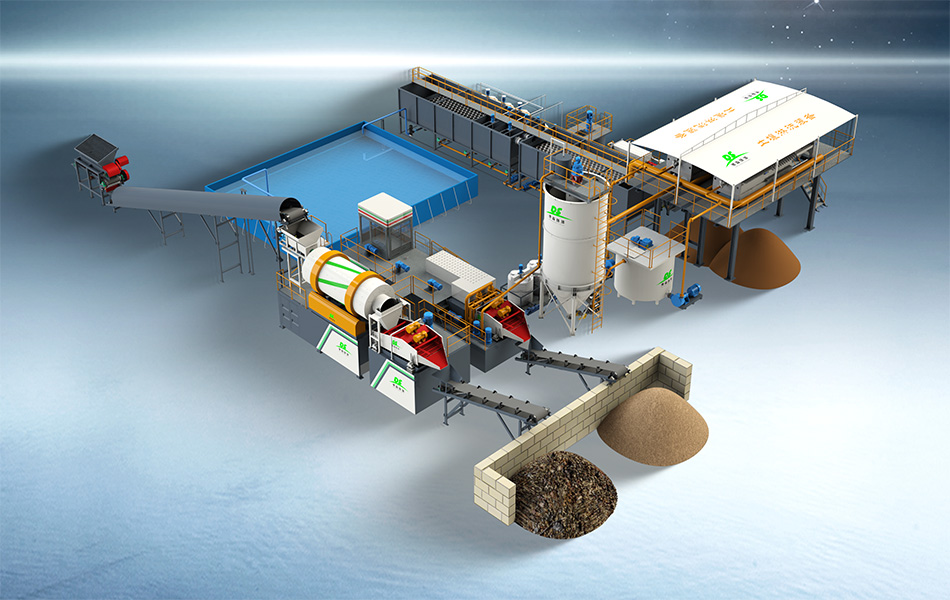
Soil washing is a physical and chemical treatment process that separates contaminated soil into a clean coarse fraction and a concentrated fine fraction. Excavated soil passes through a rotary drum scrubber, where the material abrades against itself to fracture clay aggregates and release contaminants from the grain surfaces. The slurry is then classified by hydrocyclones and dewatering screens. Clean sand and gravel are recovered and can be reused; silt and clay, where most of the contamination often lodges, are thickened and dewatered to a small, manageable filter cake. Washing water is treated and recycled continuously, so water consumption and wastewater discharge stay low.
What Is Thermal Desorption?
Thermal desorption uses heat to remove organic contamination from soil instead of washing it away. The soil is heated in a rotary dryer or similar unit to a temperature at which water and organic pollutants volatilise. The vapour stream is then treated through thermal oxidation or carbon adsorption before the cleaned gas is released. The remaining soil is largely free of organic contaminants, although its physical structure and moisture content may be altered by the high-temperature process.
Soil Washing vs Thermal Desorption: Key Differences
- Removal mechanism: soil washing separates and scrubs grains physically and chemically, while thermal desorption relies on high temperature to evaporate organics.
- Energy demand: washing uses pumps, scrubbers and classifiers with modest electrical load; thermal units consume significant fuel to heat every tonne of soil.
- Contaminant range: washing can address heavy metals together with organic pollutants; thermal desorption is designed for organics only and does not remove heavy metals.
- Soil sensitivity: washing works well with sandy and silty soils and concentrates fines, while thermal desorption treats all soil textures but reshapes the material physically.
- Mobility: modular and mobile washing plants can be relocated between excavation zones, whereas thermal units are usually larger, fixed installations.
- By-products: washing yields reusable sand, a concentrated filter cake and recovered oil; thermal systems produce treated soil, combustion residues and off-gas treatment residuals.
Cost and Energy Considerations
Operating cost is often the deciding factor for large sites. As an example, a 30 t/h soil washing line typically requires installed power of about 400 kW, consumes only roughly 260 kWh per hour of operation, recycles more than 90 percent of its water and needs just three or four operators per shift. Because washing targets the fine fraction, the volume of contaminated material that must be handled downstream is dramatically reduced. Thermal desorption, in contrast, must heat the entire soil mass, so its energy cost rises steeply with throughput and with the moisture level of the soil. For projects of 20,000 cubic metres or more, the cost advantage of washing usually grows with each additional tonne.
When Soil Washing Makes Sense
- Sites with heavy metal contamination, where thermal desorption offers no benefit.
- Mixed contamination combining organics with metals, which washing can treat in one line.
- Sandy or silty soils where washing can recover a large clean fraction for reuse.
- Large volumes in the 15 to 100 t/h range, where per-tonne cost matters most.
- Projects spread across several excavation zones that benefit from mobile or skid-mounted equipment.
When Thermal Desorption Is Preferable
- Very high hydrocarbon concentrations that would overwhelm a washing circuit, for example heavily oily sludge or pitch-like material.
- Streams dominated by viscous, weathered oil where physical detachment is inefficient.
- Remote locations where a fixed, high-efficiency thermal facility is the established and permitted solution.
The Hybrid Approach
The best engineered solutions often combine both worlds. Washing can remove the bulk of contamination and shrink the volume that needs aggressive handling, while a complementary step treats the concentrated residuals. For oil-contaminated soils, Desen also offers thermal-chemical washing systems that raise wash-water temperature and chemistry to detach heavy oil films — a middle ground that extends the practical ceiling of conventional soil washing. In Abu Dhabi, for example, a mobile 100 t/h unit improves contaminated drilling soils with average oil content of about eight percent, demonstrating that modern washing technology can handle demanding oilfield conditions reliably.
Conclusion
There is no universal winner in the soil washing vs thermal desorption discussion. Thermal desorption is powerful for high-concentration organic streams, while soil washing offers lower energy use, the ability to treat heavy metals, smaller residual volumes and a strong case for cost efficiency at scale. For most industrial and petrochemical sites, a well-designed soil washing plant — optionally combined with a targeted thermal or biological step for the concentrates — delivers the best balance of compliance, cost and sustainability.