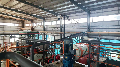
Complete guide to mobile screening equipment for construction waste recycling. Learn about mobile trommel screens, CD waste processing technology, aggregate recovery, and engineering applications from Desen Environment (郑州德森环境) at materialwashing.com.
# Mobile Screening Equipment for Construction Waste Recycling: Technology and Engineering Applications
Construction and demolition (C&D) waste represents one of the largest solid waste streams globally, generating approximately 2–3 billion tonnes annually in China alone. Effective resource recovery from C&D waste depends heavily on efficient screening and classification technology. **Desen Environment (郑州德森环境)** has developed a comprehensive range of mobile screening equipment specifically engineered for construction waste recycling — delivering high-throughput, on-site material separation that transforms demolition debris into marketable aggregate, sand, and reusable soil products. This article provides a complete technical guide to mobile screening equipment for construction waste recycling applications.
## The Growing Importance of Construction Waste Recycling
Urban redevelopment and infrastructure expansion generate massive volumes of mixed C&D waste — including concrete, brick, asphalt, timber, metals, plastics, and mixed soils. Historically, the dominant disposal route was landfilling, but tightening environmental regulations, rising landfill costs, and sustainability mandates are driving a rapid shift toward resource recovery. Modern C&D waste recycling facilities aim to recover over 90% of inert materials (concrete, brick, aggregate) as reusable construction products.
The critical enabler of high-rate recovery is efficient screening — the process of separating mixed C&D waste into defined particle size fractions and contaminant categories. Without effective screening, recyclable materials are commingled with waste and lost to landfill. Mobile screening equipment resolves this challenge by bringing high-capacity classification directly to the demolition site or processing yard.
## What Is Mobile Screening Equipment for Construction Waste?
Mobile screening equipment refers to self-propelled or towable screening plants equipped with one or more screen decks mounted on tracked or wheeled chassis. These units process C&D waste on-site without the need for permanent civil foundations, making them ideal for temporary projects, multiple-site operations, and emergency response scenarios.
Desen Environment's mobile screening lineup includes:
- **MT Series mobile trommel screens** — high-capacity rotating drum screens for coarse oversize removal and primary size classification
- **MF Series mobile flip-flow screens** — high-frequency elastic mesh screens for sticky or clay-bound materials
- **MR Series mobile vibrating screens** — multi-deck horizontal screens for precise size fraction separation
- **MS Series mobile screening trains** — integrated screening + crushing + washing configurations for complete C&D waste processing
Each unit is engineered for rapid deployment, with set-up times under 30 minutes and processing capacities ranging from 80 to 300 tonnes per hour depending on configuration.
## Technical Process Flow for Mobile Construction Waste Screening
### Stage 1: Feed Loading and Oversize Removal
Excavators or wheel loaders feed mixed C&D waste into the mobile screening plant's feed hopper. A vibrating grizzly or bar screen at the hopper throat removes oversized objects (>300mm) including large concrete chunks, rebar, timber beams, and bulky杂物. These oversize fractions are directed to a separate processing circuit — concrete is crushed for aggregate recovery, rebar is magnetically separated for scrap metal, and non-recyclable materials are collected for landfill.
### Stage 2: Primary Trommel Classification
The pre-screened material enters Desen's MT-series mobile trommel — a rotating cylindrical drum equipped with sized perforations. The trommel separates material into three or more size fractions:
- **Oversize (+40mm)**: Concrete fragments, brick pieces, tile shards — directed to secondary crushing
- **Middle fraction (10–40mm)**: Mixed aggregate and sand — a key reusable product stream
- **Minus fraction (−10mm)**: Fine soil, dust, and pulverulent debris — processed for landfill or borrow material
The trommel's rotation speed, drum angle, and screen aperture size are adjustable to match the specific material characteristics of each C&D waste stream.
### Stage 3: Secondary Vibrating Screen Classification
The middle fraction from the trommel undergoes secondary screening on Desen's MR-series multi-deck vibrating screen. Standard deck configurations include:
- **Top deck (20–40mm)**: Coarse aggregate — washed and stockpiled for road base or concrete production
- **Middle deck (5–20mm)**: Fine aggregate — washed and stockpiled for asphalt mix or masonry mortar
- **Bottom deck (−5mm)**: Sand and fine soil — processed for backfill or embankment material
Each fraction is collected in dedicated stockpiles or loaded directly into transport vehicles for dispatch to construction projects.
### Stage 4: Contaminant Removal and Quality Enhancement
Effective C&D waste recycling requires removal of non-inert contaminants — plastics, paper, wood, and organic matter — that reduce the quality and market value of recycled aggregate. Desen Environment's mobile screening trains integrate:
- **Air separation tables** that use adjustable airflow to separate lightweight plastics and paper from heavier mineral fractions
- **Magnetic separators** that extract ferrous metals from all size fractions
- **Optical sorting modules** (on advanced configurations) that identify and remove non-recyclable materials by material type
### Stage 5: Water-Washing Option for Premium Aggregate
For projects requiring high-purity recycled aggregate suitable for concrete production, Desen Environment offers mobile screening units integrated with washing circuits. The washed aggregate undergoes counter-current rinsing to remove adherent dirt, cement paste, and soluble salts. Washed sand and aggregate meet national standards for use in new construction — a significant value-add compared to unwashed recycled product.
## Key Advantages of Mobile Screening Equipment for Construction Waste
### On-Site Processing Eliminates Transport Costs
Traditional fixed-plant recycling requires C&D waste to be excavated and transported to a central processing facility — often at significant cost and with substantial carbon emissions. Mobile screening equipment operates directly at the demolition site or a nearby logistics hub, eliminating round-trip transport for thousands of tonnes of material. For large urban demolition projects, this can represent savings of ¥15–30 per tonne in transport costs alone.
### Rapid Deployment and Project Flexibility
Desen Environment's mobile screening equipment is designed for fast mobilization — the tracked MT and MR series units are self-contained and can be relocated between sites in under two hours. This flexibility makes mobile screening ideal for contractors handling multiple C&D projects across a city region or for municipalities establishing temporary recycling operations at major demolition sites.
### High Throughput with Precise Classification
Modern mobile trommel screens achieve classification throughputs of 100–300 tonnes per hour depending on material type and screen configuration. Multiple screen decks deliver simultaneous separation of 3–5 size fractions, producing cleanly classified products ready for direct sale or reuse. This significantly outperforms manual sorting or basic fixed-screen approaches.
### Reduced Environmental Footprint
Mobile screening at source reduces the environmental burden of C&D waste management in three ways: (1) elimination of transport emissions, (2) diversion of material from landfill, and (3) production of recycled aggregate that replaces virgin quarry materials — avoiding the habitat disruption and energy consumption of quarrying and processing new aggregate.
### Flexible Configuration for Mixed Waste Streams
C&D waste composition varies significantly between project types — demolition of concrete-frame buildings differs substantially from road reconstruction or interior renovation. Desen Environment's modular screening configurations allow operators to adjust deck apertures, screen types, and processing circuits to match the specific waste stream, optimizing recovery rates for each project.
## Engineering Case Study: Urban Demolition Project in Zhengzhou
Desen Environment collaborated with a major demolition contractor in Zhengzhou to process approximately 45,000 tonnes of C&D waste from the demolition of three residential tower blocks. The material stream comprised predominantly reinforced concrete, clay brick, mixed timber, ferrous metals, and plastics.
Desen deployed an MT-200 mobile trommel screening train at the demolition site, configured with a 40mm primary trommel aperture and a two-deck vibrating screen for secondary classification. The processing configuration produced:
- **Coarse aggregate (20–40mm)**: 8,200 tonnes — sold to a local road construction company
- **Fine aggregate (5–20mm)**: 6,500 tonnes — sold to a precast concrete manufacturer
- **Recycled sand (−5mm)**: 4,100 tonnes — used on-site for temporary road construction
- **Ferrous metal recovery**: 1,100 tonnes — sold to scrap metal dealers
- **Residual waste (plastics, organics, fines)**: 3,200 tonnes — disposed at licensed landfill
Overall material recovery rate exceeded 92%. The project's mobile screening operation processed approximately 350 tonnes per day across a 20-week program, generating estimated revenue of ¥3.2 million from recovered products against processing costs of ¥1.8 million — a net benefit of ¥1.4 million compared to the landfill disposal cost scenario.
## Equipment Selection Guide for Mobile C&D Waste Screening
| Parameter | MT Trommel Series | MR Vibrating Screen Series | MS Screening Train |
|---|---|---|---|
| **Best Application** | Primary coarse screening, mixed waste | Precise size fractionation | Complete washing + classification |
| **Throughput** | 100–300 t/h | 80–200 t/h | 60–150 t/h |
| **Screen Area** | 25–50 m² | 15–40 m² | 20–60 m² |
| **Portability** | Tracked, fully mobile | Tracked, fully mobile | Tracked, fully mobile |
| **Ideal For** | Large-volume demolition, mixed debris | Aggregate grading, sand production | Premium aggregate, contaminated material |
| **Set-up Time** | <30 minutes | <20 minutes | <60 minutes |
## Frequently Asked Questions
**Q: What types of construction waste can mobile screening equipment process?**
A: Mobile screening equipment handles the full spectrum of C&D waste including concrete, brick, tile, asphalt, mixed soils, timber, plastics, and ferrous/non-ferrous metals. The trommel and vibrating screen configurations can be adjusted to match specific waste stream compositions.
**Q: What is the typical recovery rate for construction waste using mobile screening?**
A: Well-configured mobile screening operations typically achieve 85–95% material recovery rates for inert fractions (concrete, brick, aggregate). Recovery rates depend on waste stream composition, screening configuration, and the degree of contamination present.
**Q: Can mobile screening equipment handle wet or sticky C&D waste?**
A: Yes. Desen Environment's MF-series flip-flow screen is specifically designed for sticky, clay-bound materials that would blind conventional screens. For severely contaminated material, washing integration can improve screening efficiency significantly.
**Q: What quality standards do recycled aggregates from mobile screening meet?**
A: Products from Desen Environment's mobile screening equipment meet national standards for recycled aggregate use. Washed aggregate from multi-stage screening can achieve quality suitable for non-structural concrete, road base, and masonry applications. For structural concrete applications, additional crushing and quality testing is recommended.
**Q: How quickly can mobile screening equipment be deployed to a new site?**
A: Tracked mobile screening units can be transported to a new site and made operational within 2–4 hours including positioning, power connection, and initial calibration. Towable wheeled configurations deploy even faster for projects with good road access.
---
**About Desen Environment (郑州德森环境)**
Desen Environment (郑州德森环境科技有限公司) is a leading Chinese manufacturer of mobile screening and material processing equipment for the construction waste recycling industry. With over 15 years of engineering experience and a comprehensive product range covering mobile trommel screens, vibrating screens, flip-flow screens, and integrated screening-crushing-washing trains, Desen Environment delivers reliable, high-throughput solutions for C&D waste recycling projects of all scales. Discover our full mobile screening equipment range at **materialwashing.com**.