End of Waste Criteria for Soil Washing Aggregate: How Washed Soil Becomes a Reusable Product
End of waste criteria decide when washed soil aggregate can leave waste controls and be reused. See the four tests and how a soil washing plant produces material that meets them.
End of Waste Criteria for Soil Washing Aggregate: How Washed Soil Becomes a Reusable Product
Across Europe, contaminated soil that leaves a remediation site is legally waste, and waste comes with a price tag: gate fees at landfills, haulage over increasing distances, and disposal taxes that most member states raise year after year. At the same time, the construction sector keeps buying sand and gravel, much of it dredged or quarried far from where remediation projects actually run. End of waste criteria for soil washing aggregate are the bridge between these two facts. When washed sand and gravel from a soil washing plant are assessed against the end-of-waste framework, they can leave waste controls and re-enter the supply chain as construction material. Desen Environmental builds the modular and mobile washing equipment that makes this conversion possible on site.
What the End of Waste Test Actually Requires
The European end-of-waste framework rests on Article 6 of the Waste Framework Directive. It does not declare every cleaned soil fraction a product automatically. Instead, a recovered material stops being waste when four conditions are met:
The material is commonly used for specific purposes, for example structural backfill, road sub-base or pipe bedding sand.
A market or demand exists for that material.
The material fulfils the technical requirements and applicable standards for those purposes.
Using the material will not lead to overall adverse environmental or human health effects.
The detailed assessment procedure differs between member states, and the competent authority in each country defines which tests, permits and declarations it expects. The practical consequence for project owners is the same everywhere: the washed aggregate must be produced under controlled conditions and documented in a form the authority can accept. A washing plant that simply moves soil around without clean separation and records will not produce material that passes this test.
How a Soil Washing Plant Produces Aggregate That Can Meet the Test
Contaminants concentrate in the fine fraction
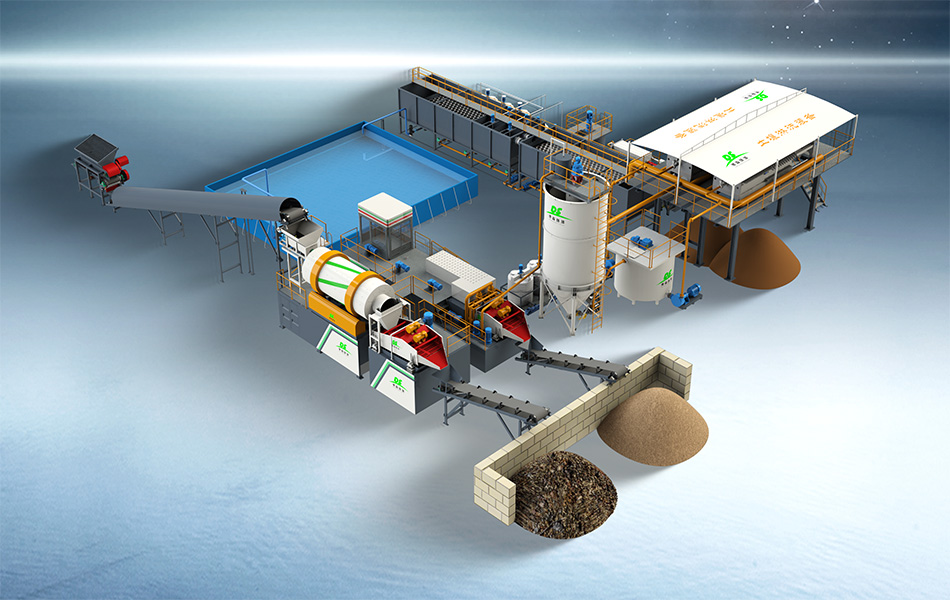
The physical basis for end-of-waste compliance is particle size separation. Heavy metals and organic contaminants bind strongly to silt and clay particles, because fines offer far more surface area per kilogram than coarse grains. A Desen washing plant works with this fact: the scrubbing module breaks down mud coatings and separates fine particles from sand in the slurry, the classifying module splits the flow at defined cut points, and the contaminated fines are pumped to the solid-liquid separation module where a filter press turns them into a compact cake. The coarse washed fraction, typically sand and gravel above the 2 mm range, leaves the line as a clean, consistent product stream. On sandy European soils this coarse share is usually the majority of the feed, which is exactly why washing has become the reference technology for diverting excavated soil from landfill.
Verification, traceability and documentation
Production is only half of the compliance story; the washed aggregate must also be verifiable. In practice that means representative sampling of each output stream, grain size distribution analysis, comparison of contaminant concentrations against the regional screening values that govern the intended use, and leaching tests such as EN 12457, which many member states reference for granular materials. Batch records should link every stockpile to its test results, and independent laboratory confirmation carries more weight with authorities than internal monitoring alone.
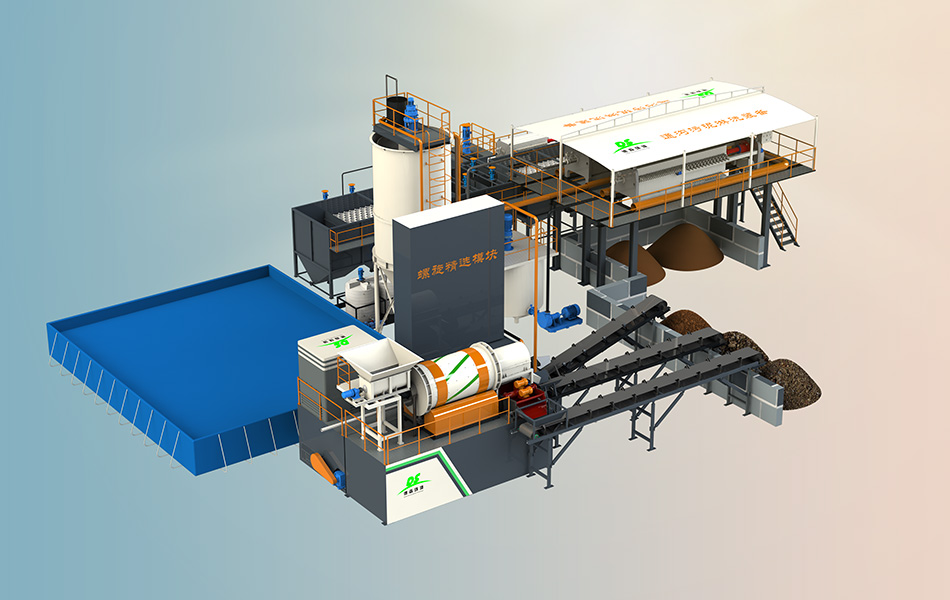
This is where plant design directly affects compliance. A line that keeps the fine and coarse streams cleanly separated, and that dewateres the fines into a separate cake, gives the site manager two clearly defined materials: a coarse fraction destined for reuse assessment and a small concentrated fraction for further treatment or disposal. Mixed, poorly controlled outputs blur that boundary and make the end-of-waste assessment far harder to support.
What This Means for European Remediation Projects
For contractors and landowners in Europe, planning a remediation project around end-of-waste outcomes changes the economics. Disposal volume shrinks to the dewatered fine fraction and any residue that fails testing, while the washed aggregate either returns to the site as engineered fill or is sold into the local construction market. Transport movements fall accordingly, which matters both for cost and for the carbon accounting that public clients increasingly request.
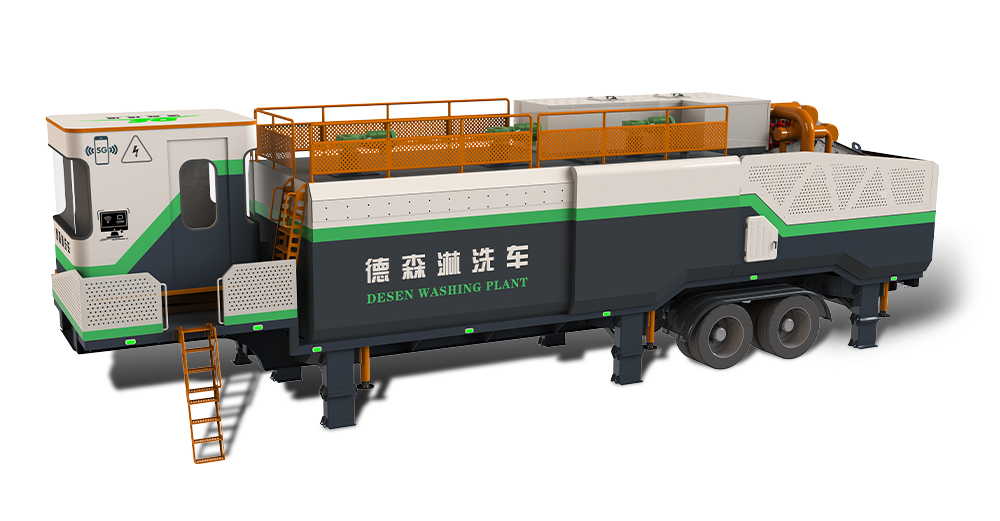
Achieving this depends on equipment choices. Desen supplies modular washing plants composed of four basic modules - scrubbing, classifying, solid-liquid separation and water treatment - and mobile versions that work on a hardened surface without civil foundations. Wash water is treated and recycled within a closed loop, so the site does not trade a soil problem for a wastewater problem. Whether the feed is heavy-metal contaminated soil, dredged sediment or industrial legacy ground, the same principle applies: separate the fines, clean the coarse fraction, and generate the documented, consistent aggregate quality that an end-of-waste assessment can stand on.
If you are evaluating soil washing for a European project and want the aggregate output to qualify for reuse, the Desen team can review your soil data, propose a plant configuration matched to the local assessment rules, and outline the testing programme the washed material will need to pass.