Harbor Sediment Washing Treatment Plant: Cutting Dredged Sediment Volumes for Port Projects
A harbor sediment washing treatment plant recovers clean sand from dredged sediment and cuts disposal volume to a small dewatered cake. See the process, outputs and plant options for port projects.
Harbor Sediment Washing Treatment Plant: Cutting Dredged Sediment Volumes for Port Projects
Ports, marinas and waterway authorities dredge their basins and channels on a fixed cycle, and the sediment they lift out is rarely clean. Decades of urban runoff, industrial discharge and shipping activity leave harbor sediment loaded with heavy metals, hydrocarbons and organic fines. As disposal rules tighten across Europe and Southeast Asia, dumping this material at sea or hauling it to landfill is becoming more expensive and, in a growing number of jurisdictions, simply unavailable. A harbor sediment washing treatment plant offers a different path: wash the dredged sediment on site, recover the clean sand and gravel fraction for beneficial reuse, and shrink the volume that still needs disposal down to a small dewatered cake. Desen Environmental supplies modular and mobile washing plants for exactly this duty.
Why Dredged Harbor Sediment Needs Washing Before Reuse
Contaminants in harbor sediment are not spread evenly through the material. They concentrate in the fine particles, because silt and clay offer far more surface area per kilogram than coarse sand, and organic matter binds metals and hydrocarbons chemically. The sand and gravel that usually dominate the dredged volume are comparatively easy to clean. Washing exploits exactly that difference: intensive scrubbing detaches contaminated coatings and slimes from the coarse grains, classification then splits the slurry at a defined cut point, and the fines carry most of the pollutant load into a dewatering stage. What remains is a coarse fraction that can often be reused inside the port itself.
What harbor sediment typically contains
Heavy metals such as copper, zinc, lead and cadmium, accumulated from urban and industrial runoff over decades.
Hydrocarbons, including oil residues and PAHs from shipping, bunkering and port machinery.
Organic-rich fines and nutrients that cause odor, oxygen demand and rejection of the material at disposal sites.
Physical debris such as timber, plastics and rubble that must be screened out before any treatment step.
How the washing circuit works
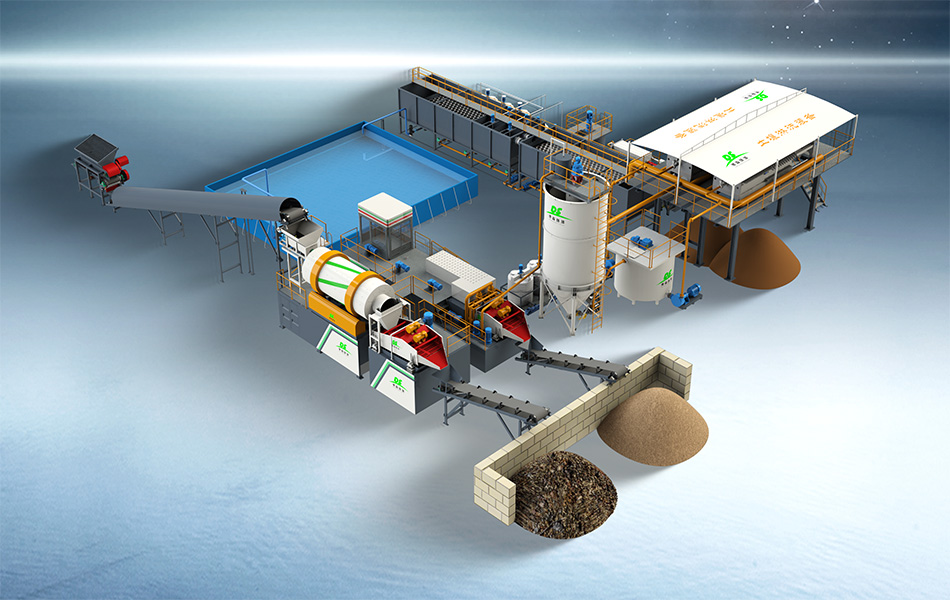
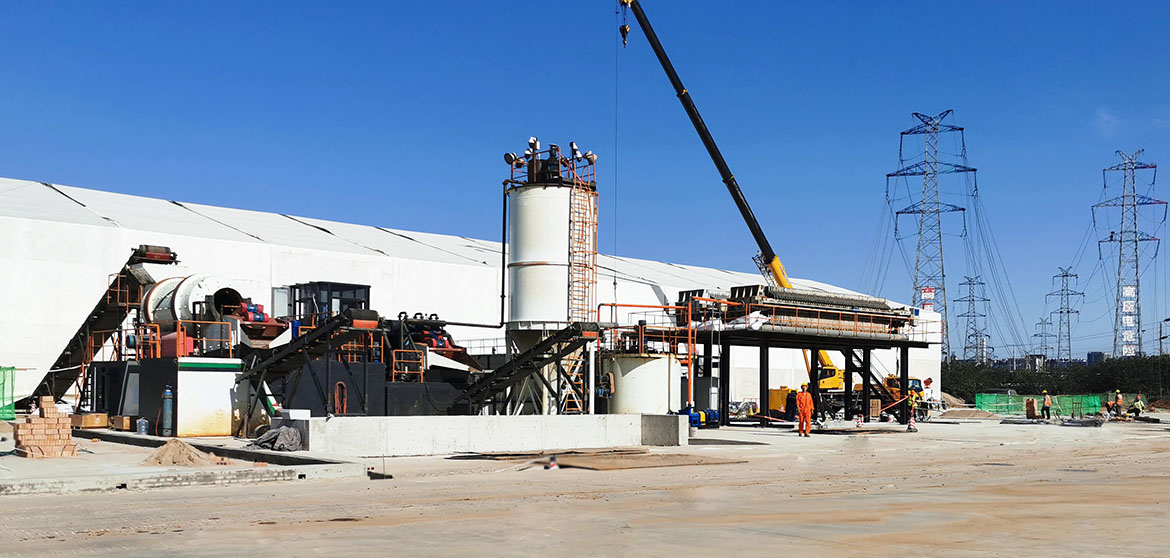
A typical Desen harbor sediment washing treatment plant follows the sequence proven on contaminated soil projects. Dredged material is screened first to remove debris and oversize stones, then fed into an attrition scrubber where rotating drums break down slimes and detach coatings from the sand. The slurry passes through classification equipment, usually hydrocyclones and screw washers, which separate the clean coarse fraction from the contaminated fines. The fines flow into a thickener, where flocculant settles the solids, and the clarified water is pumped back to the front of the circuit. A filter press dewaters the thickened fines into a compact cake, typically reducing the original dredged volume to a small fraction that is practical to transport.
What the Plant Produces and Where It Goes
The commercial case for harbor sediment washing rests on the output streams, not on the equipment itself. A project owner should ask any supplier for a projected mass balance before signing a contract, because the value of the plant is decided by how much material leaves the site as a reusable product.
Washed sand suitable as construction fill, pipe bedding or land reclamation material, subject to the project's acceptance criteria.
Clean coarse aggregate that can be used for harbor pavement, breakwater backing or general earthworks.
Dewatered filter cake holding the concentrated contaminant load, small enough in volume to be hauled to a licensed facility at a fraction of the original cost.
Recirculated process water, which keeps fresh water demand low, an important consideration for ports in the Middle East and Southeast Asia.
Mobile or modular: matching the layout to the site
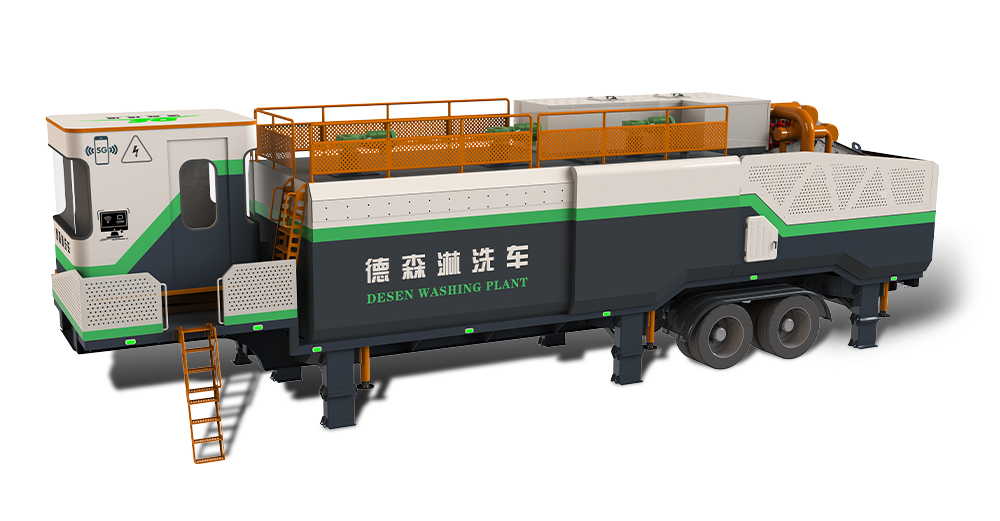
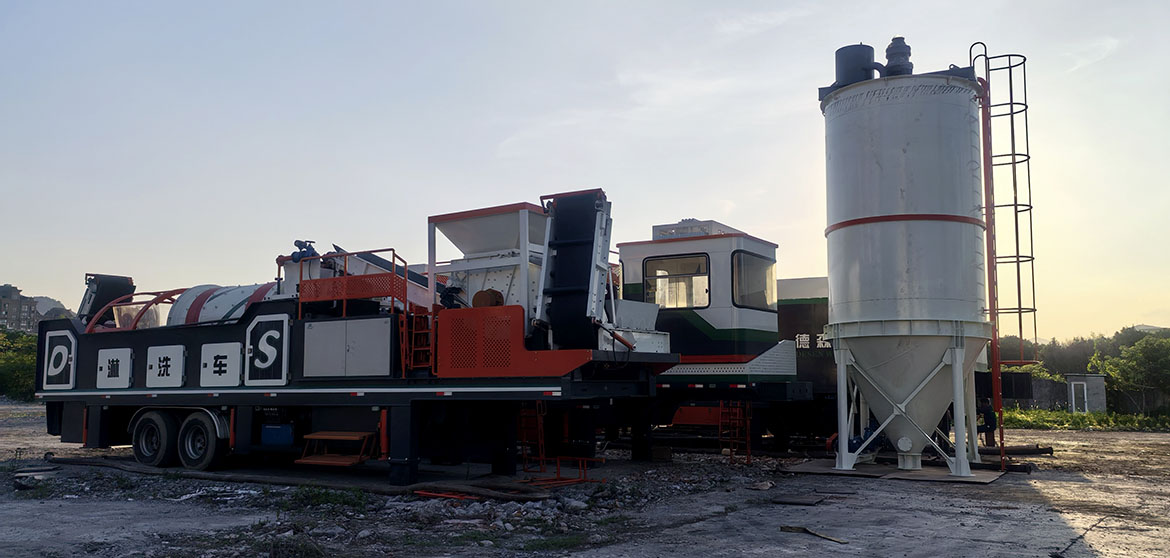
Port projects differ in scale and duration, and the right plant layout follows from that. For a capital dredging campaign spread across several berths, a mobile washing plant can be towed between work fronts and set up quickly on firm ground, which suits contractors who move from one waterway project to the next. For a port authority that manages sediment year after year at a dedicated treatment area, a modular fixed arrangement is usually more economical, since the modules can be arranged around the existing site layout and expanded as volumes grow. Desen supplies both configurations, and the company's engineers size the washing circuit against the sediment analysis before a quotation is issued.
For any port or waterway operator facing rising disposal costs, the first practical step is a sediment characterization test: particle size distribution plus contaminant screening. Those two results determine the expected reduction ratio, the achievable reuse share and the payback of the washing plant. Desen Environmental supports this stage with free lab testing, and reference projects such as the riverside sediment treatment site in Wenzhou show how the equipment performs on real dredged material.