Mine Tailings Washing Classification Treatment: Recovering Value From Legacy Tailings Dams
Mine tailings washing classification treatment recovers sand and aggregate from tailings and concentrates contaminants into a small dewatered cake. See a 30 TPH Desen plant on a Hebei project.
Mine Tailings Washing Classification Treatment: Recovering Value From Legacy Tailings Dams
Every major mining region, from the gold fields of South Africa to the tin and nickel operations of Southeast Asia, carries a legacy of tailings dams closed decades ago under far weaker environmental rules than those in force today. These deposits occupy land, generate dust, and in many cases release acid mine drainage and heavy metals into groundwater. Regulators are tightening their position, and mine owners are looking for treatment options that do not simply move the problem into another hole in the ground. Mine tailings washing classification treatment has become the practical starting point: wash the tailings, split them by particle size, and deal with a small concentrated fraction instead of the whole volume.

Why Washing and Classification Suit Mine Tailings
The logic that makes soil washing work for contaminated land applies to tailings as well, and it rests on one physical fact: in most tailings, contaminants are not distributed evenly across all particle sizes. Heavy metals, residual reagents and sulphide-associated compounds concentrate in the fine particles, because fines offer far more surface area per kilogram than coarse grains. The sand and gravel fraction, once the coatings and slimes are washed off, is frequently clean enough for construction use, mine backfill or rehabilitation material. Washing breaks down the slimes that coat the coarse grains; classification then divides the slurry at a defined particle size, sending the clean coarse material one way and the contaminated fines the other.
Where classification happens in the line
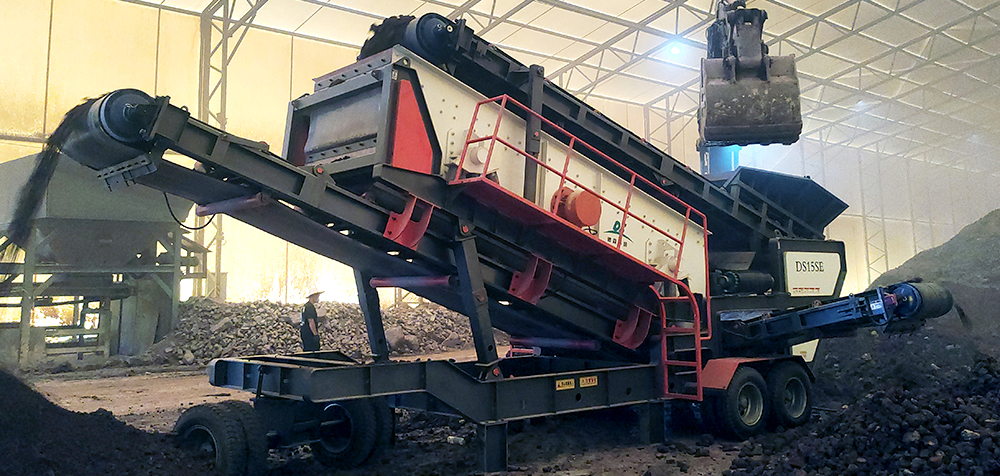
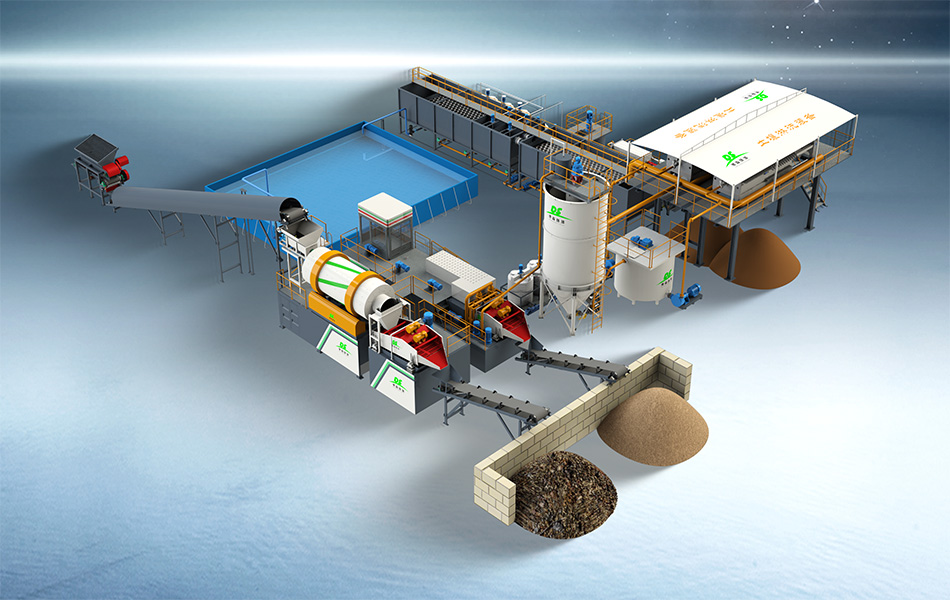
In a Desen tailings plant, classification is a staged process rather than a single machine. A screen first removes oversize debris and coarse reject from the feed. After scrubbing, hydraulic classification by cyclone and sizing screen grades the slurry, typically separating material above roughly 2 mm and then splitting the fine sand below that cut. The overflow, carrying clay, slimes and the attached contaminant load, reports to the thickening stage. Setting the cut points correctly is project-specific work: it depends on the grain size distribution of the tailings and on the reuse limits the cleaned fraction must meet, which is why a flowsheet should always follow laboratory testing of the actual tailings rather than an assumed average.
Closing the water loop
Tailings slurry carries a large amount of water, and in mining regions water is often the scarcest resource on site. After classification, the fine slurry is flocculated and settled in a thickener, and a filter press dewaters the captured fines into compact cakes. Clarified water overflows from the thickener back into the washing circuit. On a balanced plant, make-up water demand is limited to the losses in the dewatered cake and evaporation, a significant difference from disposal routes that consume water and export it inside a waste stream.
Field Reference: A Hebei Tailings Project at 30 TPH
A mine tailings washing and classification treatment project in Hebei, China, commissioned in July 2024, shows the flowsheet in practice. The plant treats tailings classified as mine pollution at a rated capacity of 30 tonnes per hour. Excavated tailings are fed and prescreened, then scrubbed in a rotary drum scrubber that detaches slimes from the sand grains; the slurry is classified, and the coarse washed fraction is stockpiled for reuse while the fines are flocculated, settled in the thickener and pressed into cakes. Brick-lined settling basins along the line capture residual sediment, and the layout sits within a compact yard between the mine's existing buildings.
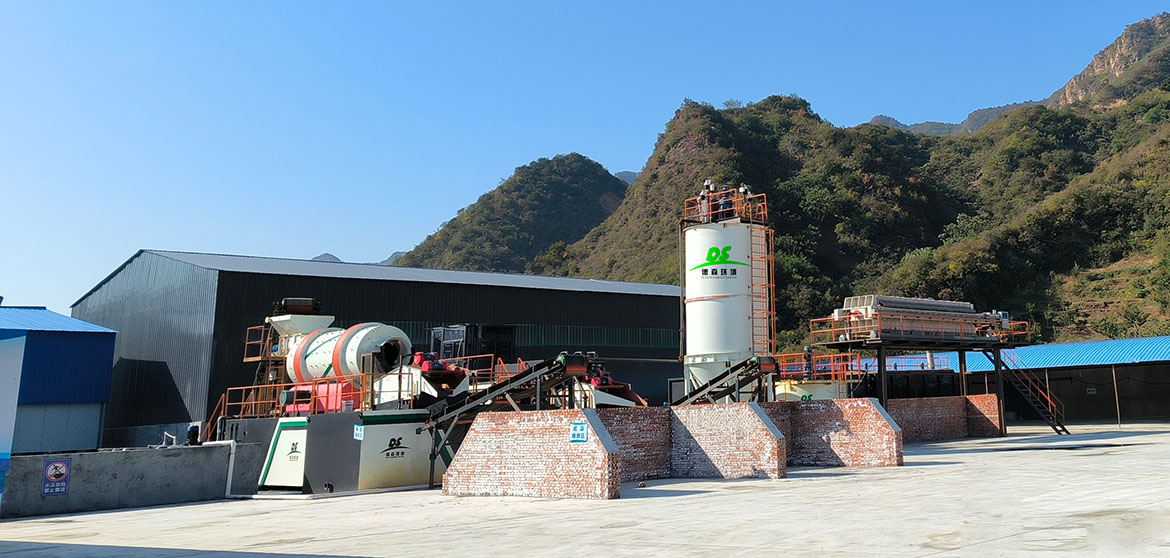
Feed preparation and prescreening — a screen removes oversize debris before the tailings enter the scrubbing circuit.
Attrition scrubbing — the rotary drum scrubber breaks down agglomerates and strips slimes from sand and gravel surfaces.
Multistage classification — screens and cyclones split the slurry, separating the washed coarse fraction from the fine, contaminated stream.
Flocculation, thickening and filter pressing — the fines are settled and pressed into compact cakes that carry the concentrated contaminant load.
Water recycling — clarified overflow returns to the circuit, keeping fresh water demand low across the treatment campaign.
What to Confirm Before Committing to a Plant
Tailings vary more from site to site than almost any other feed material a washing plant can face. Before signing, a project owner should be able to obtain the following from any supplier:
Particle size distribution and metal content by fraction from the actual tailings, because these determine the split between reusable material and dewatered cake.
The water balance of the plant, including closed-loop recovery and expected make-up water per tonne treated.
The disposal route for the cake and the reuse standards the washed fraction must meet in the project jurisdiction.
Site constraints: power supply, available footprint and the distance between the tailings deposit and the treatment yard.
A bench or pilot test on representative samples before the flowsheet is fixed.
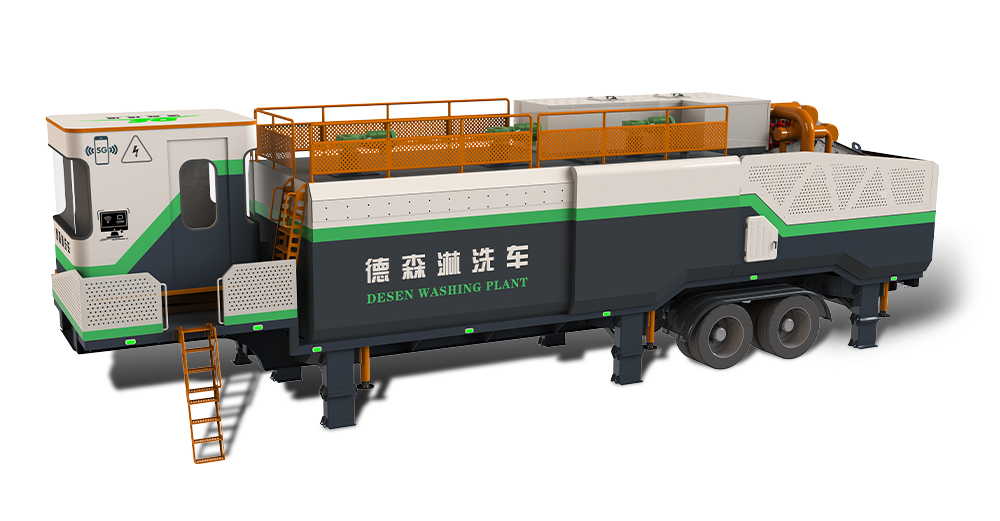
Desen Environmental, Zhengzhou Desen Environmental Technology Co., Ltd., supplies modular and mobile washing plants rated from 15 to 30 tonnes per hour for mine tailings, heavy metal contaminated soil and combined contamination, with references across China and the Middle East and deliveries to Africa and Southeast Asia. For a flowsheet review based on your tailings data, contact desengroups@gmail.com or visit materialwashing.com.