Skid Mounted Soil Washing Unit for Oil Sludge: Compact Hot Washing for Oilfield and Refinery Waste
A skid mounted soil washing unit for oil sludge washes tank bottom and aged oily sludge on site, cuts disposal volume by over 80 percent and recovers clean sand. See the process.
Oil fields, storage terminals and refineries across the Middle East and Central Asia accumulate oily sludge year after year: ground sludge scraped from pit bottoms, tank bottom sludge from crude storage, and aged, weathered sludge from legacy waste pits. Much of it is mixed with sand, which makes it heavy, hard to pump and expensive to haul. A skid mounted soil washing unit for oil sludge treats this material close to where it is stored, separating the oil from the sand so that most of the volume can stay on site. Desen Environmental builds compact hot washing plants designed for exactly this duty, with configurations for both fixed installations and relocation between sites.
Why Oil Sludge Responds Well to Washing
Oily sludge is a mixture of hydrocarbons, water and mineral solids, and the three phases are not distributed evenly. Oil coats the fine particles and accumulates in the slimes, while the coarse sand and gravel fraction carries comparatively little hydrocarbon. Washing exploits that difference: intensive scrubbing detaches oil-coated fines from the sand grains, classification then splits the slurry at a defined particle size, and the fines carry most of the oil load into a dewatering stage. On the sandy sludge typical of Gulf oil fields, the share of material that still needs disposal after washing is correspondingly small, and project data from Desen campaigns show a volume reduction of more than 80 percent.
What hot washing changes
Weathered sludge does not release its oil to cold water alone. The hydrocarbons form a stable emulsion around the solid particles, and that emulsion has to be broken before separation can work. Desen's hot washing process heats the wash water and doses suitable agents to destroy the emulsified structure, lower the interfacial tension and destabilize the oil phase. Once the emulsion breaks, the oil disperses and can be skimmed or separated, the washed sand exits clean enough for backfill on many projects, and a measurable share of the oil is recovered instead of lost to landfill.
How a Skid Mounted Unit Is Built and Operated
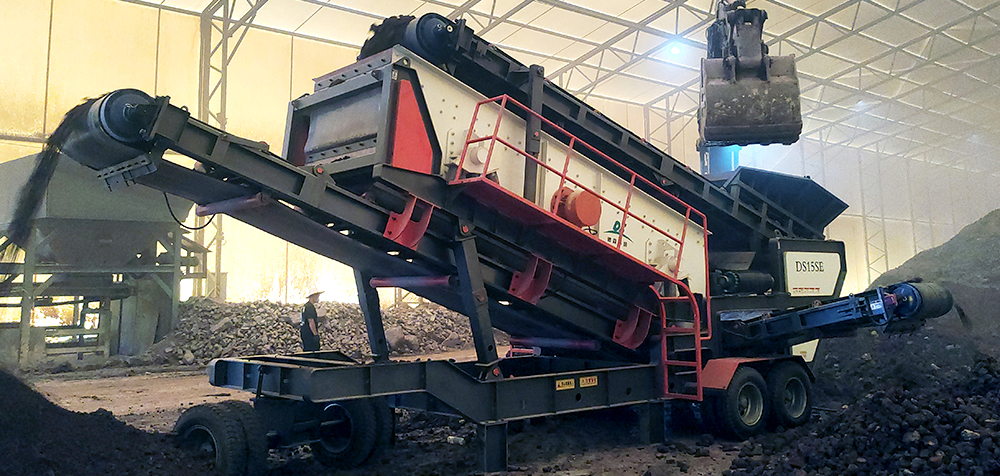
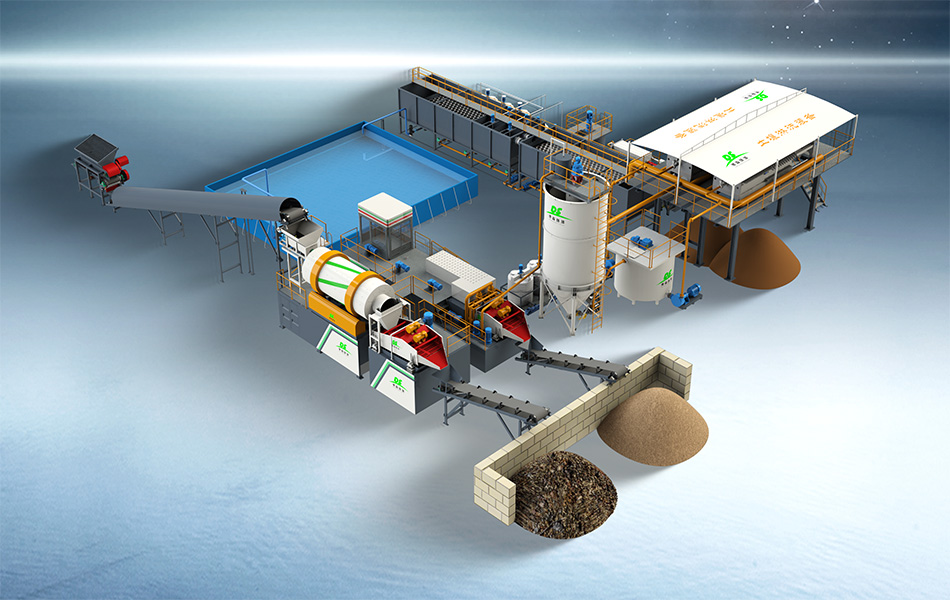
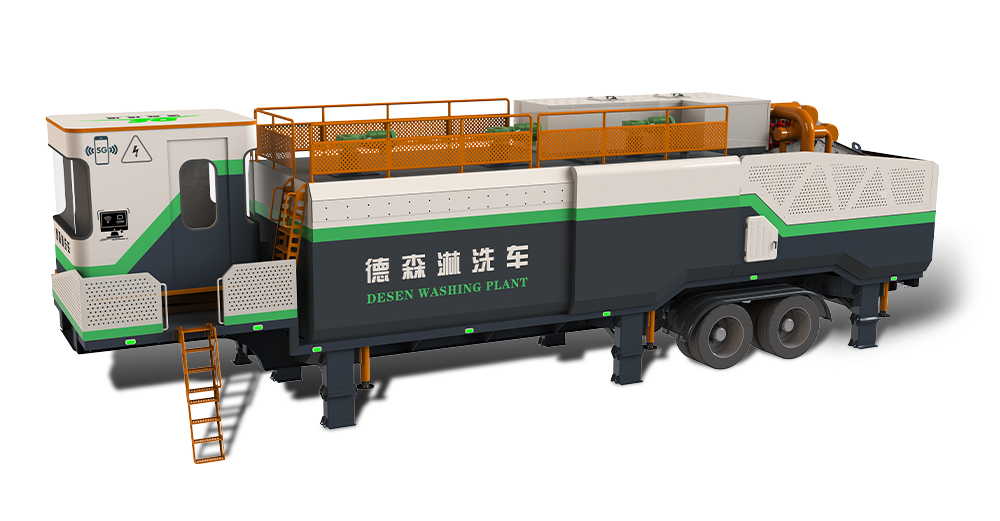
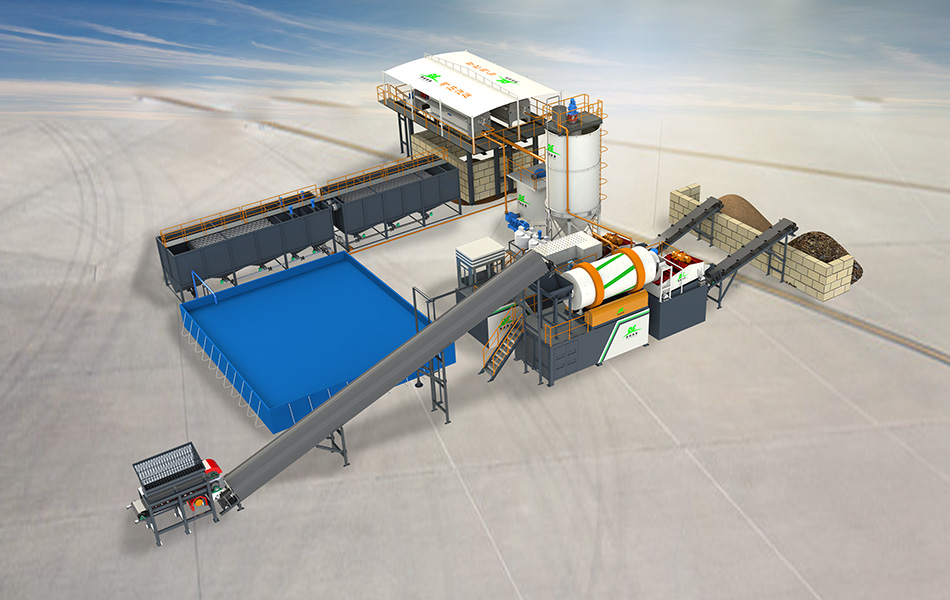
A skid mounted unit ships as pre-assembled modules fixed on steel skids: feeding and prescreening, the hot washing and scrubbing line, classification and dewatering, and the water treatment circuit. The modules connect through belt conveyors and pipework, and each skid is sized so the material flow between stages stays balanced. Because everything arrives assembled, site work is limited to positioning the skids on a leveled area, connecting power and water, and commissioning the line. The whole system runs on an intelligent DCS control platform with remote monitoring, so a small crew can operate the plant and supplier engineers can support it from a distance.
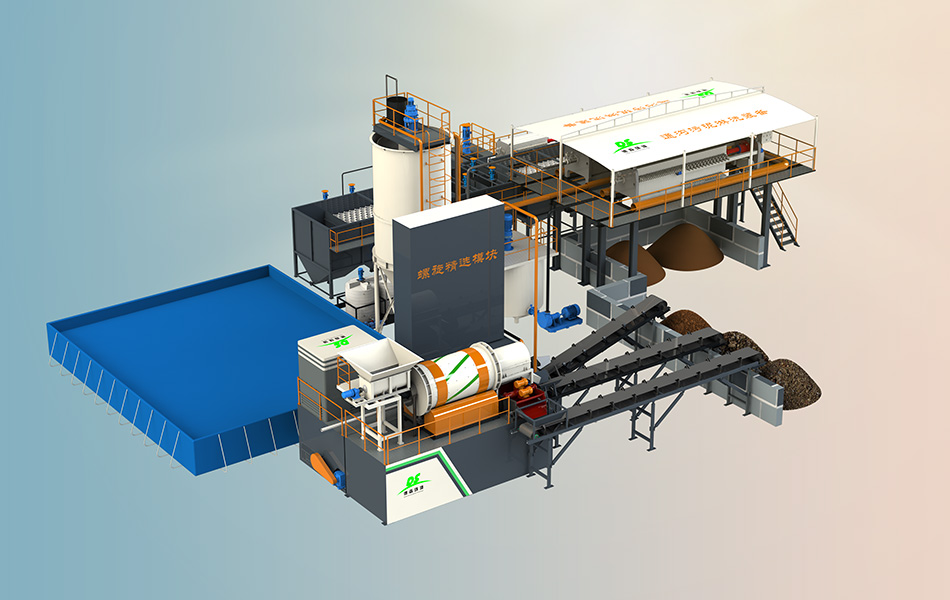
The process flow from waste pit to clean sand
Prescreening: a bar screen removes oversize lumps, rocks and debris so the washing line receives a regular feed.
Feeding and mixing: a screw feeder blends the prescreened sludge with hot water and washing agents into a pumpable slurry.
Scrubbing: a cylinder scrubbing machine uses self-grinding and attrition to separate oil from the sand grains.
Classification: immersion classifying modules grade the 0.15 to 2 mm fine sand fraction and minimize the solid content in the remaining slurry.
Dewatering: the slurry is flocculated and settled, cleaned water overflows to the recycling system, and the concentrated fines are pressed into a mud cake for safe backfill or further treatment.
What Buyers Should Confirm Before Ordering
A skid mounted washing unit is selected against the project, not against a catalogue page. Before requesting a quotation from Desen Environmental or any other supplier, prepare the following information so the configuration matches the actual material:
Particle size distribution of the sludge, especially the sand, silt and clay percentages.
Oil content and the condition of the sludge: fresh ground sludge, tank bottom sludge or aged pit material.
Total volume to treat and the required throughput in tonnes per hour.
Site utilities: available power supply and frequency, water source, and the footprint available for the skids and basins.
The disposal or reuse route for the dewatered cake and the plan for recovered oil.
With this data, a supplier can size the hot washing line, the dewatering stage and the water recycling circuit correctly, and the skid mounted format can then follow the sludge rather than the other way round. For operators managing several pits, tank farms or terminal sites across the Middle East and Central Asia, that mobility is often what turns a one-off cleanup into a repeatable treatment service.