Site Visit and Factory Tour Before a Soil Washing Equipment Purchase: What Middle East and Southeast Asia Buyers Should Check
Planning a site visit and factory tour before a soil washing equipment purchase? See what Middle East and Southeast Asia buyers should check: workshop, FAT and references.
Site Visit and Factory Tour Before a Soil Washing Equipment Purchase: What Middle East and Southeast Asia Buyers Should Check
Ordering a soil washing plant from a supplier on another continent is a decision that is difficult to reverse. Once the contract is signed, the deposit is paid and the steel is cut, correcting a misunderstanding about configuration, wear parts or water treatment costs a project both time and money. For buyers in the Middle East and Southeast Asia, where remediation programs are expanding quickly and delivery distances are long, a structured site visit and factory tour before the soil washing equipment purchase remains the most direct way to confirm what the brochures promise. This article sets out what to ask to see, what to test and how to turn a two-day visit into contract terms that protect the project. 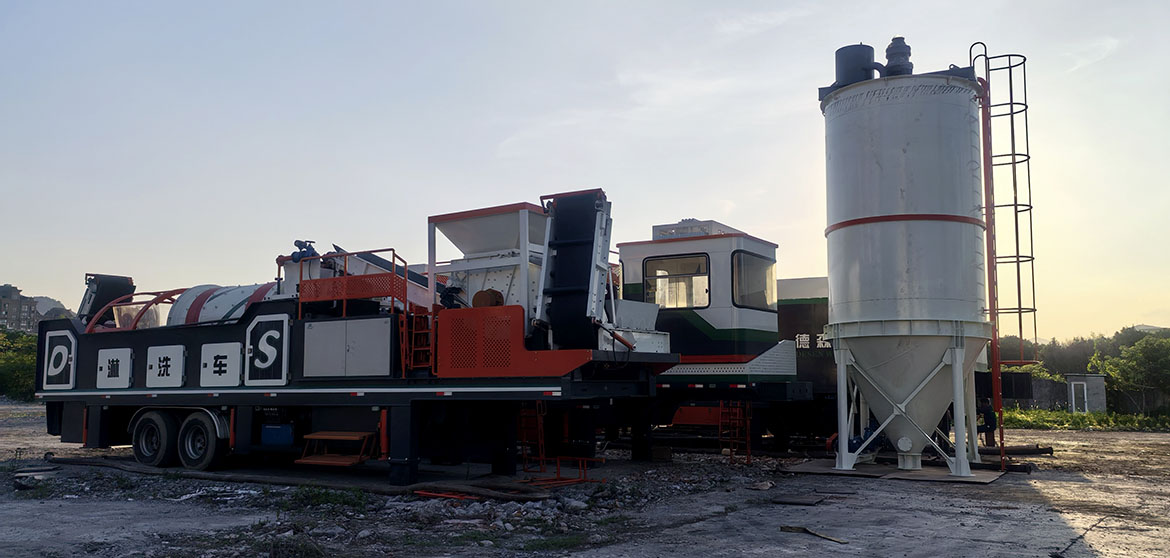
Why a Site Visit Still Matters Before Signing
What brochures and video calls cannot show
Drawings, renderings and video calls answer questions about layout and process, but they do not reveal how a manufacturer actually works. Weld quality on the scrubber shell, the finish inside a pump casing, the condition of jigs and fixtures in the workshop, the way spare parts are shelved and labelled - these details tell a buyer whether the plant arriving in eighteen weeks will match the one discussed in the meetings. A factory tour also shows the scale of the operation: whether the supplier fabricates in-house or assembles bought-in modules, and how many lines can be built in parallel if the project schedule moves.
Seeing the equipment run, not just stand
Wherever possible, ask to watch the plant or at least its core modules run under load. An attrition scrubber that looks complete on the shop floor still needs to demonstrate bearing temperature, motor load and discharge consistency when it is fed. If the supplier runs a demonstration line, schedule the tour around that run and bring the project's own soil data so the discussion stays concrete.
Planning the Factory Tour: What to Ask to See
The workshop and the fabrication floor
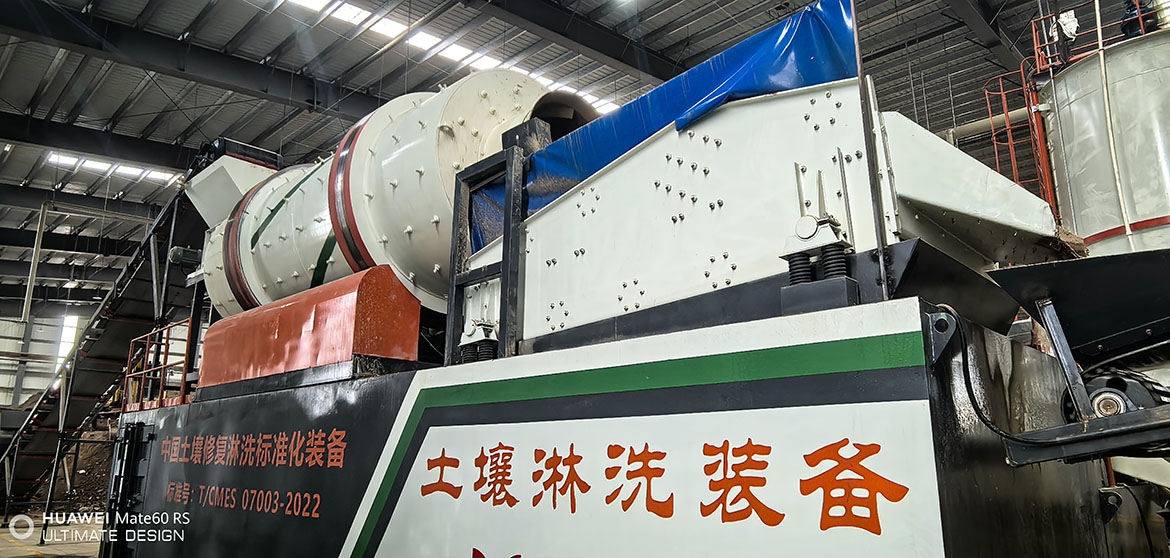
A practical tour follows the material flow of the plant itself. Start where the steel enters: plate cutting, rolling and welding for the drum washer shell and the screening decks. Continue to machining and lining, where rubber or polyurethane wear protection is bonded to surfaces that will handle abrasive, contaminated soil. Ask which components are manufactured on site and which are purchased, and note the brands of the motors, pumps, bearings and hydraulic parts. For buyers in the Gulf and in Southeast Asia, that list matters later - spare parts for recognized brands can usually be sourced regionally, while proprietary components may only come from the factory.
Reviewing the full plant configuration
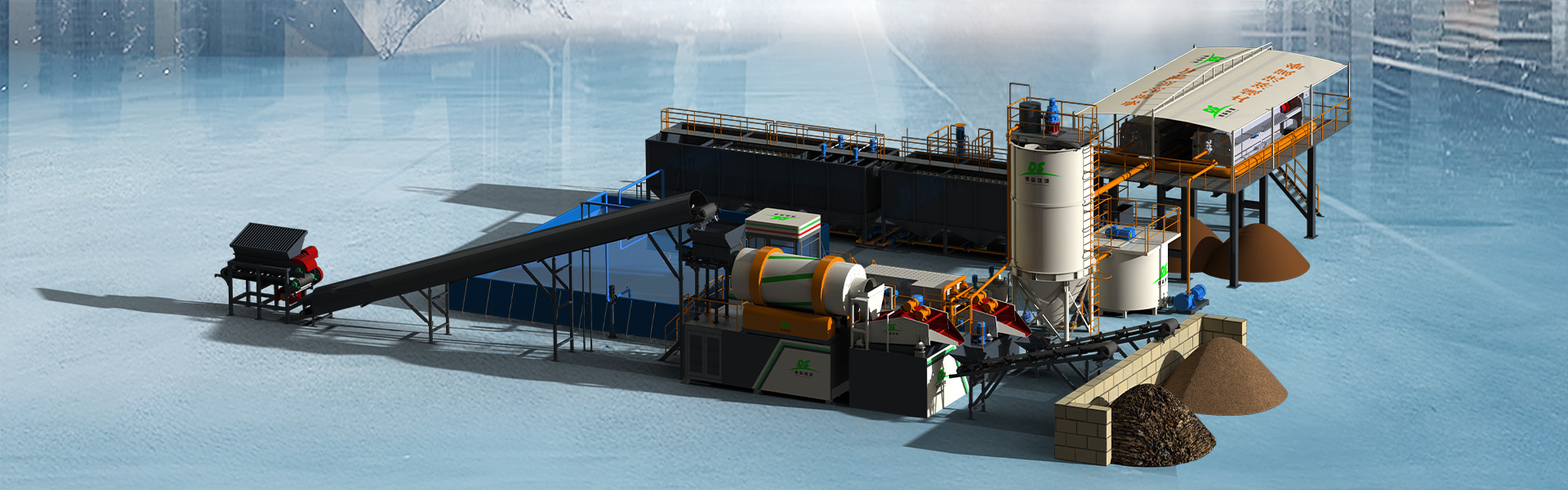
Before or after the workshop walk, sit down with the process engineer and walk through the complete flow sheet: feeding and screening, washing and attrition, classification, dewatering and the water treatment loop. 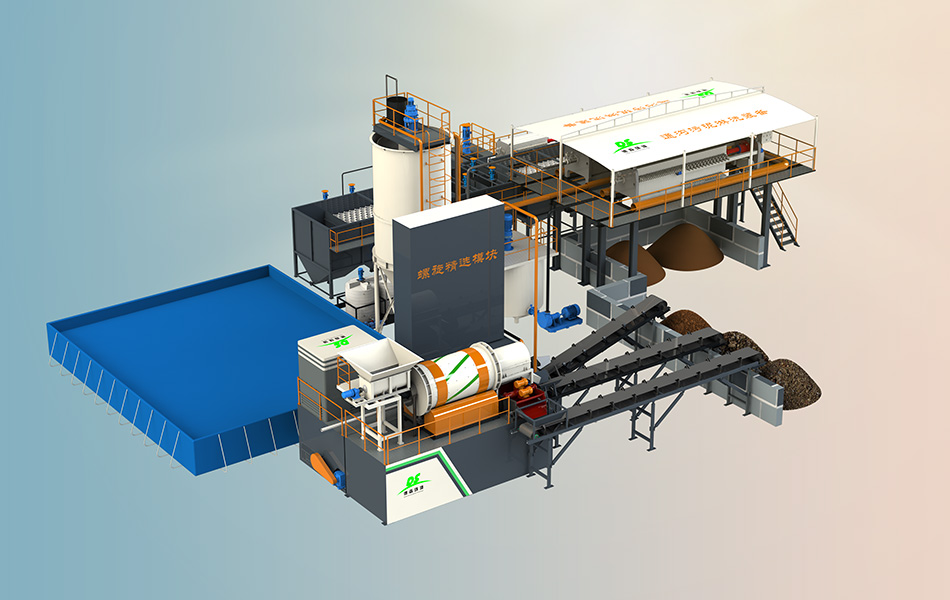 A rendering of the full line, like the configuration above, is the right moment to challenge assumptions: where the fines go, how much fresh water the plant draws, what happens to the sludge from the clarifier, and how the line is protected against the high ambient temperatures and saline water tables common at Middle East sites. Every question answered here is one dispute avoided after delivery.
Turning the Visit Into Contract Terms
What to verify before you leave
A visit earns its cost when it ends with documented answers rather than impressions. Confirm at least the following:
- Factory acceptance testing: what is tested, with what feed material, and which performance figures the test report will certify.
- Wear parts: the expected service life of pump liners, screen panels and scrubber internals at the project's tonnage, and the price list for replacements.
- Documentation: drawings, electrical schematics, operating and maintenance manuals in the language the site team will actually use.
- References: contact details for completed projects in a comparable climate and contamination profile, ideally with permission to call the operator directly.
- Training and commissioning: how many supervisor-days on site, and who pays for travel and accommodation.
- Spares strategy: the recommended first-year spare parts package and whether it ships with the plant or follows later.
Write down what was demonstrated
Every figure shown during the tour - a scrubber running at a stated feed rate, a water consumption estimate, the layout drawings reviewed together - belongs in the technical annex as a factory acceptance criterion, not in meeting notes. Buyers who convert tour findings into signed specifications hold a clear reference point if a dispute arises at delivery.
Plan the follow-up visit
For a purchase of this scale, one visit is rarely the end of the verification. Most buyers return or send an inspector for the factory acceptance test before shipment, when the completed plant can be run with water and feed material. Budgeting for that second trip - or appointing a third-party inspection agency in the supplier's country - completes the assurance chain that began with the first tour, and it gives the project a documented performance baseline before the plant is packed for the port.
A well-planned site visit does not slow a soil washing equipment purchase; it exposes weak points while they can still be changed, and remains the shortest distance between a proposal and a plant that performs on site.