Modular Washing Plant Pipework and Tank Material Selection: Building Lines That Resist Corrosion
How to select pipework and tank materials for a modular soil washing plant, matching slurry, water and reagent streams to the right materials in saline climates.
Modular Washing Plant Pipework and Tank Material Selection: Building Lines That Resist Corrosion
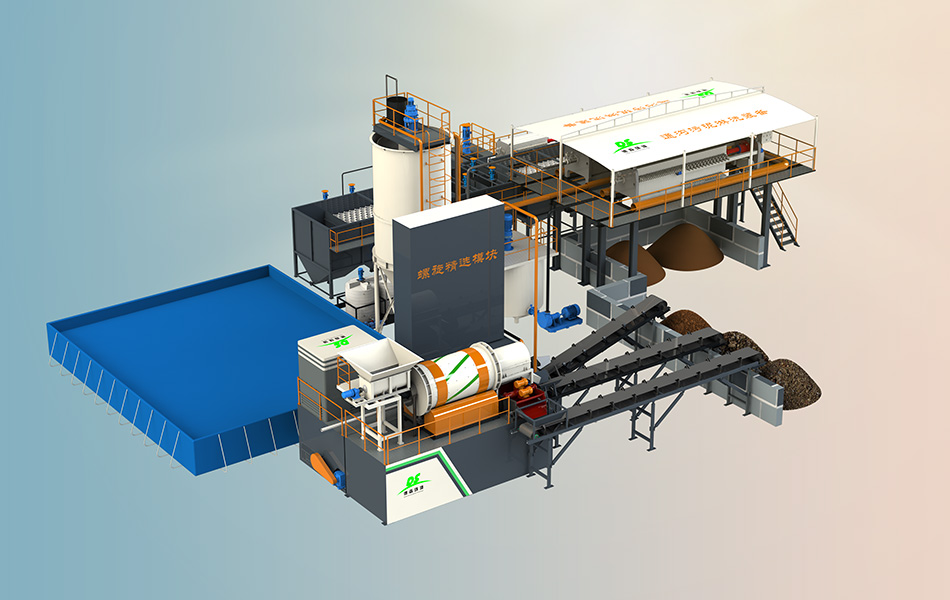
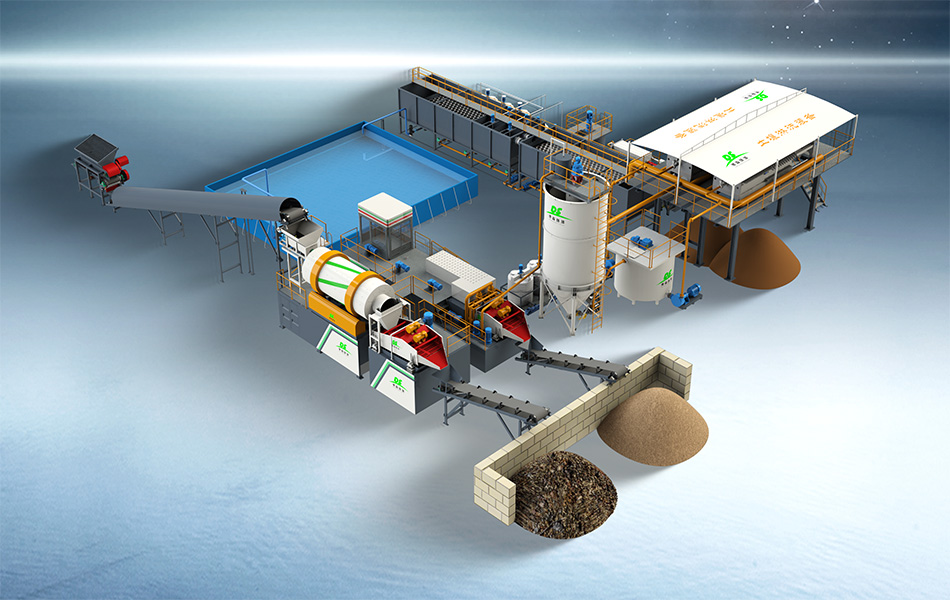
When buyers compare modular soil washing plants, most attention goes to the headline process units: the drum scrubber, the screens, the hydrocyclones, the thickener and the filter press. What connects those modules is often treated as an afterthought. In practice, pipework and tanks are where abrasive slurry, dosed reagents and saline process water meet metal and polymer around the clock, and they are among the first parts of a washing line to demand maintenance. For projects in the Middle East and Southeast Asia, where brackish makeup water and coastal air accelerate corrosion, material selection for these components has a direct effect on uptime and on the total cost of owning the plant.

Why Pipework and Tanks Decide Uptime on a Washing Line
The duty a modular washing line imposes
A soil washing line runs heavily loaded slurry through its scrubbing and classifying stages, recirculates process water that carries fines and dissolved salts, and meters reagents such as flocculants and, on many contaminated sites, acids or chelating agents for pH adjustment. Every one of those streams attacks its containment differently: slurry erodes, saline water corrodes, and dosed chemicals attack both the pipe wall and the gaskets that join it. Because modular plants are designed to run long shifts with a small crew, a single leaking bend or a corroded tank shell can stop the whole line, not just one module.
What fails first
Field experience on remediation sites follows a predictable pattern. Erosion concentrates at bends and reducers on slurry lines, where the flow changes direction and particles grind the wall. Weld seams and shell bottoms on steel tanks show corrosion first, especially where coating quality was inconsistent. Gasketed flange joints weep before they fail outright, and small-diameter dosing lines for acidic reagents degrade fastest of all. Selecting materials with these failure modes in mind is therefore less about premium specifications and more about matching each material to the stream it actually carries.
Selecting Materials System by System
Slurry pipework: design for erosion
On slurry duty, abrasion rather than chemistry sets the requirement. Common practice is to use rubber-lined steel or thick-wall HDPE for main slurry runs, with hardened or ceramic-lined bends at every high-wear change of direction. Bend radii should be generous, and critical bends are supplied as flanged spools for quick replacement so a worn section can be swapped in hours rather than days. Keeping flow velocity within the pumpable range, instead of pushing throughput through undersized lines, extends pipe life as much as any material upgrade.
Process water and reagent tanks
For fresh and recirculated process water, polyethylene or internally coated welded steel both work well, provided the coating is applied and cured under factory quality control. Thickener and slurry tanks are typically welded steel with internal protective linings, since they combine abrasion with exposure to dosed chemicals. Reagent and acid storage demand polypropylene or HDPE tanks with compatible fittings, and stainless steel (316L grade) valves and injectors on the dosing side. Tanks installed outdoors in the Gulf or in tropical Southeast Asia should be UV-stabilised or shaded, because solar exposure degrades unprotected polymer shells over a season.
Corrosion protection in coastal and saline service
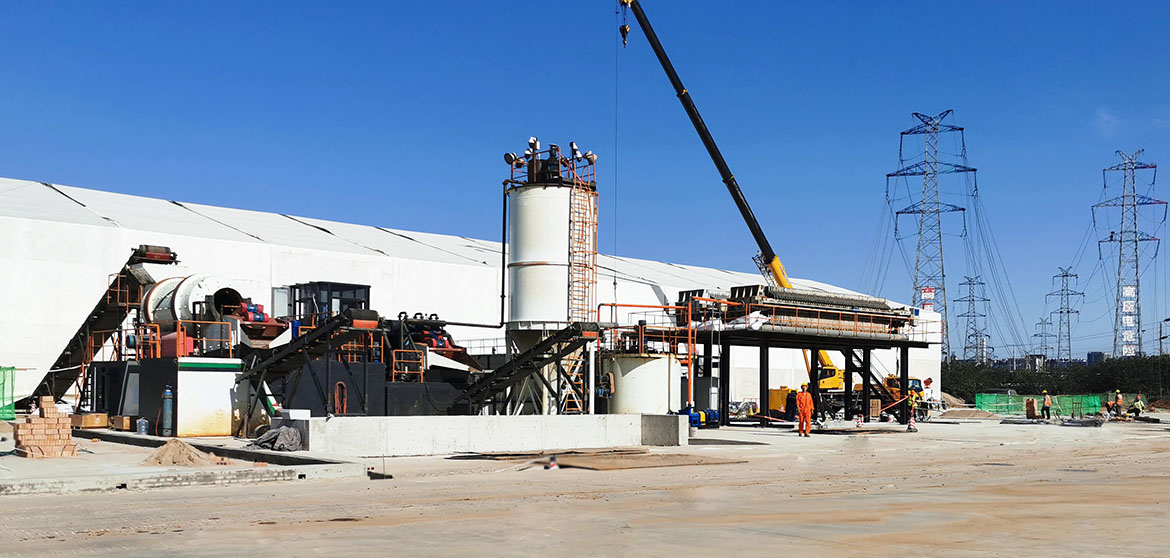
Coastal sites add a second attack front: salt fog. Structural steelwork and tank shells benefit from hot-dip galvanising or high-build epoxy coating systems specified for marine environments. Mixed-metal connections should be insulated to avoid galvanic corrosion between stainless fittings and carbon steel structures. Coating condition on tanks, handrails and pipe supports is exactly the kind of item to verify at the factory before shipment, while repairs are still inexpensive, rather than discovering bare patches after a year of Gulf humidity.
Turning Material Selection Into Site Practice
The commercial value of a careful material schedule appears during operation, when the plant runs week after week without unplanned stops. A practical way to get there:
- Map every stream. Classify each line as slurry, process water, reagent or discharge before choosing any material, so the specification follows the fluid instead of a single generic standard.
- Design for replacement. Use flanged wear bends and accessible pipe runs, and hold critical spares such as lined elbows and dosing hose on site, especially where delivery of parts takes weeks.
- Verify at the factory. Check weld seams, internal linings and coating thickness during acceptance testing, and photograph the finished surfaces for the project record.
- Document the schedule. Keep a material list by stream so operators know which lines are polymer, which are lined steel, and which tolerate which cleaning chemicals.
Desen Environmental supplies pipework and tank material schedules as standard documentation with its modular washing plants, in line with the assembly requirements of the T/CMES 07003 group standard for modular skid-mounted soil washing equipment. For buyers planning projects in saline coastal environments, discussing the expected water chemistry and reagent regime with the plant supplier at the enquiry stage is the simplest way to make sure the line that arrives is built for the site it will serve.