Extended Producer Liability and Contaminated Land Liability Allocation: How the Cost Share Shapes the Remediation Route
Extended producer liability and contaminated land liability allocation decide who pays for cleanup. See how on-site soil washing shifts the cost share.
Extended Producer Liability and Contaminated Land Liability Allocation: How the Cost Share Shapes the Remediation Route
On a contaminated site, the first question a lender, a board or a regulator asks is rarely which treatment works. It is who pays. Extended producer liability and contaminated land liability allocation answer that question from two different directions: one traces cost back towards the maker of the product that caused the contamination, the other apportions cost among the parties connected to the land itself. Both end at the same arithmetic: tonnes, concentrations and the residual risk left after closure. That is also where an on-site soil washing plant changes the negotiation.
The Two Regimes That Shape the Cost Share
Producer responsibility instruments
In North America, producer responsibility instruments, meaning collection and stewardship programmes funded by manufacturers, have expanded steadily at state level. Most of them cover products such as paint, batteries, tyres and packaging rather than soil. Applied to contaminated land they remain closer to a policy direction than to a settled cost-recovery mechanism, but the direction is consistent: where contamination can be traced to a product chemistry, regulators and litigants look further upstream than the fence line.
Land-based liability regimes
Land-based regimes work from the property rather than the product. Under the federal Superfund framework in the United States, and under the voluntary cleanup programmes operated by most states, liability commonly attaches to current and former owners and operators, and to parties that arranged for disposal of hazardous substances at the site. Where several parties are named, allocation tends to follow factors such as the volume and toxicity of each contribution and the cost of separating one contribution from another. Liability can also be joint and several, so one party may be pursued for the whole bill and left to recover the rest, which is why allocation talks start before soil is moved.
What both regimes have in common
Whichever route applies, three numbers carry the argument: how many tonnes each party is deemed to have contributed, how contaminated those tonnes are, and how much residual risk stays on the land when the work is declared complete. The third is the one most often left unquantified, and the one a treatment route can move most decisively.
How On-Site Washing Changes the Allocation Arithmetic
The tonnes you leave behind are the tonnes you carry
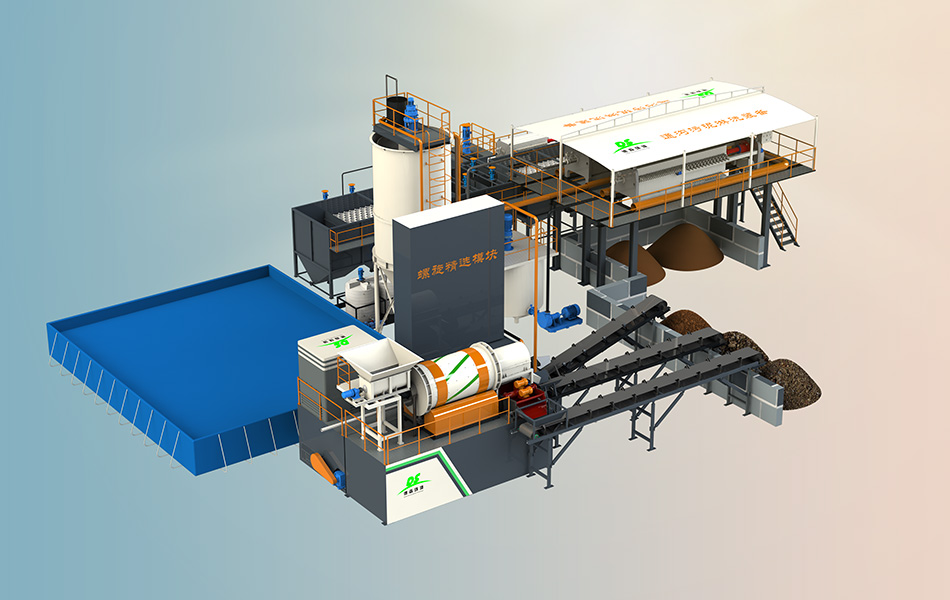
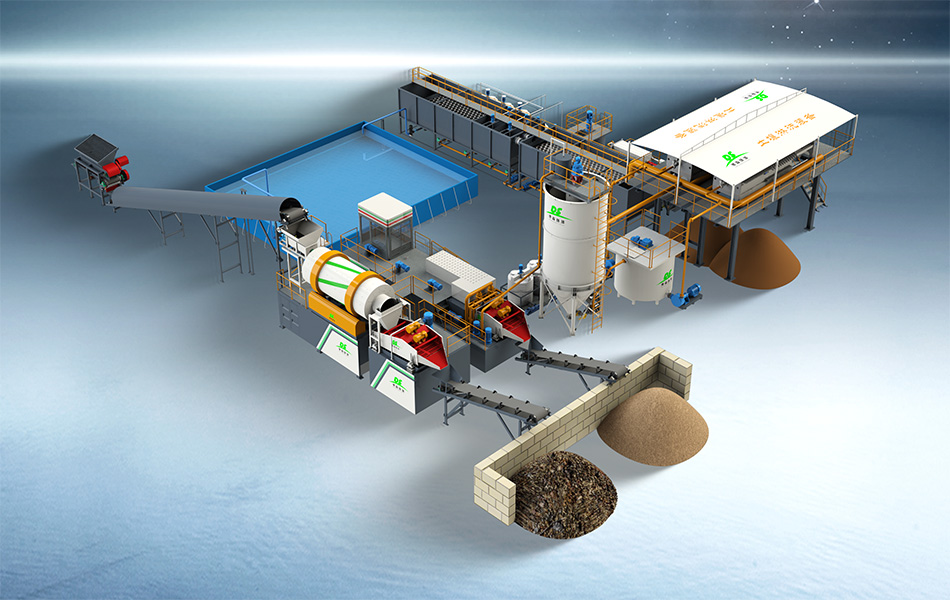
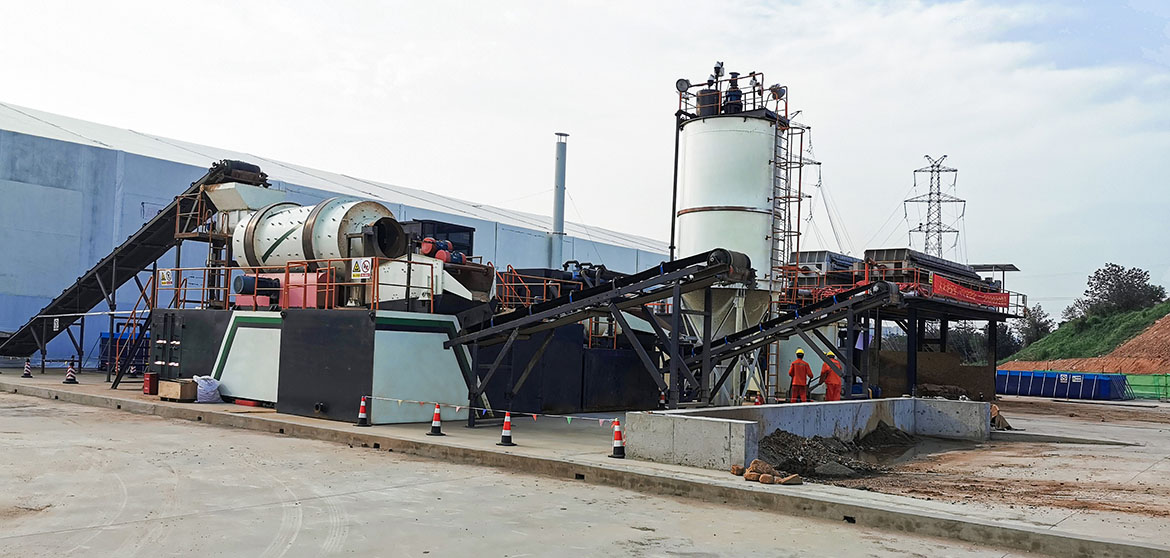
The practical link between process design and liability is mass. If a site holds 40,000 tonnes of contaminated soil and washing returns 70 to 80 percent of it as clean sand and gravel, the volume that must be transported and disposed of falls in the same proportion. In an allocation that runs on volume contribution, the difference between hauling 40,000 tonnes and hauling 8,000 to 12,000 tonnes is not a rounding error. It changes the shape of the settlement, and the size of the financial assurance each party is asked to post.
Closing zones instead of the whole site
Washing also allows part of a site to be released before the rest. Treated aggregate that meets the agreed criteria can be reused on site or sold, and the zone it came from can move towards closure while the fines fraction is still being managed. For an owner working to a remedial action plan with staged certification, that sequence matters: every closed zone reduces the area under long-term monitoring and the liability attached to it.

The residual share stays visible
The fines fraction does not disappear. It leaves as filter cake, characterised and sent to a permitted facility, and the producing party still carries that disposal obligation. What changes is scale and certainty. A small, tested, documented stream is easier to price, easier to bond and easier to defend in an allocation hearing than an uncharacterised mass of mixed soil.
What to Fix in the Agreement Before Mobilization
Liability documents and process design are usually handled by different teams, and the gap between them is where cost quietly reappears. Four items are worth settling before the plant arrives on site.
- The treatment standard and the test that proves it: total concentration, leachate testing, and the sampling frequency each party will accept as evidence.
- The mass balance method: how feed tonnage, washed fractions and filter cake are weighed and reconciled, and who witnesses the weighing.
- The endpoint for treated material: reuse on site, sale as aggregate, or disposal, and which party carries the obligation if a receiving facility rejects it.
- The exit criteria for each zone: what must be demonstrated before a closed area stops carrying monitoring obligations.
Documentation carries the share
Allocation arguments are won on records. A campaign that produces weighbridge tickets, per-batch assay results and a reconciled mass balance gives every party the same numbers to argue from, and gives the owner evidence that the reduction claimed was actually achieved. Treating the water loop as part of the same record helps as well, because discharge quality and reagent consumption are the two figures a regulator is most likely to test against the permit.
Desen Environmental builds modular and mobile soil washing plants for heavy metal, oil and sludge contaminated soil, with the metering points and sampling locations that make a mass balance auditable from the first shift. Equipment scopes and project references are documented at materialwashing.com.