Flocculant Preparation and Dosing in Washing Plants: Settling Fines and Keeping Water Clean
How flocculant preparation and dosing work on a soil washing plant: making down polymer correctly, setting dosage with jar tests, and reading the thickener to keep recycled water clean.
Flocculant Preparation and Dosing in Washing Plants: Settling Fines and Keeping Water Clean
Soil washing removes heavy metals mainly by separating contaminated fines from the coarser sand and gravel. But once a scrubbing stage has stripped the clay coatings off clean sand, those same fines stay suspended in the process water, sometimes for days. A washing plant that cannot settle its fines quickly will drown in its own water circuit: thickeners overflow with slurry, recycled water carries solids back into the washers, and filter presses chase a moving target. Flocculant preparation and dosing in washing plants is the discipline that prevents this, and it is far more sensitive to technique than most buyers expect.
Where Flocculation Sits in a Soil Washing Line
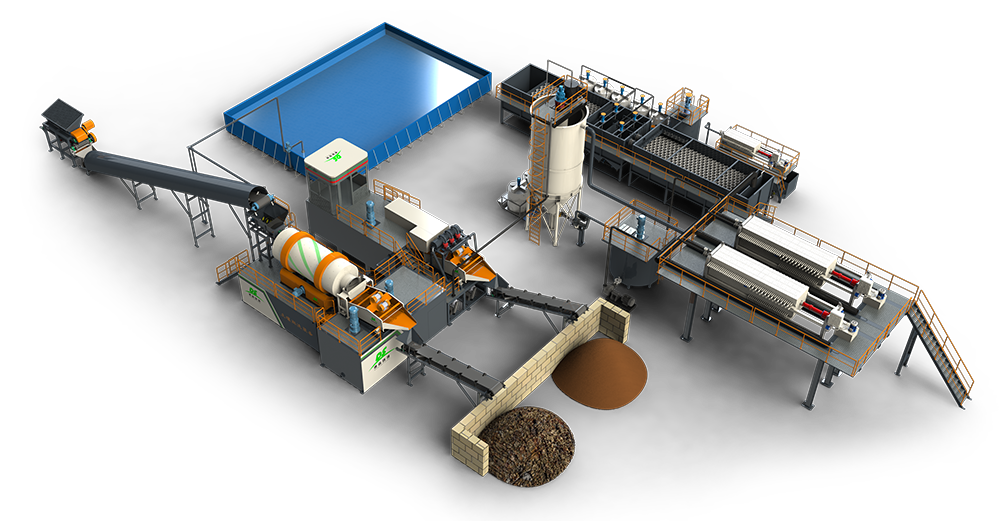
On a typical modular line, flocculant enters the circuit at two points. The first is the thickener or clarifier: slurry from desliming cyclones carries clay and silt into a large tank, where polymer binds fine particles into fast-settling flocs. Solids sink and are raked to the underflow; clarified water rises and returns to the washers. The second point is ahead of dewatering, where flocculant dosed into the filter press feed conditions the sludge so the press forms a releaseable cake instead of a sticky paste.
Why fines will not settle on their own
Clay and silt particles leaving an attrition scrubber are tiny, and they carry surface charges that keep them repelling one another. Left alone, a one-micron particle can take days to fall a few metres. Flocculants work by neutralising those charges and bridging many particles into flocs large enough to settle in minutes. That is the whole mechanism, which is why the gap between a well-run and a poorly-run dosing station shows up in tonnes of slurry handled per shift rather than in laboratory numbers.
Preparation: making a solution, not a paste
Most flocculant failures begin before the dosing pump ever runs. Dry polymer powder is extremely sticky when it gets wet unevenly: if powder meets water in a lump, the outside gels instantly and seals a dry core that will never dissolve. These fisheyes pass through the pump, do nothing in the thickener, and get written off as a weak product. Correct preparation is mechanical and simple:
- Wet the powder across the full water surface with a dedicated wetting cone or eductor, never by pouring powder into a still tank.
- Give the solution ageing time. Most anionic polymers need 30 to 60 minutes of gentle stirring after make-down to reach full viscosity.
- Keep shear low during transfer. High-speed pumps and tight valves tear the long polymer chains, and a torn chain does not flocculate. Use progressive cavity or diaphragm pumps for duty transfer.
- Prepare at a low stock concentration, commonly 0.25 to 0.5 percent, and dilute inline to the working dose. A concentrated solution is hard to meter accurately.
- Do not batch more than the plant uses within its holding window. Aged solution degrades, especially in the hot climates typical of Middle East sites.
Setting and Holding the Right Dose
Dosage is not a fixed number; it follows the slurry. Fine, clay-rich feeds from a gasworks or tannery site may need several kilograms of polymer per tonne of solids, while a sandy feed with a modest fines load needs a fraction of that. The working method is a jar test on actual process samples, run at least once per shift change and any time the feed formation shifts: dose a series of beakers at increasing rates, watch floc size and settling speed, and choose the lowest dose that still gives a clear overflow.
What to watch on the thickener
Overdosing and underdosing announce themselves differently. Underdosing shows as a cloudy thickener overflow and rising solids in the recycled water: the washers slowly silt up and screen decks blind earlier in the shift. Overdosing is more costly and subtler. Flocs grow large and fluffy, the underflow thickens poorly, rake torque climbs, and filter press cycles stretch because the conditioned sludge holds more water. Operators should log overflow clarity, underflow density and dosing pump speed every shift so drift is caught by comparison rather than by failure.
Dosing on compact and mobile lines
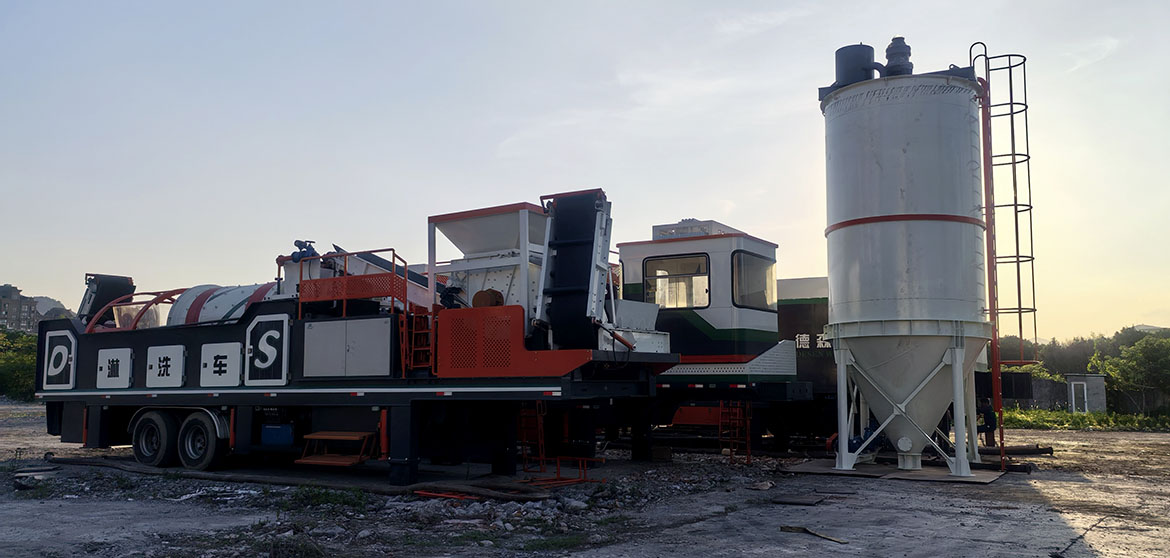
On a compact or mobile washing plant, footprint pressure makes the preparation equipment smaller, so discipline matters even more. A trailer-mounted line may carry a single make-down tank and one duty pump with no standby. Pre-mixing polymer into sealed drums at base, or using emulsion polymer that needs only simple dilution, reduces the number of things that can go wrong at a remote site with a small crew.
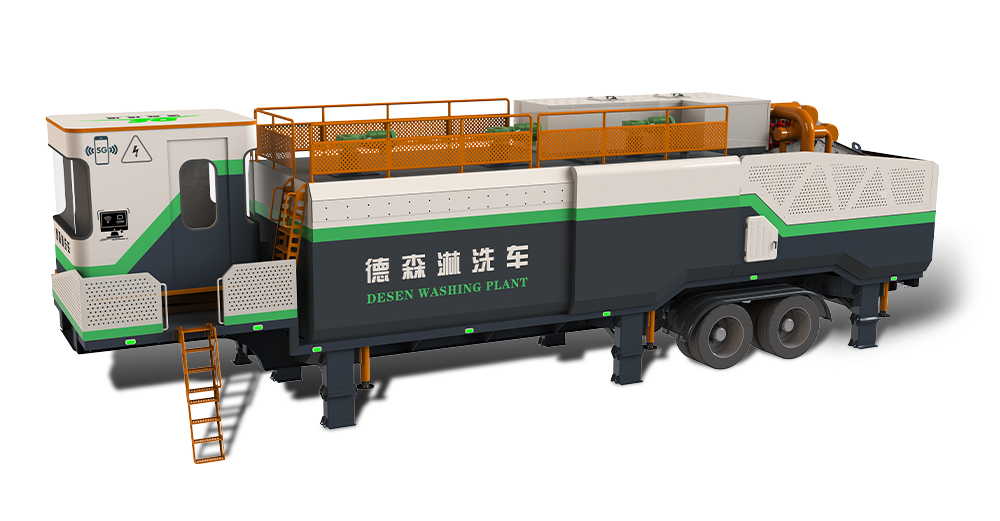
Flocculant dosing looks like a minor utility until it fails, and then it fails everywhere at once: water quality, cake formation and throughput degrade together. Buyers evaluating washing equipment should treat the flocculant station as core process equipment, ask for make-down tank sizing, ageing time, dosing pump type and the jar test procedure, and confirm them during factory acceptance testing. Desen Environmental configures flocculant preparation and dosing on every modular and mobile washing line it builds for soil remediation projects across the Middle East, Europe and Southeast Asia.