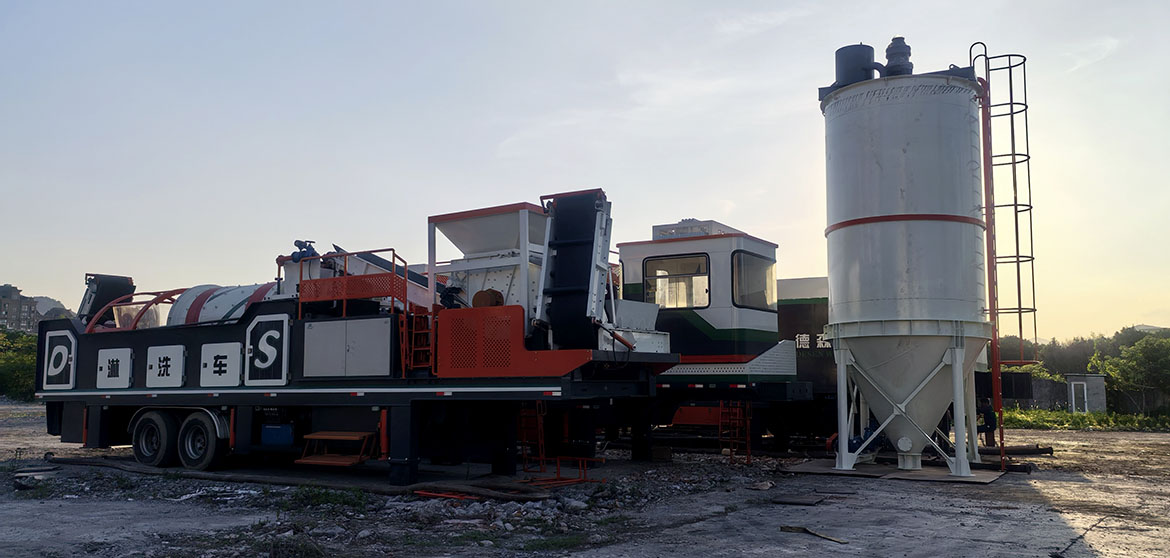
Dewatering Screen Operation for Washed Sand: Deck Selection, Rinse Water and Moisture Control
A practical guide to dewatering screen operation for washed sand: deck media selection, rinse spray setup, vibration settings and hitting moisture targets on a soil washing plant.
When the sand fraction leaves a soil washing plant, it comes off the washer saturated, typically at 20 to 25 percent moisture. That material is too wet to stockpile cleanly, too heavy to haul economically, and unacceptable to most reuse destinations. The dewatering screen is the last machine the sand touches before it becomes a product, and how it is set up decides whether the day's production is a dry, stackable pile or a slumping wet mass. This guide covers deck media, rinse water, vibration settings and moisture verification.
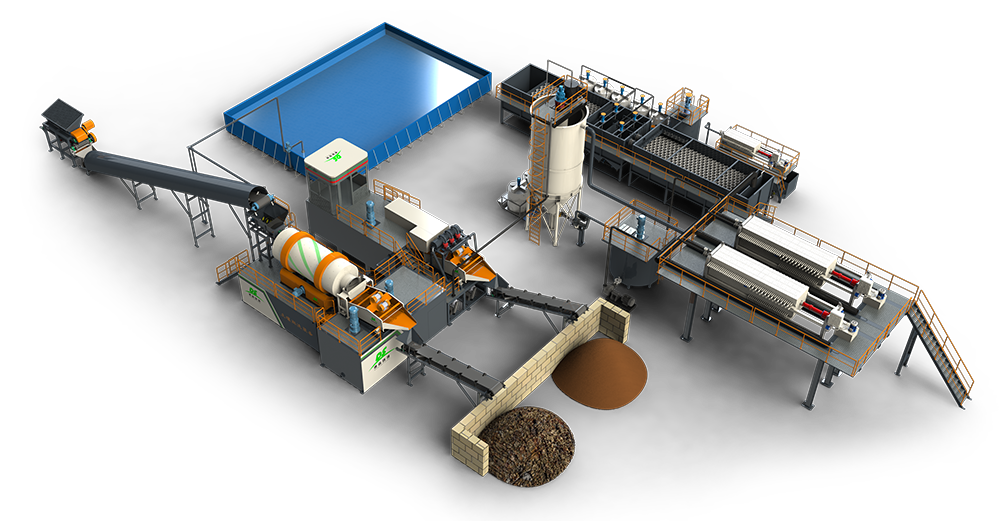
Why the Sand Fraction Needs Its Own Dewatering Step
On a modular washing line, the coarse sand fraction carries most of the recovered volume, and it is the easiest fraction to clean: heavy particles scrub well, release contaminants into the wash water, and classify predictably. But that value is not realized until the water is removed. A dewatering screen does three jobs at once:
Drainage: free water flows down through the deck and returns to the water circuit while the sand travels across the pan.
Bed transport: vibration moves the sand up an inclined deck, building a bed that squeezes water out of the material beneath it.
Fine rejection: residual fines that would hold moisture are washed through the deck, keeping the product clean and free-draining.
Get these three functions working together and the sand leaves the screen at 10 to 15 percent moisture, depending on gradation. Get them wrong and even a correctly sized screen will deliver a wet product no matter how long it dwells.
Setting Up the Screen for Contaminated Sand
Deck media and aperture
Dewatering decks are usually polyurethane or stainless wire mesh. Polyurethane panels resist abrasion and shed sticky material, which matters on clay-bearing contaminated soil; wire mesh drains faster but blinds more readily when fines are present. The aperture for a sand dewatering deck typically sits between 0.2 and 0.5 mm, chosen against your target product gradation rather than the feed: anything smaller than the cut will pass to the fines circuit, and everything retained must meet your reuse specification. On Desen Environmental washing lines the deck media is matched to the soil analysis agreed during pilot testing, because a sandy soil and a silty sand demand very different decks.
Rinse water on the deck
Rinse sprays on a dewatering screen are not a second wash; the washer has already done that. Their job is to displace the last dirty water film clinging to the grains with cleaner water from the back of the circuit. Spray pressure should be enough to penetrate the bed, around 2 bar at the nozzle, without blasting sand over the discharge lip. Placement matters more than flow rate: bar nozzles about two thirds of the way up the deck, aimed against the direction of travel, give the water time to drain before discharge. Countercurrent rinsing, taking clean water from the final stage of the water treatment loop, keeps the added rinse from loading the circuit with dissolved salts.
Vibration, angle and bed depth
A dewatering screen works on a shallow incline, typically 3 to 5 degrees, with vibration frequency around 1,400 to 1,600 rpm for sand duty. The balance to strike is between transport speed and dewatering time. If the bed deepens beyond about 100 to 150 mm, the lower layers never drain and the discharge moisture climbs even at full amplitude. Throttling the washer discharge or adding a feed buffer keeps the bed depth where the screen is actually dewatering rather than merely conveying. Operators should check the bed profile at each shift change; a channeling bed, where material runs in a narrow ribbon, is the first sign that feed distribution has drifted.
Managing Moisture Targets and Product Discharge
Most reuse or disposal routes set a moisture limit for washed sand, and the dewatering screen is where that limit is proven or missed:
Grab testing every hour: weigh a sample, dry it in a field moisture balance, and log the number. A trend line tells you more than a single reading.
Watch the discharge lip: water dribbling over the lip instead of through the deck means the bed is too deep or the sprays are too high.
Check the underflow: cloudy water means the deck is passing good sand; clear water with dry cake on the deck means the media may be blinding.
If moisture stays above target, work through the causes in order. Blinded deck media is the most common: inspect and spray-clean the panels before changing any other setting. Excessive rinse flow is second. A feed that has drifted fine will carry more moisture at any screen setting, and the fix belongs upstream. When the sand is stacked for later reuse, keep the stockpile pad drained and separate from unwashed stock, so a compliant product does not sit in runoff from the rest of the site.

Dewatering screens are simple machines, but they sit where process performance turns into a deliverable product. Deck media matched to the gradation, countercurrent rinse water placed correctly, and an hourly moisture log will keep the sand fraction within specification through the campaign. Desen Environmental supplies dewatering screens as part of its modular and mobile soil washing plants, with deck configurations selected against pilot test data for each project soil.