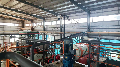
Skid-Mounted vs Fixed Soil Washing Equipment: A Complete Selection Guide
Complete comparison of skid-mounted vs fixed soil washing equipment: deployment speed, capital cost, operational flexibility and selection criteria. Expert guidance from Desen Environment at materialwashing.com for your remediation or material washing project.
Selecting the right soil washing equipment configuration is one of the most consequential decisions in planning a contaminated soil remediation or material washing project. The two dominant deployment formats — skid-mounted (撬装式) soil washing equipment and fixed (固定式) soil washing equipment — each offer distinct advantages in capital cost, deployment speed, operational flexibility and long-term throughput economics. Making the wrong choice can add hundreds of thousands of dollars to a project budget or leave a plant unable to handle variable feed conditions efficiently.
Desen Environment (郑州德森环境科技有限公司, operating globally as Desen Environment, online at materialwashing.com) has designed, manufactured and commissioned both skid-mounted and fixed soil washing installations across more than 200 projects globally, spanning brownfield remediation, mining tailings reprocessing, construction and demolition (C&D) waste recycling, and industrial by-product washing. This article draws on that direct project experience to provide a systematic comparison of skid-mounted versus fixed soil washing equipment, so that remediation contractors, environmental engineers and project developers can make confident, well-informed selections for their specific site conditions and operational requirements.
Understanding the Two Equipment Configurations
What Is Skid-Mounted Soil Washing Equipment?
Skid-mounted (撬装式) soil washing equipment refers to treatment systems where all major components — feeders, screens, scrubbers, classifiers, pumps and control panels — are mounted on rigid steel skid frames designed for lifting, towing or transport by flatbed truck. Each skid is a self-contained functional module that can be disconnected, relocated and reconnected at a new site without cutting pipes, rewiring electrical systems or requiring on-site fabrication. Skid-mounted soil washing plants are the preferred configuration for remediation projects, temporary processing operations, multi-site service contracts and any application where the equipment must be mobile.
What Is Fixed Soil Washing Equipment?
Fixed (固定式) soil washing equipment refers to permanently installed treatment systems where components are mounted on dedicated structural foundations, typically concrete pads or structural steel frames with fixed utility connections (piping, electrical cable trays, process water supply lines). Fixed soil washing plants are the standard configuration for permanent industrial facilities — such as large-scale mining operations, dedicated hazardous waste treatment centers, municipal solid waste processing plants and manufacturing facilities with continuous by-product washing needs — where the equipment will operate at a single location for its entire operational life.
Skid-Mounted vs Fixed Soil Washing Equipment: Side-by-Side Comparison
Deployment Speed and Mobilization
Skid-mounted soil washing equipment delivers decisive advantages in deployment speed. A complete skid-mounted soil washing plant — typically comprising 5 to 9 modular skids for a 30 to 100 t/h treatment train — can be delivered to site, offloaded, positioned and commissioned within 7 to 14 days from purchase order confirmation or site arrival. Modules are designed to fit standard international shipping and road transport envelope dimensions (maximum 2.5 m width, 4.0 m height per unit), eliminating the need for oversize transport permits in most jurisdictions.
Fixed soil washing equipment installation timelines are substantially longer: civil works (foundation excavation, concrete pouring, curing) alone typically require 4 to 8 weeks, followed by equipment installation (2 to 4 weeks), utility connections and commissioning (1 to 2 weeks). A typical fixed soil washing plant requires 3 to 5 months from project kickoff to first material feed — a critical consideration for projects with regulatory deadlines or construction schedules that cannot accommodate extended lead times.
Capital Cost and Project Economics
The capital cost differential between skid-mounted and fixed configurations depends heavily on project scale and complexity. At lower throughput capacities (10 to 50 t/h), skid-mounted soil washing equipment typically carries a 15 to 30% lower capital cost than an equivalent fixed installation, primarily because skid-mounting eliminates on-site civil engineering costs and reduces on-site installation labor. The skid frame itself serves as the structural foundation — no concrete pad is required beyond a prepared aggregate or compacted crushed stone working surface capable of bearing the distributed load.
At very high throughput capacities (200 t/h and above) for permanent facilities, the capital cost advantage of skid-mounting diminishes or reverses, because large processing equipment (multi-cell attrition scrubbers, multi-stage hydrocyclone clusters, large dewatering screens) requires heavy structural support that is more efficiently and economically provided by dedicated concrete foundations rather than steel skids. For large permanent facilities, fixed soil washing plants generally offer superior long-term cost efficiency.
Operational Flexibility and Scalability
Skid-mounted soil washing equipment provides unmatched operational flexibility. Because each processing module operates independently, a skid-mounted plant can be reconfigured by adding, removing or replacing individual skids to match changing feed conditions, treatment targets or capacity requirements. This is particularly valuable for:
- Multi-site remediation contractors who need to redeploy equipment across different contaminated sites with varying contaminant profiles (heavy metals at one site, petroleum hydrocarbons at another);
- Pilot projects where the treatment plant must be expandable based on pilot testing results before full-scale deployment;
- Variable-feed operations such as construction and demolition waste recycling where input material composition changes seasonally or by loads received.
Fixed soil washing equipment, while less flexible in reconfiguration, offers advantages in operational stability for long-running continuous operations. Fixed structural foundations provide superior vibration damping and alignment stability for high-throughput equipment, reducing mechanical wear and maintenance frequency over multi-year continuous operations. Process piping and electrical systems in fixed installations are also more robust and easier to insulate against weather extremes — an important consideration for outdoor fixed installations in extreme climates.
Maintenance and Serviceability
Skid-mounted soil washing equipment modules are designed for rapid disconnection and removal for off-site service. Major wear components — attrition scrubber wear liners, hydrocyclone apex and vortex finder inserts, screen panels, pump impellers — can be accessed from the top or sides without crawling into confined spaces. The modular layout facilitates scheduled maintenance shutdowns where one module is taken offline while others continue operating, minimizing production losses.
Fixed soil washing equipment maintenance typically requires more extensive shutdown procedures because components are interconnected through fixed piping and electrical systems. However, fixed installations offer advantages in long-term maintenance cost: permanent access platforms, crane beams and service roads built into the civil design make major component replacement (such as changing a trommel screen drum or removing a large attrition scrubber shell) more straightforward and less expensive than equivalent operations on skid-mounted units in the field.
Site Footprint and Infrastructure Requirements
Skid-mounted soil washing equipment requires minimal site infrastructure: a level, compacted working surface (typically 200 to 400 mm of well-graded crushed aggregate on compacted subgrade), adequate electrical power connection (typically 400 to 630 A, 380 to 480 V, 3-phase, 50/60 Hz), and a process water supply (potable water, borehole water or recycled process water). No building, enclosed structure or permanent civil works are required, though acoustic enclosures and weather shelters can be added as bolt-on accessories if required.
Fixed soil washing equipment requires substantially more site infrastructure: concrete foundations (typically 300 to 600 mm thick reinforced slabs for major equipment), structural steel support buildings or enclosures, fixed piping networks with valving and instrumentation, dedicated electrical switchgear rooms, and typically a covered or enclosed processing building to protect equipment and operators from weather. This additional infrastructure cost — often USD 200,000 to USD 800,000 depending on site location and local construction costs — must be factored into any fixed installation budget.
How to Select the Right Configuration for Your Project
Choose Skid-Mounted Soil Washing Equipment When:
- Project duration is limited (typically less than 3 to 5 years) or project timeline is uncertain;
- Equipment will be relocated to multiple sites over its operational life;
- Budget is constrained and on-site civil works costs must be minimized;
- Regulatory or construction deadlines require rapid equipment deployment;
- Feed conditions or treatment targets may vary over the project duration;
- The project is a pilot or demonstration before full-scale fixed installation;
- Site access for heavy equipment is limited or site conditions are temporary.
Choose Fixed Soil Washing Equipment When:
- Project has a permanent, long-term operation requirement (5+ years continuous operation);
- Throughput requirements exceed 200 t/h and require large, heavy equipment;
- Continuous 24/7 operation is required with minimal planned downtime;
- Local regulations require enclosed or covered processing facilities;
- Extreme climate conditions (very high or very low ambient temperatures) require building-enclosed equipment;
- Capital budget is available to cover civil works and infrastructure costs;
- The facility will be integrated into a larger existing processing plant or industrial complex.
Real-World Selection Case Studies
Case Study 1: Multi-Site Remediation Program — Skid-Mounted Selection
Project context: A national environmental remediation contractor in China was awarded contracts to remediate five former industrial sites over a three-year period, each contaminated with different pollutant profiles (lead-cadmium at two sites, petroleum hydrocarbons at two sites, mixed organic-inorganic contamination at one site). Total remediation volume across all five sites was approximately 280,000 tonnes.
Selection rationale: Desen Environment recommended a skid-mounted soil washing plant with modular attrition scrubbing and hydrocyclone classification units that could be reconfigured between sites. The contractor purchased a base 50 t/h treatment train (three skids) with additional add-on modules for chemical leaching (for the heavy metal sites) and thermal desorption feed preparation (for the petroleum hydrocarbon sites). Total deployment across all five sites was achieved in under 18 months, with equipment relocation between sites completed in an average of 8 days per mobilization cycle.
Outcome: The skid-mounted approach enabled the contractor to complete all five projects within the three-year contract window at an estimated 35% lower total project cost compared to a fixed installation at each site or equipment rental arrangements.
Case Study 2: Permanent Mining Tailings Reprocessing Facility — Fixed Selection
Project context: A mining company in Inner Mongolia required a permanent tailings reprocessing facility to treat approximately 8 million tonnes of historical tungsten mine tailings over a 15-year operational life. Target throughput was 350 t/h. The tailings contained elevated concentrations of tungsten, iron and minor amounts of arsenic requiring washing, classification and magnetic separation.
Selection rationale: Given the 15-year operational life, very high throughput requirement and the company's preference for a dedicated permanent facility, Desen Environment engineered a fixed soil washing plant with two parallel 175 t/h treatment trains. Fixed structural foundations and enclosed processing building accommodated the large multi-cell attrition scrubbers and high-capacity hydrocyclone clusters required. Permanent overhead crane beams and access platforms enabled efficient long-term maintenance.
Outcome: The fixed installation achieved sustained throughput of 340 to 360 t/h over three years of continuous operation, with mechanical availability exceeding 92%. The permanent civil infrastructure, while representing a significant upfront investment, delivered superior long-term operating economics compared to any skid-mounted alternative at this scale.
Desen Environment's Equipment Portfolio: Skid-Mounted and Fixed Solutions
Desen Environment offers both skid-mounted and fixed soil washing equipment configurations across its full product range, including:
- AS Series Attrition Scrubbers — available in both skid-mounted modular cells (5 to 50 t/h per cell) and fixed multi-cell configurations (50 to 500+ t/h per train);
- Hydrocyclone Classification Systems — skid-mounted clusters for portable installations and fixed multi-stage classification circuits for permanent plants;
- Trommel and Vibrating Screen Modules — available as standalone skid units or integrated into fixed plant layouts;
- Process Water Management Systems — closed-loop recycling systems designed for both portable and permanent installation contexts.
All Desen Environment equipment is designed and manufactured at the company's ISO-certified manufacturing facility in Zhengzhou, China, with global delivery and on-site commissioning capability. Both configurations carry full documentation packages including process design reports, hydraulic and mass balance calculations, P&ID drawings, electrical schematics and operational manuals.
Frequently Asked Questions (FAQ)
Q1: What is the minimum throughput for skid-mounted soil washing equipment?
Skid-mounted soil washing equipment is available in configurations ranging from 5 t/h to 200 t/h per treatment train. For projects requiring throughput below 5 t/h, batch or containerized treatment systems may be more appropriate. For projects above 200 t/h in a single train, fixed installation typically offers superior economics and operational efficiency. Contact Desen Environment for specific throughput recommendations for your project.
Q2: Can skid-mounted equipment be upgraded to a fixed installation later?
In many cases, yes. The structural skid frames are designed to be compatible with permanent foundation mounting, so a skid-mounted system deployed initially can be converted to a fixed installation on a concrete foundation if the project transitions to a permanent operation. This hybrid approach — using skid-mounted equipment initially for rapid deployment and converting to fixed foundations if the operation extends beyond three to five years — is a practical strategy that balances deployment speed and long-term cost efficiency.
Q3: What is the typical power consumption for skid-mounted soil washing equipment?
A complete skid-mounted soil washing plant at 50 t/h throughput typically requires 200 to 350 kW of electrical demand (depending on process configuration and whether thermal or chemical enhancement stages are included). Fixed installations at equivalent throughput have similar electrical demand, though fixed plants can more efficiently integrate on-site power generation or renewable energy systems due to their permanent electrical infrastructure.
Q4: How does maintenance cost compare between the two configurations?
Annual maintenance costs for skid-mounted soil washing equipment are typically 5 to 15% higher than equivalent fixed installations, primarily due to the additional wear on transport connectors, quick-release couplings and weather-exposed electrical systems. However, this premium is usually more than offset by the lower civil works and infrastructure costs of skid-mounted deployment. Over a 5-year operational horizon, total cost of ownership (capital + operating + maintenance) typically favors skid-mounted configurations for projects under 200 t/h and projects with uncertain long-term duration.
Q5: What water consumption should be expected?
Both skid-mounted and fixed soil washing equipment achieve similar water consumption rates when equipped with closed-loop process water recycling — typically 0.3 to 0.8 cubic meters of fresh water per tonne of material processed, after accounting for water recovery through thickeners and dissolved air flotation (DAF) units. Desen Environment's skid-mounted plants are designed with integrated water recycling skids that can be deployed alongside the treatment train regardless of site water availability.
Conclusion
The choice between skid-mounted (撬装式) and fixed (固定式) soil washing equipment is fundamentally a question of project duration, throughput scale, deployment timeline and long-term operational plans. Skid-mounted soil washing equipment is the optimal choice for remediation projects, temporary processing operations, multi-site programs and any application where deployment speed, re-deployability and minimized civil works costs are priorities. Fixed soil washing equipment is the preferred choice for permanent, high-throughput, long-duration industrial facilities where superior operational stability, lower long-term maintenance costs and integration with existing infrastructure justify the higher upfront capital investment.
Desen Environment provides free technical consultation for soil washing equipment selection, including washability testing of feed material, customized configuration recommendations and detailed cost-benefit analysis comparing skid-mounted versus fixed options for your specific project parameters. Contact Desen Environment through materialwashing.com to discuss your project requirements.