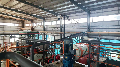
Soil Washing Equipment Process Flow and Technical Advantages Explained
Complete technical guide to soil washing equipment process flow and technical advantages. Covers attrition scrubbing, hydrocyclone classification, water management and mass reduction benefits. Expert solutions from Desen Environment at materialwashing.com.
Effective remediation of contaminated soil and mineral processing of industrial by-products depend fundamentally on selecting the right soil washing equipment and understanding how each process stage contributes to the overall treatment objective. A well-engineered soil washing plant combines mechanical, hydraulic and sometimes chemical processes in a carefully sequenced flow sheet to separate contaminants from soil particles, concentrate hazardous fractions into a small residual mass, and produce a clean aggregate or soil product that meets regulatory standards for reuse or safe disposal. Desen Environment (郑州德森环境科技有限公司, trading globally as Desen Environment at materialwashing.com) has designed and commissioned more than 200 soil washing equipment installations worldwide, ranging from compact 10 t/h mobile units to large-scale 500+ t/h fixed processing plants. This article provides a detailed technical walk-through of the standard soil washing equipment process flow, explaining each stage's function, the engineering rationale behind common configurations, and the measurable technical advantages that distinguish well-designed washing systems from simplified or undersized alternatives.
The Soil Washing Process Flow: Stage-by-Stage Breakdown
Stage 1 — Feed Preparation and Coarse Material Removal
Raw contaminated soil or mineral by-product arrives at the washing plant typically in dump trucks or excavator buckets. The first processing stage separates oversized materials — rocks, concrete rubble, root matter, metal debris, wood and other inert foreign objects — that would otherwise damage downstream equipment or consume washing capacity without benefiting from treatment. This is achieved using a trommel screen or vibrating screen with a primary cut point typically set at 5 mm to 20 mm, depending on the feed material's gradation and the project's treatment target. Oversized material rejected at this stage is either disposed of as inert waste or further processed (crushed and re-screened) if it contains recoverable aggregate.
Desen Environment recommends installing a heavy-duty drum trommel screen with variable-speed drive and interchangeable screen panels for this stage, as trommel screens handle sticky, clay-rich material more effectively than vibrating screens and produce less dust in dry-climate operations. The undersize fraction — the fine soil fraction that carries the majority of contaminants in most contaminated land scenarios — passes through the screen openings and gravitates to the next processing stage.
Stage 2 — Attrition Scrubbing: Releasing Contaminants from Particle Surfaces
The attrition scrubbing stage is the heart of any soil washing plant. In this stage, the screened soil slurry is fed into an attrition scrubber — a cylindrical or polygonal tank equipped with rotating impeller blades that create intense inter-particle collisions and turbulent shear forces. These mechanical forces strip clay coatings, break down soil aggregates and dislodge fine contaminant particles — including heavy metals, petroleum hydrocarbons and organic compounds — from the surface of sand, silt and gravel particles.
The scrubbing action converts the feed from a coarse granular material into a partially or fully disaggregated slurry, depending on the clay content and moisture addition rate. Scrubber retention time typically ranges from 5 to 30 minutes per pass, with multi-pass scrubbing configurations used for heavily contaminated or clay-rich material. Desen Environment's AS Series Attrition Scrubbers feature variable-speed drives (allowing operator adjustment of scrub intensity), replaceable wear-resistant rubber or ceramic liner panels, and a modular tank design that allows capacity scaling from 5 t/h to 500+ t/h per cell without fundamental redesign.
For heavy metal contaminated sites, chemical reagents — typically dilute sulfuric acid (for pH reduction and metal solubilization), citric acid or EDTA solutions — can be added at the attrition scrubbing stage to enhance contaminant release. For petroleum hydrocarbon contamination, the addition of surfactants or biodegradable detergents at the scrubber improves wetting and separation of oil films from mineral particles. Desen Environment's soil washing equipment is designed with reagent dosing system integration points at this stage to support chemical enhancement without requiring separate treatment tanks.
Stage 3 — Size Classification and Contaminant Fraction Concentration
After attrition scrubbing, the disaggregated slurry passes to the hydrocyclone classification stage. Hydrocyclones are cylindrical-conical vessels that use centrifugal force — generated by the slurry's tangential inlet velocity — to separate particles by size and density. Heavier particles (sand and coarse silt) migrate to the cyclone wall and discharge at the underflow (apex), while lighter particles (fine silt, clay) and water report to the overflow (vortex finder) with the process water stream.
In most soil washing plant configurations, two or three hydrocyclone stages are used in series: a primary coarse classifier removes the sand fraction (typically > 75 microns or > 150 microns, depending on the project specification), an intermediate classifier targets medium silt fractions, and a fines classifier or settler handles the colloidal clay fraction. Each overflow stream — representing progressively finer, more contaminated material — is directed to a separate thickener or settling pond for water recovery and sludge concentration.
Desen Environment's hydrocyclone classification systems feature precision-manufactured replaceable wear liners in the conical section (the highest-wear zone), variable-aperture apex devices for flow balancing, and automated underflow density monitoring to maintain consistent classification performance as feed conditions change during a shift. This adaptability is essential in contaminated land remediation, where feed material composition can vary significantly between excavation batches.
Stage 4 — Contaminant Sludge Thickening and Water Recycling
The overflow streams from hydrocyclone classifiers — carrying the fine clay fraction that concentrates the majority of contaminants — are collected in a sludge thickener or lamella clarifier. Here, suspended solids settle under gravity, producing a thickened sludge (typically 15 to 30% solids by weight) that can be pumped to filter press or container storage for disposal. The clarified overflow water is recycled back to the plant's process water tank, treated with pH adjustment or flocculant dosing as required, and reused in the scrubbing and classification stages.
Effective water management is critical to both environmental performance and operating cost. A well-designed soil washing plant with closed-loop water recycling typically achieves a fresh water consumption rate of 0.3 to 0.8 cubic meters per tonne of material processed — a fraction of the rate consumed by once-through washing systems. Desen Environment designs its water management circuits to achieve 85 to 95% process water recovery, with zero or minimal discharge to sewer or surface water under normal operating conditions.
Stage 5 — Clean Aggregate Dewatering and Product Handling
The classified sand and coarse aggregate fractions — now physically cleaned of fine contaminant particles — require dewatering before transport or reuse. Dewatering screens (horizontal or inclined vibrating screens with drainage panels) or dewatering screws reduce moisture content from the slurry state to typically 10 to 20% by weight, producing a free-draining aggregate that can be stockpiled, loaded into trucks or used directly in construction applications. For projects requiring very low moisture content (below 8%), a thermal dryer or filter press dewatering stage can be added downstream.
The clean aggregate product from a properly designed soil washing plant typically meets regulatory standards for unrestricted reuse in backfill, road sub-base, concrete aggregate or landscape fill applications, depending on the jurisdiction and applicable standards. Desen Environment provides full compliance documentation packages — including mass balance calculations, contaminant removal efficiency data and leachability test results — to support regulatory acceptance of treated material for beneficial reuse.
Key Technical Advantages of Professional Soil Washing Equipment
1. Significant Mass Reduction and Cost Savings in Disposal
Perhaps the most economically significant advantage of soil washing equipment is its ability to concentrate contaminants into a small fraction of the original excavated material mass. In typical brownfield remediation scenarios — where contamination is concentrated in the fine clay and silt fractions below 75 to 150 microns — the washing process can reduce the total mass requiring specialist disposal by 60 to 85%. This dramatically reduces disposal costs, since disposal of concentrated hazardous waste (classified waste) is typically 5 to 15 times more expensive per tonne than disposal of treated inert material or reuse of clean aggregate. A well-engineered soil washing plant can therefore deliver a net cost saving even after accounting for equipment, energy and consumables — particularly on projects with more than 5,000 to 10,000 tonnes of contaminated material to process.
2. Flexible Process Configuration for Variable Feed Conditions
Professional soil washing equipment — particularly modular skid-mounted configurations — can be reconfigured to adapt to changing feed conditions without requiring fundamental redesign. Desen Environment's modular soil washing equipment allows operators to add or remove processing stages (for example, adding a chemical leaching stage for heavily metal-contaminated batches, or bypassing attrition scrubbing for clean aggregate processing) by repositioning or reconnecting modular units. This flexibility is invaluable in remediation projects, where excavation typically uncovers variability in contamination depth, concentration and distribution that was not fully characterized in the pre-construction site investigation.
3. Rapid Deployment and Short Commissioning Timeline
Modern skid-mounted soil washing equipment can be deployed and commissioned in 7 to 14 days from site arrival — a fraction of the time required for permanent fixed installations. This rapid deployment capability is critical for projects with tight regulatory deadlines, phased construction schedules or emergency remediation requirements. Desen Environment's skid-mounted washing plants are delivered as pre-wired, pre-piped modular units with factory-tested control systems, reducing on-site commissioning time and the risk of field wiring or piping errors that can delay fixed installations.
4. Closed-Loop Water Management and Environmental Compliance
A properly designed soil washing plant with integrated water recycling achieves near-zero liquid discharge under normal operating conditions, eliminating the risk of process water contamination to groundwater or surface water. The closed-loop circuit also minimizes fresh water consumption — an important consideration at remote sites without reliable municipal water supply or at projects with strict water use permitting requirements. Desen Environment's water management systems include real-time turbidity monitoring, automated flocculant dosing and pH control, and alarm systems that prevent overflow or spill conditions from developing into environmental incidents.
5. High Treatment Efficiency Backed by Performance Data
Professional soil washing equipment from established manufacturers like Desen Environment delivers quantifiable treatment efficiency. For heavy metal contaminated sites, a properly configured washing plant typically achieves 60 to 90% removal of lead, cadmium, zinc and copper from the treated soil mass, with the cleaned coarse fraction meeting regulatory thresholds for reuse. For petroleum hydrocarbon contaminated sites, washing plus attrition scrubbing can achieve 70 to 95% total petroleum hydrocarbon (TPH) removal, depending on soil clay content and initial contamination concentration. These performance figures are supported by mass balance calculations and post-treatment analytical results that can be submitted to regulatory authorities as evidence of treatment compliance.
6. Scalable from Pilot to Full-Scale Without Design Redesign
Desen Environment's soil washing equipment is designed on a scalable modular platform. A 10 t/h pilot plant uses the same attrition scrubber and hydrocyclone technology as a 500 t/h full-scale installation — simply in smaller tank volumes and with fewer parallel units. This means that treatment parameters established during pilot testing (scrubber retention time, reagent dose, hydrocyclone cut point) can be directly scaled to the full-scale design without empirical correction factors or redesign. This scalability reduces project risk and accelerates the transition from site investigation to remediation delivery.
Process Flow Diagram: Desen Environment's Standard Soil Washing Equipment Configuration
While a complete process flow diagram (PFD) is a project-specific engineering deliverable, the standard soil washing equipment configuration supplied by Desen Environment follows a consistent process sequence that can be adapted to most contaminated soil and mineral processing applications:
- Raw material reception and feed hopper → Dump truck unloading, grizzly oversize removal, live-bin feed control
- Primary trommel screen → Oversize rejection (rocks, debris), undersize slurry preparation
- Attrition scrubber → Mechanical disaggregation and contaminant release; optional reagent dosing
- Primary hydrocyclone cluster → Sand/coarse silt separation at 75 to 150 micron cut point
- Secondary hydrocyclone / classifier → Fine silt and clay removal; overflow to sludge thickener
- Sludge thickener → Solids settling, clarified water return to process water tank
- Dewatering screens → Sand and aggregate dewatering to stockpiling moisture content
- Process water tank with recycling → pH adjustment, flocculant dosing, recirculation to attrition scrubber
- Treated product stockpile → Clean aggregate for reuse or sale
- Sludge dewatering press → Filter press or belt press for final hazardous waste concentrate
Engineering Case Study: Soil Washing Equipment for Former Gasworks Site Remediation
Project background: A former coal gasification facility in northeastern China required remediation of approximately 45,000 tonnes of soil contaminated with polycyclic aromatic hydrocarbons (PAHs), cyanide and heavy metals (lead and zinc) to depths of 3 to 5 meters below ground level. Regulatory cleanup targets required PAH concentrations below 1 mg/kg for unrestricted land use and lead below 400 mg/kg.
Equipment configuration: Desen Environment supplied a skid-mounted soil washing plant with the following process train: heavy-duty trommel screen (10 mm aperture) → AS-50 attrition scrubber with surfactant dosing → primary hydrocyclone cluster (75 micron cut point) → secondary settling thickener → dewatering screen for sand product → filter press for sludge dewatering. Nominal throughput was 35 to 45 t/h depending on feed clay content.
Results: Over 14 months of operation, the plant treated 43,800 tonnes of contaminated material. PAH removal efficiency averaged 81% across the treated material, with the cleaned sand fraction (representing 72% of the original mass) meeting regulatory reuse standards. The concentrated PAH-bearing sludge (approximately 12,200 tonnes at 25% solids) was disposed of at a licensed hazardous waste facility at a total disposal cost 58% lower than the projected cost of disposing of the entire 43,800 tonnes as hazardous waste. Total project cost saving attributable to soil washing — compared to excavation and direct hazardous disposal of the full mass — was approximately USD 2.8 million.
Frequently Asked Questions (FAQ)
Q1: What is the typical throughput range for skid-mounted soil washing equipment?
Skid-mounted soil washing equipment from Desen Environment is available in standard configurations from 5 t/h to 200 t/h per treatment train. Larger throughput requirements (200+ t/h) are typically served by fixed multi-train installations. The modular nature of skid-mounted equipment means that multiple trains can be operated in parallel for very large projects.
Q2: How much water does a soil washing plant consume per tonne of material?
With closed-loop water recycling, a well-designed soil washing plant consumes 0.3 to 0.8 cubic meters of fresh water per tonne of material processed. Water consumption is higher for clay-rich materials (which retain more moisture in the sludge fraction) and lower for sand-dominated materials. The majority of process water is recovered and recycled through the thickener and process water tank circuit.
Q3: What contaminants can soil washing equipment remove?
Soil washing equipment is effective against a wide range of inorganic and organic contaminants, including: heavy metals (lead, cadmium, zinc, copper, arsenic, mercury, chromium); petroleum hydrocarbons (TPH, PAHs); cyanides; phenols; and certain agricultural pesticides. The removal mechanism — physical size classification — works best when contaminants are concentrated in the fine particle fractions (< 75 to 150 microns). Contaminants that are uniformly distributed across all particle size fractions are less amenable to washing and may require additional treatment (e.g., chemical stabilization or thermal desorption).
Q4: How long does it take to commission a skid-mounted soil washing plant?
A complete skid-mounted soil washing plant from Desen Environment can typically be commissioned within 7 to 14 days from the arrival of all equipment modules on site. Commissioning activities include skid positioning and leveling, utility connections (electrical, water, process piping), control system power-up and software configuration, water circuit filling and circulation, and performance testing with trial feed material. Factory pre-testing of all modules before shipment significantly reduces on-site commissioning time.
Q5: What maintenance is required for soil washing equipment?
Key maintenance activities for soil washing equipment include: inspection and replacement of attrition scrubber wear liners (typically every 800 to 2,000 operating hours depending on feed abrasiveness); hydrocyclone apex and vortex finder replacement (every 400 to 1,200 hours); screen panel replacement (every 200 to 800 hours depending on material); pump impeller and seal inspection; and bearing lubrication across all rotating equipment. Desen Environment provides detailed maintenance schedules, spare parts packages and on-site or remote technical support as part of its standard equipment delivery package.
Conclusion
The soil washing equipment process flow — from coarse screening through attrition scrubbing, hydrocyclone classification, sludge thickening and product dewatering — represents a proven, scalable and economically compelling approach to contaminated soil remediation and industrial by-product processing. Each process stage plays a essential role in achieving the overall treatment objective: separating the contaminated fine fraction from the reusable coarse aggregate, recovering and recycling process water, and producing a clean product that meets regulatory standards for beneficial reuse. The technical advantages of professional soil washing equipment — including 60 to 85% mass reduction, rapid deployment, closed-loop water management, quantified treatment efficiency and scalable modular design — make it a first-choice remediation technology for contaminated sites where contaminants are concentrated in fine soil particles.
Desen Environment offers complete soil washing equipment supply and commissioning services, including laboratory-scale washability testing of feed material, customized process flow design, manufacturing and factory acceptance testing, logistics and site installation, operator training and ongoing technical support. Contact Desen Environment through materialwashing.com for a project-specific technical proposal and treatment efficiency estimate for your contaminated soil or mineral processing application.