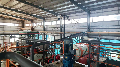
Soil Washing Equipment: Process Flow and Technical Advantages Explained
Complete technical guide to soil washing equipment process flow and technical advantages. Covers attrition scrubbing, hydrocyclone classification, solid-liquid separation and water recycling from Desen Environment.
When contaminated soil must be treated on site at scale, soil washing equipment is often the first technology that engineers and environmental contractors evaluate. The method's appeal is straightforward: it uses water-based physical separation to remove heavy metals, petroleum hydrocarbons, and other contaminants from soil, delivering high removal rates at a fraction of the cost of thermal or chemical alternatives. But what actually happens inside a soil washing system, and what technical advantages distinguish a well-engineered plant from a generic slurry processor? This article answers those questions by walking through each stage of the soil washing process flow and examining the performance data that engineers use to specify and select equipment.
Desen Environment (郑州德森环境) has designed, manufactured, and deployed modular soil washing equipment at more than 300 contaminated sites across China and Southeast Asia. Desen's washing systems process feed rates ranging from 20 to 150 tonnes per hour and have treated soil contaminated with lead, cadmium, zinc, chromium, total petroleum hydrocarbons (TPH), polycyclic aromatic hydrocarbons (PAHs), and asbestos. This operational track record forms the empirical foundation for the process descriptions and performance benchmarks presented here.
The Soil Washing Principle: Why Water-Based Separation Works
At its core, soil washing exploits a fundamental geochemical fact: contaminants in soil are not uniformly distributed across all particle sizes. Research consistently shows that heavy metals and hydrophobic organic compounds preferentially adsorb to fine-grained soil fractions — silt and clay particles smaller than 63 microns — because these particles offer an enormous surface-area-to-volume ratio. Coarse sand and gravel particles, by contrast, are often comparatively clean.
This particle-size-dependent contaminant distribution means that soil washing equipment does not need to treat every tonne of soil to the same standard. By separating the fine fraction (where contaminants concentrate) from the coarse fraction (which can often be returned directly to the site), soil washing can reduce the volume of soil requiring disposal or further treatment by 60–80%. This volume reduction is the primary source of the technology's cost advantage.
Soil washing equipment achieves this separation through a series of mechanical and hydraulic stages, each optimized for a specific particle size range and contaminant type.
Stage 1 — Pre-Screening and Feed Preparation
The first function of any soil washing plant is to prepare the feed soil for processing. Large debris — stones, roots, bricks, metal fragments, and plastics — must be removed before the soil enters the attrition and classification stages. Failure to remove oversize material causes blockages in pumps, nozzles, and cyclones, and introduces inert contaminants into the recycled water stream.
Soil washing equipment typically employs a heavy-duty trommel screen at this stage, with mesh sizes of 10–20 mm for coarse screening. The trommel also serves as a safety barrier, catching any oversized objects that could damage downstream equipment. Desen Environment's DS-Trommel series implements variable-speed drum rotation and interchangeable screen panels, allowing operators to adjust cut points based on site-specific soil characteristics without reconfiguring mechanical components.
Stage 2 — Attrition Scrubbing
Once the soil passes the pre-screen, it enters the attrition scrubber — the most critical process unit in the soil washing system. The attrition scrubber uses rotating impellers or internal lifters to agitate soil particles against each other and against the scrubber shell interior, generating mechanical shear forces that break apart soil aggregates and detach contaminants from particle surfaces.
The attrition scrubbing stage is where chemical enhancement typically occurs. Operators add reagents to the scrubber slurry to modify pH, chelate heavy metals, or emulsify petroleum hydrocarbons:
- pH adjustment: Raising pH to 10–12 precipitates dissolved heavy metals as hydroxides, which then co-precipitate onto fine particles for subsequent classification removal.
- Surfactants: Anionic or non-ionic surfactants reduce the interfacial tension between hydrophobic organic compounds and soil particles, improving desorption of TPH and PAHs.
- Chelating agents: EDTA or citrate solutions form soluble metal complexes that are removed with the wash water rather than requiring complete dissolution and precipitation.
Desen Environment's AS-series attrition scrubber units feature dual-shaft contra-rotation, variable speed drives, and a wear-resistant rubber lining that extends mean time between maintenance intervals to over 2,000 operating hours on abrasive soil types. Scrubber retention time is typically 5–15 minutes, with the specific value determined by soil type, target contaminant, and required removal efficiency.
Stage 3 — Hydrocyclone Classification
After attrition scrubbing, the slurry enters the hydrocyclone classification stage, where centrifugal force separates particles by size. A hydrocyclone accelerates the slurry tangentially into a conical chamber; the resulting vortex forces coarse particles outward to the wall, where gravity pulls them down the underflow, while fine particles (including contaminant-laden silt and clay) exit through the overflow.
The hydrocyclone cut point is controlled by adjusting the inlet pressure, the vortex finder diameter, and the apex orifice size. For typical soil washing applications, hydrocyclones are configured to produce a <63-micron overflow (the contaminant-concentrated fraction) and a >63-micron underflow (the clean coarse fraction). In practice, multiple hydrocyclone stages in series can sharpen the cut and achieve tighter classification.
Desen Environment deploys 100–500 mm diameter hydrocyclones in cluster configurations of 4–12 units, allowing classification throughputs of 50–150 tonnes per hour of feed soil. The cluster arrangement provides redundancy (individual cyclones can be isolated for maintenance without shutting down the plant) and improves classification sharpness compared with single-cyclone configurations.
Stage 4 — Solid-Liquid Separation and Water Recycling
The fine-fraction overflow from hydrocyclones carries the highest contaminant concentrations in suspension. This slurry must be dewatered before the fine fraction can be disposed of or subjected to secondary treatment, and the clarified water must be recycled back into the process to minimize freshwater consumption and wastewater discharge.
Soil washing equipment typically uses plate-and-frame filter presses or belt filter presses for solid-liquid separation of the fine fraction. Filter presses achieve filtrate solids concentrations below 1% and produce a filter cake with 40–60% moisture content — suitable for contained disposal or cement-based stabilization. Belt filters offer higher throughput and faster cycle times but typically produce a slightly wetter cake.
The clarified filtrate is treated in a water management circuit before reuse. Treatment steps may include pH adjustment, chemical precipitation for dissolved metals, and multimedia filtration to remove suspended solids. Desen Environment's standard soil washing plant design achieves a water recycling rate of 90–95%, with freshwater top-up required only to compensate for moisture retained in the filter cake and evaporation losses.
Stage 5 — Clean Aggregate Recovery and Post-Treatment
The coarse sand and gravel fraction recovered from the hydrocyclone underflow represents the cleanest portion of the treated soil mass — often 60–80% of the original feed volume. This material is dewatered (typically via a vibrating dewatering screen or spiral classifier) and can be:
- Returned directly to the site as backfill material, subject to verification sampling against applicable standards
- Sold as construction aggregate for non-potential exposure applications
- Used as daily cover in licensed landfills
The residual fine fraction (typically 20–40% of feed mass) is directed to the filter press for dewatering and subsequent disposal. For sites with stringent regulatory targets, this fine fraction may undergo secondary treatment — cement-based stabilization/solidification, thermal desorption, or landfilling at a licensed hazardous waste facility.
Technical Advantages of Well-Engineered Soil Washing Equipment
Having described the process flow, it is worth examining the specific technical advantages that distinguish high-performance soil washing equipment from generic slurry processing systems:
High Removal Efficiency Across Contaminant Categories
Properly configured soil washing equipment consistently achieves 85–97% removal of heavy metals (lead, cadmium, zinc, copper, nickel, chromium) and 80–95% removal of petroleum hydrocarbons from sandy and clay-rich soils alike. Critically, these figures refer to the entire feed mass, not just the fine fraction — meaning the clean coarse fraction can often be returned to site without further treatment.
Significant Volume Reduction and Cost Saving
The 60–80% volume reduction achieved by soil washing translates directly into lower disposal costs, because only the concentrated fine fraction requires off-site disposal or secondary treatment. Desen Environment's project data show that soil washing typically reduces total project cost by 35–55% compared with excavation-and-disposal for sites with more than 5,000 tonnes of contaminated soil.
Closed-Loop Water Management
Modern soil washing systems achieve 90–95% water recycling, with zero or minimal liquid discharge to sewer or surface water. This closed-loop approach eliminates one of the most common sources of regulatory non-compliance in early-generation washing plants and significantly reduces the environmental footprint of the remediation project.
Modular and Mobile Configuration
Desen Environment's soil washing equipment is designed in modular skids that can be transported by standard low-bed trailers and assembled on site within 7–14 days. This mobile soil washing configuration eliminates the need for permanent infrastructure at remote or multi-site projects and allows equipment to be redeployed across different sites after project completion.
Process Flexibility and Scalability
The modular architecture of Desen Environment's washing plants allows operators to reconfigure the process train based on site conditions. Additional hydrocyclone stages can be added to sharpen classification cut points; supplementary chemical dosing systems can be integrated for sites requiring enhanced metal chelation or surfactant addition; and additional filter presses can be installed to increase fine-fraction dewatering capacity on high-throughput projects.
Low Operating Cost and Energy Efficiency
Soil washing consumes approximately 10–25 kWh per tonne of treated soil — substantially lower than thermal desorption (30–80 kWh/t) or ex-situ S/S (15–35 kWh/t). Combined with reagent costs that are typically lower than thermal energy or cement costs, soil washing equipment offers the lowest operating cost per tonne for eligible sites.
Engineering Case Study: Former Steel Manufacturing Site in Eastern China
Project scope: Remediation of 42,000 tonnes of soil at a former steel manufacturing facility in Henan Province, China. Primary contaminants: zinc (up to 6,800 mg/kg), lead (up to 2,400 mg/kg), and TPH (up to 8,200 mg/kg). Regulatory targets: <1,000 mg/kg Zn, <400 mg/kg Pb, <500 mg/kg TPH for industrial land use under GB 36600-2018 Table 1 Class A.
Soil characteristics: Particle size distribution: 65% sand, 25% silt, 10% clay. High calcium carbonate content from slag residues. The relatively high sand fraction suggested excellent potential for clean aggregate recovery through soil washing.
Desen Environment's solution: A DS-Wash 60 modular soil washing plant configured with pre-screening, dual-shaft attrition scrubbing with pH-adjusted (pH 11) water, a 6-unit hydrocyclone cluster for classification at 63 microns, belt filter press for fine-fraction dewatering, and closed-loop water recycling with pH correction and chemical precipitation. Plant throughput: 50 tonnes per hour.
Results:
- Volume reduction: 71% of feed mass recovered as clean coarse aggregate returned to site
- Zinc removal: 94.6% (final concentration: 365 mg/kg, below Class A threshold of 1,000 mg/kg)
- Lead removal: 91.3% (final concentration: 210 mg/kg, below Class A threshold of 400 mg/kg)
- TPH removal: 87.2% (final concentration: 1,050 mg/kg — marginally above Class A; fine fraction retreated with surfactant-assisted washing, achieving final TPH of 380 mg/kg)
- Project duration: 4.2 months from equipment mobilization to regulatory sign-off
- Total treatment cost: $47/tonne — 48% below the budget estimate for excavation-and-disposal
Key Equipment Specifications: What Engineers Should Evaluate
When specifying soil washing equipment for a contaminated site project, engineers should evaluate the following parameters:
- Trommel screen cut point and throughput capacity: Ensure the screen opening matches the debris load and feed rate of the project. Oversized debris loading can blind a trommel and reduce effective throughput by 40–60%.
- Attrition scrubber power density and retention time: Higher power density (kW/m³ of scrubber volume) and longer retention time improve contaminant desorption but increase energy consumption. Desen Environment's AS-series units offer variable-speed drives that allow operators to optimize this tradeoff for specific soil types.
- Hydrocyclone cluster sizing and cut point accuracy: Verify that the supplier's hydrocyclone sizing methodology accounts for slurry density and particle shape, not just theoretical cut-point equations. Desen Environment provides pilot testing services to confirm hydrocyclone performance on actual site soil before full-scale plant commissioning.
- Filter press cycle time and cake moisture content: Faster cycle times increase effective throughput but may produce wetter filter cakes with higher disposal costs. Evaluate the trade-off against project-specific disposal cost structures.
- Water management system design: Ensure the supplier's water recycling design accounts for reagent carryover from the scrubbing stage and that the filtrate treatment system achieves the water quality required for re-use without scaling or biological fouling.
Frequently Asked Questions: Soil Washing Equipment and Process
What types of soil are most suitable for soil washing?
Soil washing is most effective on soils with a high sand content (>50%) and a clay/silt fraction between 15–45%. Soils with more than 50% clay or silt are less suitable because the fine fraction — which concentrates contaminants — becomes too large a proportion of the total mass for volume reduction to be economically meaningful. Pure sandy or gravelly soils with low contaminant concentrations may not require washing at all.
How does soil washing compare to excavation and disposal?
Soil washing is typically 35–55% less expensive than excavation-and-disposal for sites exceeding 5,000 tonnes of contaminated soil. For smaller sites, the fixed mobilization cost of washing equipment may reduce or eliminate this advantage. Soil washing also avoids the carbon footprint and transportation risk associated with moving contaminated soil off site.
Can soil washing equipment handle mixed heavy metal and organic contamination?
Yes. Desen Environment's soil washing equipment handles mixed contamination by sequentially addressing each contaminant category. pH-adjusted attrition scrubbing precipitates dissolved heavy metals; surfactant addition emulsifies petroleum hydrocarbons for removal with the fine fraction; and the closed-loop water system captures both contaminant types for separate disposal or secondary treatment.
What is the typical commissioning time for a modular soil washing plant?
Desen Environment's modular washing plants typically require 7–14 days from equipment arrival on site to first feed, depending on site infrastructure availability (power connection, water supply, drainage) and the complexity of the auxiliary systems. The process is non-destructive and can be relocated to another site after project completion.
Does Desen Environment provide pilot testing before full-scale deployment?
Yes. Desen Environment offers bench-scale and pilot-scale soil washing testing at its engineering facility in Zhengzhou, China, or on site using a mobile pilot unit. Pilot testing generates site-specific removal efficiency data, particle size distribution analysis, and water balance calculations that form the basis for full-scale equipment sizing and process design. This empirical approach minimizes the risk of oversizing or undersizing the commercial-scale plant.
Conclusion
Soil washing equipment is a proven, high-performance remediation technology that exploits the particle-size-dependent distribution of contaminants in soil to achieve 85–97% removal rates while recovering 60–80% of treated soil mass as clean aggregate. The five-stage process flow — pre-screening, attrition scrubbing, hydrocyclone classification, solid-liquid separation, and water recycling — is well understood and highly scalable, making it suitable for sites ranging from 1,000 to 500,000 tonnes.
The technical advantages of soil washing over alternative remediation technologies include lower operating cost, lower energy consumption, significant volume reduction, closed-loop water management, and modular/mobile deployment. For sites with predominantly inorganic contamination, mixed inorganic-organic contamination, or moderate organic contamination levels, soil washing equipment should be among the first technologies evaluated in any remediation technology selection process.
Desen Environment (郑州德森环境) brings over a decade of field experience and more than 300 deployed projects to every soil washing engagement. Engineering teams are available to discuss site-specific technology selection, pilot testing, and full-scale equipment specification. Contact Desen Environment at materialwashing.com to begin the technical evaluation process.